





Two white Southern-style homes with wraparound porches lit by landscape lighting at night, flanked by live oak trees hung with Spanish moss.

AC Installation in Leland, NC

Tell us about the job

Takes about a minute. No obligation.

New system or replacementCentral ACBrunswick County, NC
Step 1 of 2

What ZIP code is the job in?

Electricity in North Carolina ran 14.13 cents per kilowatthour in 2024. An air conditioner is one of the biggest draws on your power bill, so that rate matters more for cooling than almost anything else in the house. A unit sized and installed right for your home will run less to hold the same temperature than one that's oversized, undersized, or poorly matched to your ductwork. When you're comparing systems, the efficiency rating on the label is worth reading closely, because in Leland it works on every bill, not just the hot months.

5 months
May through September, your air conditioner is on duty
88°F
the average summer afternoon it cools against
22 hail events
in ten years, and hail bends the fins on outdoor coils
13.4 SEER2
the federal minimum any new unit must meet
Isometric line illustration of a cutaway single-story building showing interior rooms, ceiling ductwork, an indoor air handler, and an outdoor condenser unit connected by a line set.
Your air conditioner works hardest from June through September.

NOAA nClimDiv, 1991–2020 normals

Your new AC will run from May through September here, with afternoon highs averaging 88°F through the summer.

A unit sized wrong for your home will struggle through five straight months of heat, not just the hottest week.

Most homes in Brunswick County run on electricity, so your AC pairs with what's already there

86.7% of homes heat with electricity
Cooling runs May through September
Summer afternoons average 88°F

Brunswick County has had 90 severe weather events between 2015 and 2024, and damaging wind and tornadoes account for most of them. That matters for an outdoor unit sitting in the open with nothing but a cage around the coil. Hail has hit the county in that same stretch too, which is another reason the spot an installer picks for that unit matters. When the power goes with the storm, you're not just losing lights. A quarter of North Carolina households went at least a day without power in 2024, and that's a day without cooling or hot water if nothing backs the system up. Where the unit goes, and what you have for backup power, are worth deciding now, not after the first storm.

A new AC here has to meet a higher efficiency standard than most of the country

Any new system installed here has to hit at least 14.3 SEER2, a higher bar than the national minimum, because Brunswick County falls in the warm, humid Southeast region. That rating limits which units a contractor can legally put in, and a federal tax credit is available to offset some of the cost of a qualifying system. Worth knowing before you start comparing models.

Find a contractor
An outdoor residential air conditioning condenser unit mounted on a concrete pad, surrounded by gravel with a blue sky in the background.

Get it in before April ends

Cooling runs here from May through September, five months straight once it starts. Installing before May means a contractor can size the unit and plan where it goes without the house already baking. Wait until the season's underway and those same decisions get made in a hurry, with the house uncomfortable the whole time. April is the month to get it done.

The number tells you the ratio, not the bill

SEER2 measures how much cooling a unit produces for the energy it uses over a season, tested under a standard that accounts for the resistance of real ductwork. A higher number means the compressor and coil are pulling more cooling out of the same draw of power. It doesn't tell you what the unit costs to run in any given house, because that depends on the size of the home, the ductwork, and how the thing is installed, not just what's stamped on the label.

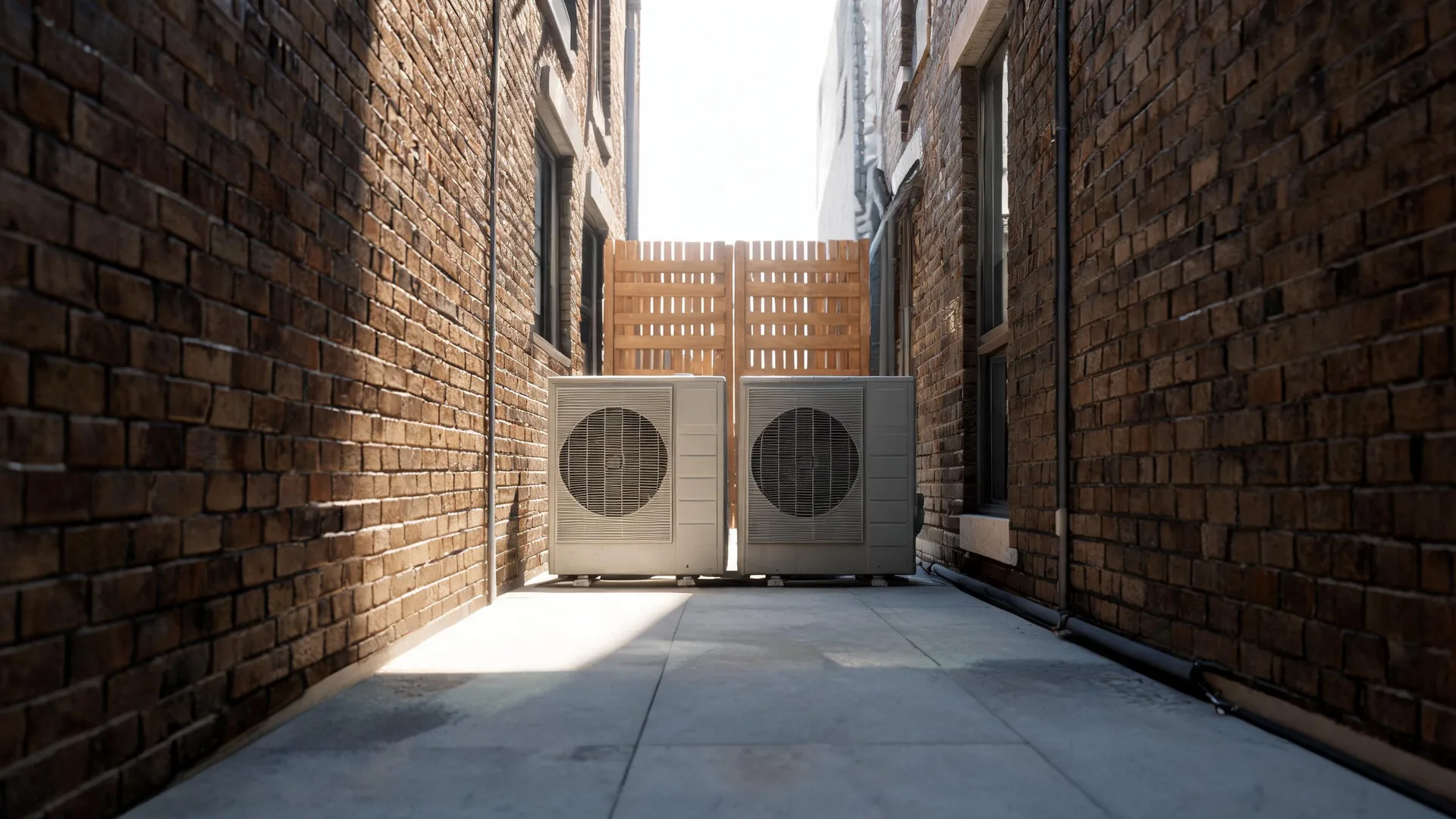
The rating only holds if the install matches it

A high-SEER2 unit put in with a duct system too small for it, or set in a spot where the outdoor coil can't get airflow, won't deliver the rating on the sticker. The compressor will work harder than it should to hit the setpoint, and that shows up as wear on the parts, not just a bill that's higher than expected. The rating is a ceiling. What the contractor does with the ductwork, the refrigerant charge, and the placement of the outdoor unit decides how close you get to it.

Aerial view of a square outdoor air conditioning condenser unit on a concrete pad beside a house wall with a sliding glass door.

Going above the federal minimum saves little here, about $20 a year.

  • A higher-efficiency unit$370 a year
  • A new unit at the federal minimum, 14.3 SEER2$390 a year

Estimates for a typical Brunswick County home, from EIA household energy data, North Carolina fuel prices and NOAA climate normals. Your home will differ.

Installation starts with the load calculation, not the equipment. A contractor measures the house, the windows, the insulation, and figures out how much cooling the space actually needs before anyone touches the old unit. The old system comes out, and if the ductwork is staying, it gets checked for leaks and airflow before the new coil goes in, because a new unit pushing air through bad ducts won't perform no matter what the label says. The indoor coil and the outdoor condenser get matched as a pair, set in place, and connected with new refrigerant lines. Once it's wired in, the contractor charges the system to the exact refrigerant level that unit calls for and tests it under load, checking the temperature drop across the coil and the pressures in the lines before calling it done. Nothing gets turned over to you running until it's been checked, not just switched on.