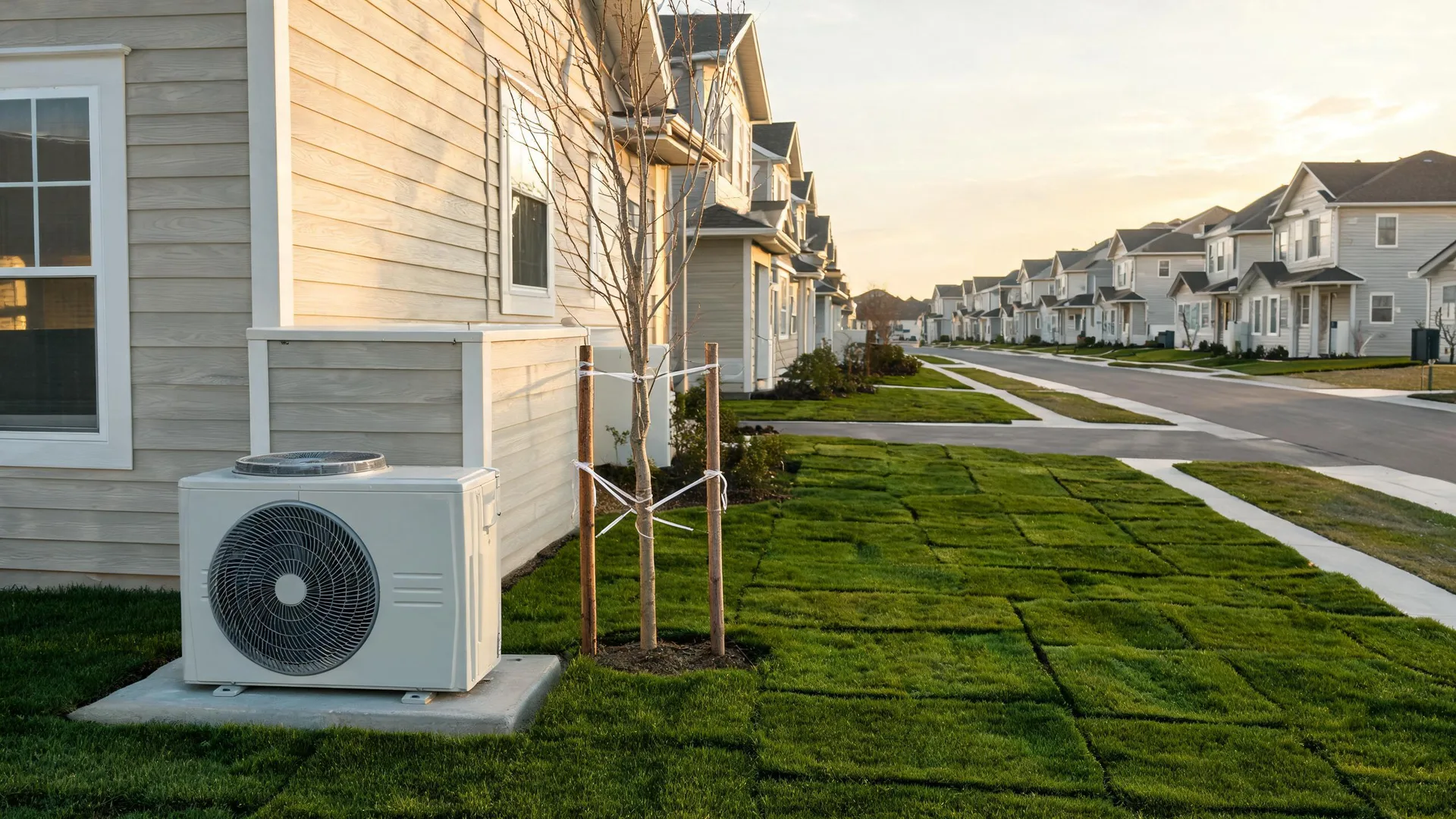
Weather here does damage
Catawba County logged 117 severe weather events between 2015 and 2024, including 66 damaging wind events, 32 hail events and 5 tornadoes. An outdoor AC unit sits outside through all of it.
Takes about a minute. No obligation.
Catawba County logged 117 severe weather events between 2015 and 2024, including 66 damaging wind events, 32 hail events and 5 tornadoes. An outdoor AC unit sits outside through all of it.
A quarter of North Carolina households went at least 24 hours without power in 2024. A new system should go in with that in mind, since an outage knocks out a central air conditioner no matter how new it is.

NOAA nClimDiv, 1991–2020 normals
Electricity heats 73.4% of homes in Catawba County.
Most AC installs here go in alongside electric heat, so the new system has to work with wiring and a breaker panel already built around that.



Any new split system going into a home in Catawba County has to hit 14.3 SEER2, the efficiency minimum set for the Southeast, a notch above what manufacturers have to meet nationally. That rating applies to systems under 45,000 Btu an hour, which covers most houses. It is not a suggestion a contractor can talk you out of. The federal government also offers a tax credit for qualifying high-efficiency equipment, worth checking into before you settle on a unit. Zone 3A, the category this county falls under, is built for long cooling runs with some humidity to handle along the way, and the equipment rated for it reflects that.
Talk to the installer about where the outdoor unit goes and what it's protected by, and have a way to keep the house livable if the power drops for a day. That's part of putting in a system here, not an extra step.
Find a contractorA new system gets compared on the sticker numbers, but ask what the installer is pulling from before that. Ductwork has to match what the equipment is rated to move. Oversized equipment cools the air fast and shuts off before it pulls the moisture out, so the house feels clammy even at the temperature you set. Undersized equipment runs long and still can't catch up on the hottest afternoons. Ask for a load calculation done on your house, not a swap based on what the old unit was rated for. Ask what the warranty covers on the compressor versus the rest of the system, since those terms often differ. Ask how the outdoor unit is grounded and protected, since it sits outside in wind and hail year round. A contractor who can answer these without pausing has done this before.
SEER2 measures how much cooling a system delivers over a full summer of on and off cycles, against the electricity it spends doing it. A higher number means less power spent for the same cooling over the whole stretch of hot months. It says nothing about how fast the system cools a room on a single scorching afternoon. That is a different rating, found separately on the same label.
The SEER2 number comes from a lab test with the system sized and installed correctly. A unit that is too big or too small for the house will not perform to that number, no matter what the label says. Airflow across the coil, the refrigerant charge, and the ductwork all have to be right for the equipment to run the way it was tested to run. The label is a ceiling, not a guarantee.
Estimates for a typical Catawba County home, from EIA household energy data, North Carolina fuel prices and NOAA climate normals. Your home will differ.
Installation day starts with the old equipment coming out, the indoor coil, the outdoor unit, and the line set running between them. A good crew checks the ductwork before hanging anything new, since the new system has to move air through what is already there. The line set usually gets replaced rather than reused, since old refrigerant lines can carry contamination into a new compressor. Once the new outdoor unit is set and the indoor coil is in place, the lines get brazed, pressure tested, and pulled into a vacuum to clear out any moisture or air before refrigerant goes in. The system then gets charged to the exact weight the manufacturer specifies, not just run until it feels cold. Before the crew leaves, airflow gets checked at the vents and the thermostat gets tested through a full cycle, so the system is proven to work before anyone signs off on it.