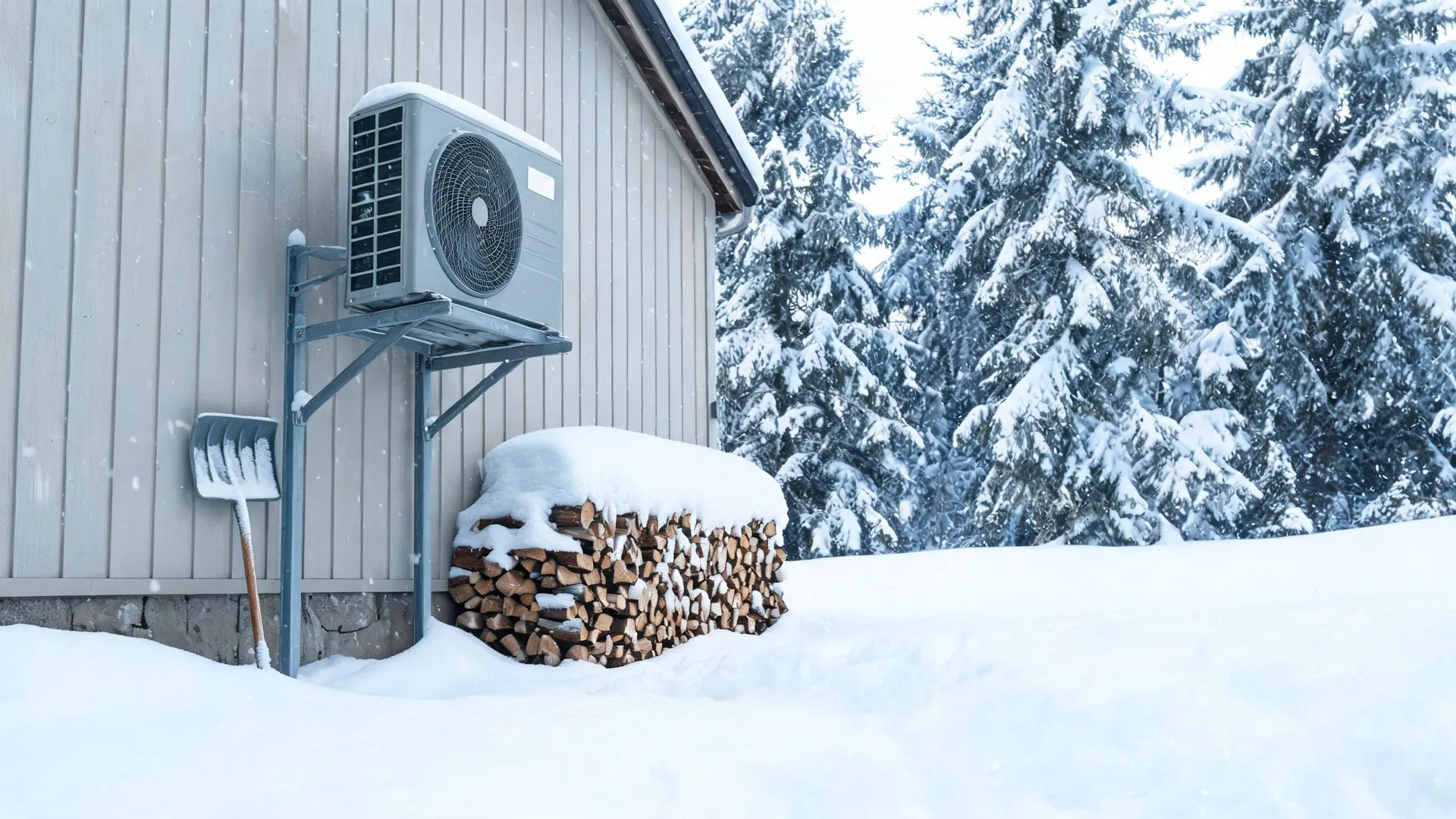
Most homes here run on electric heat
Electricity heats 60.4% of homes in Henderson County. Utility gas is a distant second at 26.3%, and the rest split between propane and fuel oil.
Takes about a minute. No obligation.
Electricity heats 60.4% of homes in Henderson County. Utility gas is a distant second at 26.3%, and the rest split between propane and fuel oil.
If your home already heats and cools through one electric system, replacing it with another electric system means no new gas line, no new venting, nothing to add. The install goes in where the old one sat.

NOAA nClimDiv, 1991–2020 normals
Henderson County sees its share of wind and hail, with a handful of ice storms most winters.
None of that changes what size or efficiency AC a standard install here needs.




Electricity in North Carolina runs 14.13 cents per kilowatt-hour, well below what people pay in a lot of other states. That changes the math on a new AC. A higher SEER2 unit still uses less power than a lower one, but the dollars it saves you each month are smaller here, so it takes longer to earn back what it costs over the standard model. That doesn't mean efficiency is wasted money, it means it shouldn't be the only thing you're deciding on. How well the unit holds up, how it's matched to your home, and how well it's installed will matter more to you over the years than another point or two of SEER2.
Henderson County falls under zone 4A, and any new split-system AC installed here has to meet the Southeast's regional minimum of 14.3 SEER2 below 45,000 Btu/h, higher than the national floor of 13.4. That rules out the lower-efficiency units sold elsewhere in the country. A federal tax credit is available on top of that for qualifying high-efficiency equipment.
Find a contractor
A warranty is only as good as what voids it. Most manufacturers require proof of annual maintenance to keep full coverage in force, and that means a dated service record, not a guess that someone looked at it last spring. Ask what the warranty covers on the compressor versus the coil, since they often run different lengths of time. Ask too whether it covers labor or only the part, because a free compressor under warranty still means paying someone to pull the old one and put the new one in. Compare the sound rating between systems if quiet matters to you, since units of the same size and efficiency can still run at different noise levels depending on the fan and cabinet design. And ask what happens if the install goes wrong, not just what happens if the equipment fails. A bad braze joint or a low charge shows up in the first year more than a failed part does.
Whoever installs the new system takes the old condenser and air handler or coil with them. The refrigerant has to be recovered first, by law, before the old unit is cut loose and carted off. You are not left to deal with a dead unit sitting in the yard.
An AC is sold as a matched pair, the outdoor condenser and the indoor coil. If only the condenser gets replaced and the old coil stays, the system can still run, but it will not hit the efficiency or the cooling it is rated for. Swapping both is what makes the install worth doing.
Estimates for a typical Henderson County home, from EIA household energy data, North Carolina fuel prices and NOAA climate normals. Your home will differ.
Sizing an AC is not about matching the old tonnage and calling it done. A unit too large for the space cools the air fast and shuts off before it pulls the moisture out, so the room feels cold and clammy at the same time. One that cycles on and off that much also wears its parts faster, since the startup is what stresses a compressor most. Too small, and it runs flat out all afternoon trying to catch up, and still loses ground on the hottest days. The right size comes from a load calculation, a room by room look at the home's square footage, window placement, insulation and sun exposure. A contractor who skips that and just quotes whatever sat outside before is guessing, even if the old unit seemed fine for years.