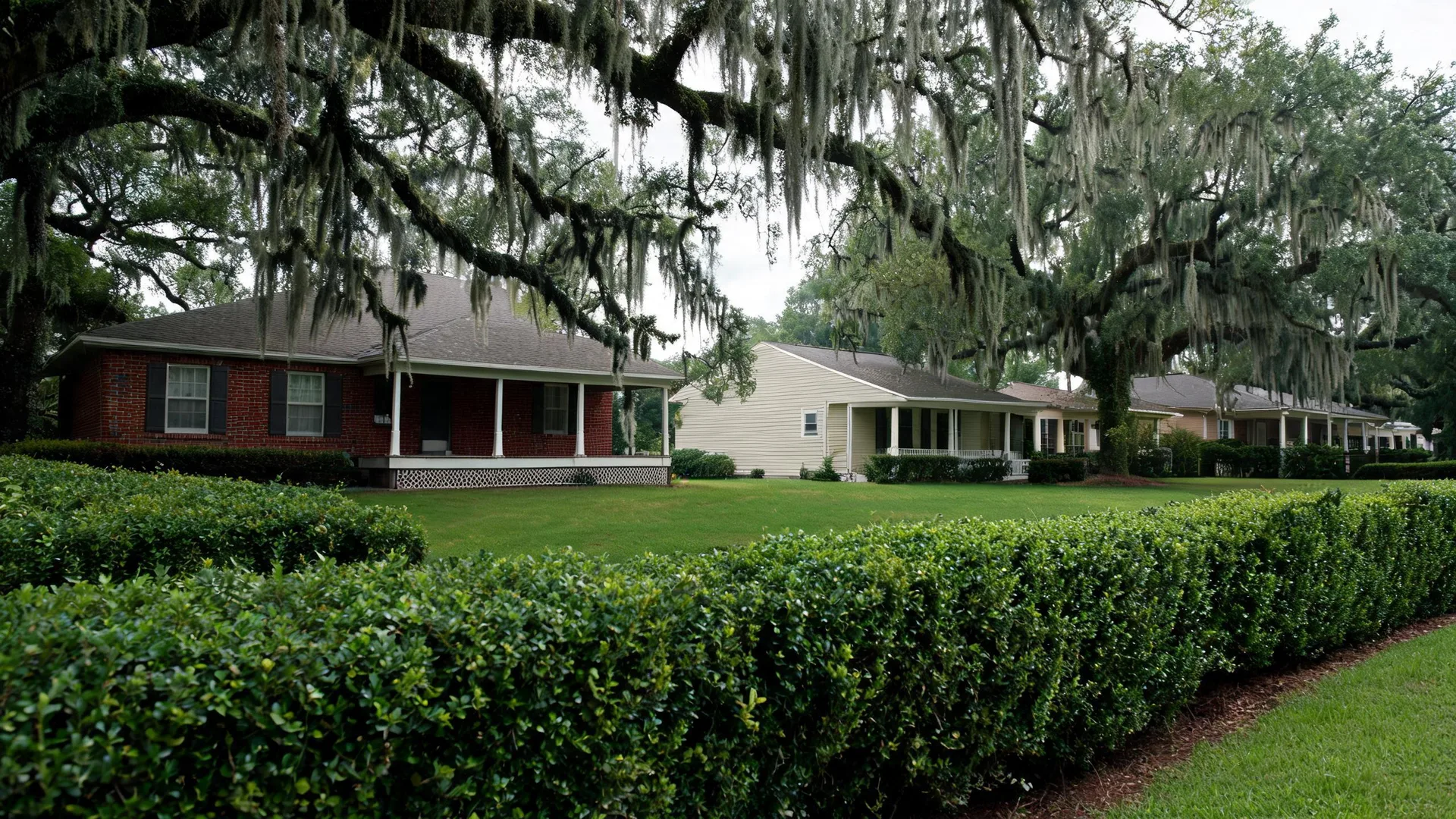
A row of single-story houses, the nearest of red brick with a covered porch and others with light siding, set behind a mowed lawn and a tall trimmed hedge, with large oak trees draped in Spanish moss overhead.

AC Installation in Greenville, NC

Tell us about the job

Takes about a minute. No obligation.

New system or replacementCentral ACPitt County, NC
Step 1 of 2

What ZIP code is the job in?

The size has to match the house

An air conditioner that's too big cools the air fast and shuts off before it pulls the moisture out, so rooms feel clammy even at the right temperature. One that's too small runs constantly and never quite catches up on the hottest days. Getting the size right takes a load calculation on the actual house, not a guess based on the old unit.


The ductwork decides more than the condenser does

A new condenser pushed through old, leaky or undersized ducts won't deliver the air it's rated for. Rooms far from the air handler run warm, and the system works harder than it should to make up the difference. Sealing or resizing ductwork during installation often matters more than which unit gets installed.

5 months
May through September, your air conditioner is on duty
88°F
the average summer afternoon it cools against
25 hail events
in ten years, and hail bends the fins on outdoor coils
13.4 SEER2
the federal minimum any new unit must meet
Isometric cutaway illustration of a house interior showing ducted air handling equipment, ceiling ducts, furniture in two rooms, and an outdoor condenser unit connected by lines outside the wall.
Your air conditioner works hardest from June through September.

NOAA nClimDiv, 1991–2020 normals

May starts five straight months of cooling in Pitt County.

April is the time to put in a new system, before the first hot week puts it to the test.

Five months of 88 degree afternoons will test this system every year

Cooling runs May through September
Summer afternoons average 88°F
Climate zone 3A
Electric heat is the standard hereFour out of five homes in Pitt County heat with electricity.

Pitt County falls in climate zone 3A under the 2021 energy code, which treats it as warm and humid with a long cooling season. Any split-system air conditioner going in here under 45,000 Btu/h has to clear 14.3 SEER2. That's higher than the 13.4 SEER2 the rest of the country requires as a baseline. A unit built to the national minimum does not meet code here, even if it still sits on a shelf somewhere labeled for sale. Ask what SEER2 rating a system carries before agreeing to anything, since that number is what has to clear the regional minimum, not the lower one stamped on units sold elsewhere.

Replace it before the season

Replace it before the season starts, so it happens on your schedule, not in a hurry.

Find a contractor
An outdoor residential air conditioning condenser unit mounted on a concrete pad, surrounded by gravel with a blue sky in the background.

Five months of running is the real test

Five months of cooling a year means the condenser outside is doing real work from May to September, not just on the worst days. Over that stretch it logs far more hours than a system in a milder state ever would. Each cycle puts load on the compressor and the fan motor, and that load doesn't let up once June arrives. A system sized for this house and rated for this climate carries that load the way it's meant to. One sized off the old unit, or picked because it was the cheapest option on the lot, tends to show the strain early: it runs longer to hit the same temperature, and the parts carrying that extra work wear sooner than they should.

Ask what happens when the power drops

An air conditioner that loses power and comes back on by itself can resume cooling without anyone touching a switch. Some outdoor units stagger their restart so the compressor doesn't try to start against full pressure, which is easier on the motor. Ask whether the system restarts clean on its own or needs a manual reset at the disconnect or the thermostat.

Ask what the warranty covers if a storm takes out the unit

A warranty on parts is not the same as coverage for a surge or a lightning strike through the power line. Some manufacturers exclude weather-related electrical damage outright. Ask the installer to point to the exact line in the warranty that addresses it, not just tell you it's covered, and ask whether surge protection is part of what gets installed or something added separately.

Overhead view of an air conditioning condenser unit on a concrete pad next to a house with asphalt shingle roofing and vinyl siding.

Going above the federal minimum saves little here, about $20 a year.

  • A higher-efficiency unit$330 a year
  • A new unit at the federal minimum, 14.3 SEER2$350 a year

Estimates for a typical Pitt County home, from EIA household energy data, North Carolina fuel prices and NOAA climate normals. Your home will differ.

Installation day starts with the old equipment coming out, the condenser outside and the air handler or coil inside. The line set gets disconnected and usually replaced rather than reused, since old refrigerant lines can carry contamination into a new system. Once the new condenser is set on its pad and the air handler is in place, the installer runs new lines, pulls a vacuum on them to clear out moisture and air, then checks for leaks before any refrigerant goes in. The electrical hookup comes next, tying the unit into its dedicated circuit and disconnect box. After that the system gets charged with refrigerant to the manufacturer's spec and run through a startup check, airflow, temperature split, pressures, to confirm it's operating the way it's supposed to before the installer leaves. A new thermostat often gets set at the same time, since the old one may not match the new system's wiring or features.