







White plantation-style houses with wraparound porches lit at night, surrounded by Spanish moss-draped live oak trees.

AC Installation in Gastonia, NC

Tell us about the job

Takes about a minute. No obligation.

New system or replacementCentral ACGaston County, NC
Step 1 of 2

What ZIP code is the job in?

Gaston County saw 102 severe weather events between 2015 and 2024. Most of that was wind, 67 events, with 20 hail events and 6 tornadoes mixed in. An outdoor AC unit sits outside through all of it, exposed to hail and flying debris. Tropical storms reached the county 3 times in that span, and winter storms with ice or heavy snow hit 6 times. A quarter of North Carolina households went at least a day without power in 2024. That matters as much as the unit itself, since a new AC is only as good as the power behind it.

5 months
May through September, your air conditioner is on duty
88°F
the average summer afternoon it cools against
20 hail events
in ten years, and hail bends the fins on outdoor coils
13.4 SEER2
the federal minimum any new unit must meet
Isometric line illustration of a cutaway house showing interior rooms with furniture, ductwork leading to an indoor air handler, and an outdoor condenser unit connected by a line set.
Your air conditioner works hardest from June through August.

NOAA nClimDiv, 1991–2020 normals

An oversized AC cools the air fast but shuts off before it pulls the moisture out.

The right size runs longer, steadier cycles, so the air actually feels dry when it's done.

Five months of cooling is worth getting installed before May

Cooling runs May through September
Climate zone 3A
Power here costs 12.87 cents per kilowatt-hour
Most of Gaston County heats with electricity57.3% of homes here run on electric heat, with gas a distant second at 37.9%

Gaston County sits in climate zone 3A, warm with a long cooling season, on the humid side. Any split-system AC installed here under 45,000 Btu/h has to hit at least 14.3 SEER2, a notch above what the rest of the country requires. That floor exists because of the humidity and the months of runtime this region asks of a system. Units that qualify at this efficiency level or better can also put the federal tax credit in reach, worth looking into before the install is scheduled. It narrows the field some, but it means what goes in is built for what this county actually puts it through.

Plan the install around the outages, not just the summer

Where the new unit goes and how it's protected matters here. Ask about a pad or mount that keeps it clear of debris, and where it sits relative to fencing or trees. Worth asking too how the system handles a power cut, since heat and hot water depend on it as much as cooling does. Settling this before install day means it's built in from the start, not patched on after.

Find a contractor
A man in a dark long-sleeve shirt and tan work pants, seen from behind, carries a canvas tool bag up wooden steps toward an orange front door with a potted plant beside it.
An outdoor residential air conditioning condenser unit mounted on a concrete pad, surrounded by gravel with a blue sky in the background.

The old unit doesn't just get unplugged

The old unit does not get reused anywhere. Once a contractor disconnects the refrigerant lines, that charge has to be recovered into a tank, not vented, so a licensed crew has to be the one to pull it. The outdoor unit and the indoor coil both get hauled off, along with the old line set if it's not reused. If the furnace or air handler sits right next to the coil, that's the moment to check whether the ductwork connecting to it still fits the new coil, since coil sizes shift between models. Old refrigerant and the compressor oil inside the unit count as something a landfill won't take, which is why removal normally rides along with the install instead of being a separate haul-away job. None of this adds much time to the work itself. It just has to happen in the right order, old system out and recovered, new coil and lines in, before anyone powers up the replacement.

The load calculation sets the price before anything else does

A contractor has to work out how much heat the house actually gains in a day, room by room, window by window. That calculation decides the tonnage, and tonnage drives almost everything else on the quote: the size of the compressor, the size of the coil, how much the line set and ductwork have to handle. Skip this step and the price might look lower, but the wrong size unit costs more to run and wears out faster.

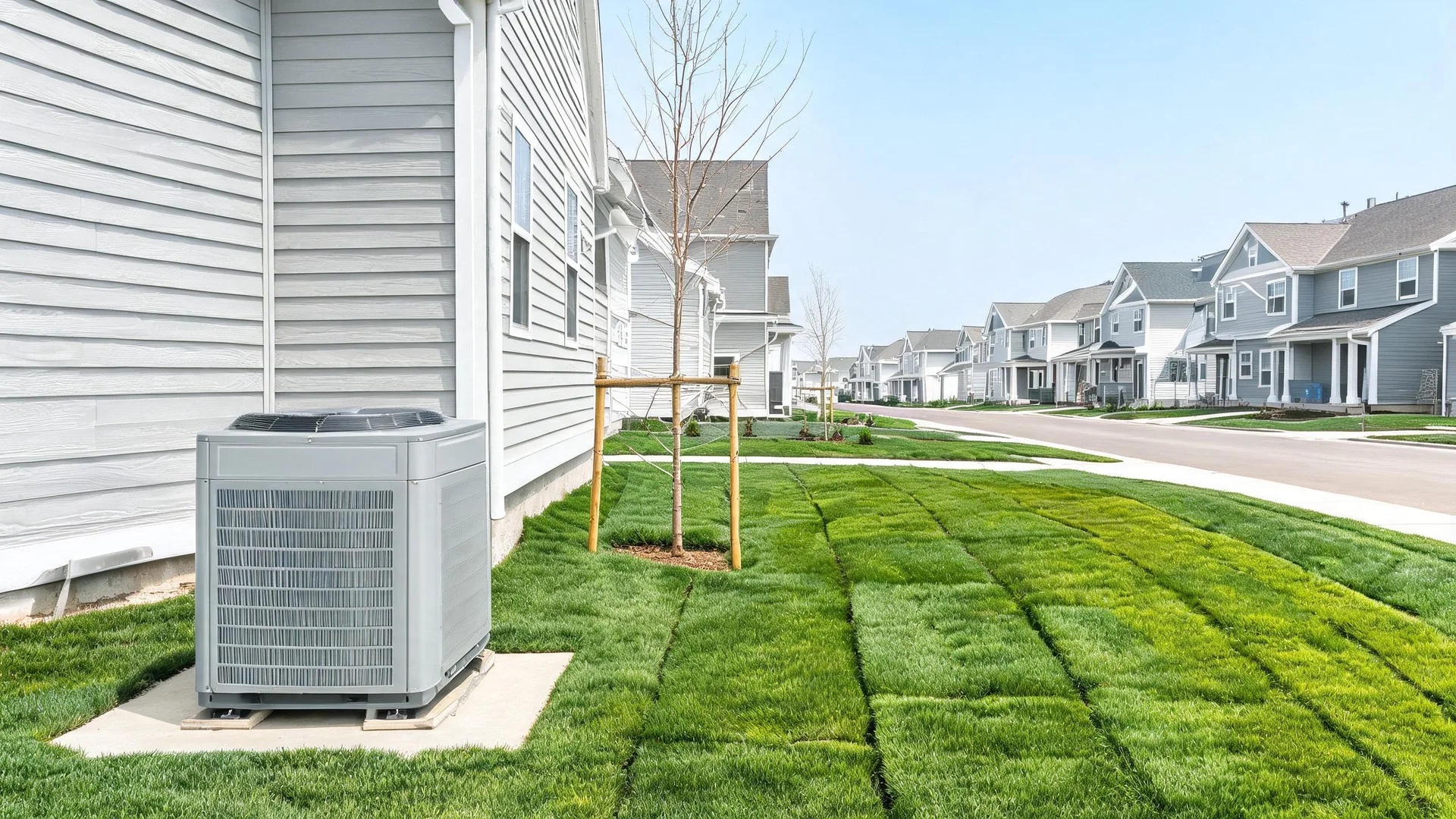
What's already in place changes what has to be built

A straight swap where the old ductwork, electrical and drain line all fit the new equipment is the cheapest version of this job. Everything beyond that adds work: a line set that has to be replaced instead of reused, a disconnect or breaker that needs upgrading to match the new unit's draw, a condensate line that has to be run somewhere it wasn't before. None of that is optional once the old parts don't match what the new system needs.

Overhead view of an air conditioning condenser unit on a concrete pad next to a house with asphalt shingle roofing and vinyl siding.

Going above the federal minimum saves little here, about $20 a year.

  • A higher-efficiency unit$290 a year
  • A new unit at the federal minimum, 14.3 SEER2$310 a year

Estimates for a typical Gaston County home, from EIA household energy data, North Carolina fuel prices and NOAA climate normals. Your home will differ.

Install day starts with the old system down and the new equipment staged, so most of the work is mechanical before it's electrical. The line set gets connected between the outdoor unit and the indoor coil, then the whole system gets pressure tested to make sure there are no leaks before any refrigerant goes in. A vacuum pump pulls moisture and air out of the lines, because any moisture left in there turns into acid once the system runs. Only after that does the system get charged with refrigerant, weighed in to match what the unit calls for. Electrical comes next: a disconnect box near the outdoor unit, a dedicated circuit back to the panel, low voltage wiring to the thermostat. The last hour is startup and checks, confirming airflow, checking the temperature split between the air going in and the air coming out, and making sure the condensate drain actually drains before anyone calls it done.