




Two illuminated white colonial-style houses with wrap-around porches, flanked by oak trees draped in Spanish moss, photographed at night.

AC Installation in Fayetteville, NC

Tell us about the job

Takes about a minute. No obligation.

New system or replacementCentral ACCumberland County, NC
Step 1 of 2

What ZIP code is the job in?

A new system doesn't just get set next to the old one. The old condenser, coil and air handler come out, along with the old refrigerant lines and the old thermostat wiring if it isn't reusable. Refrigerant left in the old lines gets recovered, not vented, since it's against the law to release it into the air. Whoever installs your new system should also check the ductwork that's staying behind. A duct system sized for an old unit doesn't always match what a new one needs to breathe right, and that mismatch shows up later as weak airflow or a system that runs longer than it should. If the old pad or mounting isn't sound, that gets addressed too, since the new unit depends on a level, stable base to run quietly and last.

5 months
May through September, your air conditioner is on duty
89°F
the average summer afternoon it cools against
18 hail events
in ten years, and hail bends the fins on outdoor coils
13.4 SEER2
the federal minimum any new unit must meet
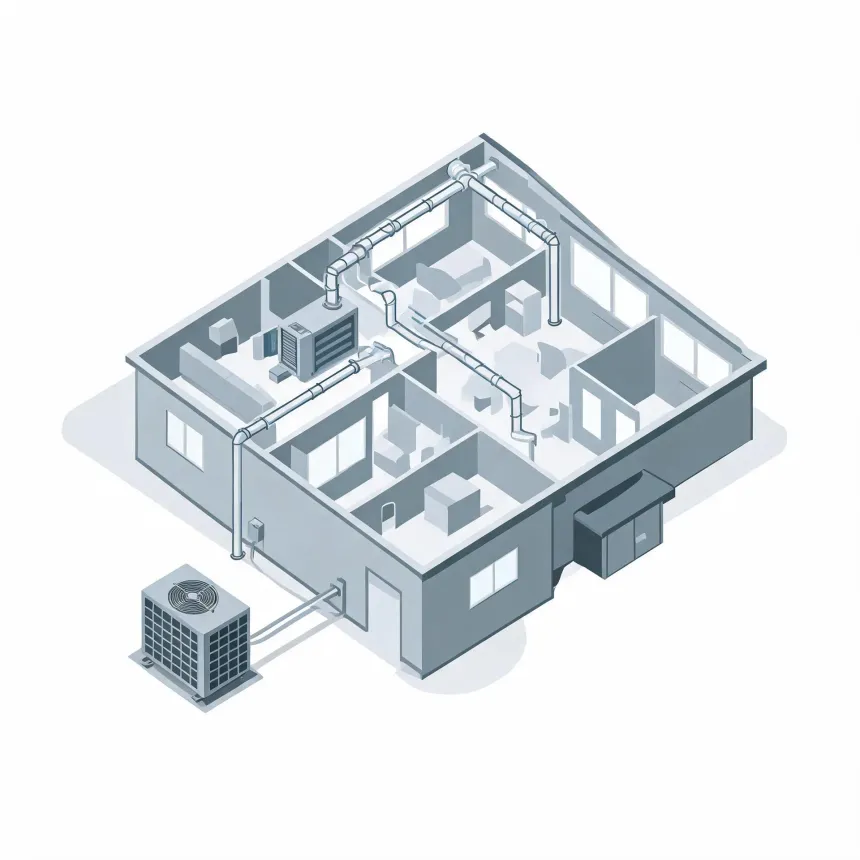
Isometric grayscale illustration of a cutaway house showing interior rooms, ceiling ductwork connected to an indoor air handler, and an outdoor condenser unit linked by lines along the exterior wall.
Your air conditioner works hardest from June through September.

NOAA nClimDiv, 1991–2020 normals

Electricity in North Carolina ran 14.13 cents per kilowatthour in 2024.

A new AC that holds its SEER2 rating keeps more of each bill in your pocket, summer after summer.

Most homes here run on electricity, and a new AC install usually keeps it that way

76.7% of homes heat with electricity
Cooling runs May through September
Summer afternoons average 89°F

When you're comparing bids, ask what SEER2 rating each proposed system actually carries, not just the price. A unit that loses efficiency after a year or two of poor installation costs you the same 14.13 cents per kilowatthour but needs more of them to cool the same house. Correct refrigerant charge and proper airflow across the coil are what let a system hold its rated efficiency once it's running. That's as much about how the installer sets the system up as which brand is on the nameplate.

Install before May, not during the first hot week

Cooling here runs May through September. Get a new system in before May and it's set up and tested on a normal schedule, not during the first hot week when every other AC in the county is also getting called in.

Find a contractor
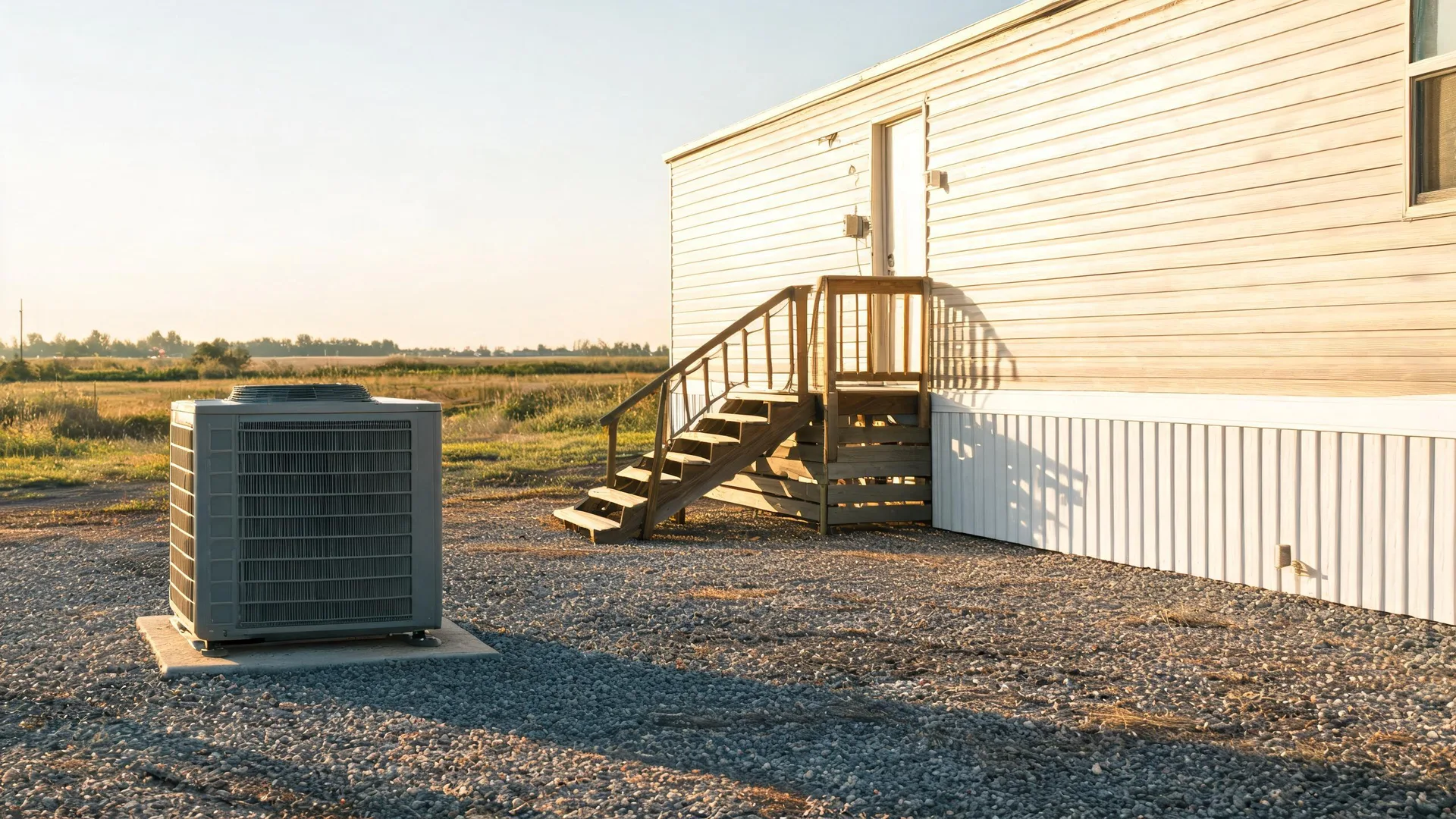
A gray metal air conditioning condenser unit mounted on a concrete pad in a flat grassy field under a partly cloudy sky.

Five months of 89 degree afternoons, every year

Five months of cooling here means five months of afternoons near 89 degrees, and a new system runs through every one of them. That's a long stretch of steady work compared to places where AC only kicks on a few weeks at a time. A new system sized right for your house will handle it without strain. One that's oversized or undersized won't, and the strain shows up as parts wearing out sooner than they should.

Size drives most of the cost

The size of the unit a house needs, in tonnage, is the biggest factor in what an installation runs. That size comes from a load calculation, not from matching whatever was there before. A house with more square footage, more windows facing the sun, or a tricky layout needs a bigger system, and a bigger system costs more to install. Skipping the calculation and guessing at size is how homes end up with equipment that costs more than it should, either because it's bigger than needed or because the wrong size causes problems later.

What's hidden in the walls matters too

Ductwork is the other part of the job, and it's the part a homeowner can't see when comparing quotes. If the ducts are undersized, leaky, or routed poorly for the new system, bringing them up to spec adds to the cost. A new condenser and air handler can be straightforward to swap in, but if the line set needs to be rerouted, or the electrical panel needs an upgrade to handle the new unit's draw, that work adds real cost. The quote that accounts for all of this up front is more trustworthy than the one that doesn't mention it at all.

An outdoor air conditioning condenser unit installed beside the exterior wall of a blue vinyl-sided house at sunset.

A higher-efficiency unit would save about $30 a year to run in Cumberland County compared with a new unit at the federal minimum.

  • A higher-efficiency unit$350 a year
  • A new unit at the federal minimum, 14.3 SEER2$380 a year

Estimates for a typical Cumberland County home, from EIA household energy data, North Carolina fuel prices and NOAA climate normals. Your home will differ.

Installation takes a full day for most homes, sometimes longer if the ductwork needs work too. The crew starts by pulling the old equipment and running new electrical and refrigerant lines where needed before the new condenser, coil and air handler go in. Once everything's connected, the system gets charged with refrigerant to the exact weight the manufacturer specifies, not just until it feels cold. Airflow gets checked and the thermostat gets set up and tested through a full cooling cycle before the crew leaves. A system that's rushed through this last step is the one that comes back with a service call in the first month.