





A nighttime street scene featuring a row of lit white colonial-style houses with wrap-around porches, flanked by oak trees draped in Spanish moss.

AC Installation in Durham, NC

Tell us about the job

Takes about a minute. No obligation.

New system or replacementCentral ACDurham County, NC
Step 1 of 2

What ZIP code is the job in?

Durham County logged 143 severe weather events between 2015 and 2024. Damaging wind caused 104 of them, with 22 hail events and 4 tornadoes touching down in that same stretch. Hail dents coils and bends fins on an outdoor unit sitting out in the open. Wind-driven debris does the same, and a tornado or tropical storm can do worse. Statewide, a quarter of households went at least 24 hours without power in 2024, and when the power goes, so does the air conditioner, no matter how new it is.

5 months
May through September, your air conditioner is on duty
88°F
the average summer afternoon it cools against
22 hail events
in ten years, and hail bends the fins on outdoor coils
13.4 SEER2
the federal minimum any new unit must meet
Isometric line illustration of a cutaway house showing interior rooms with furniture, ceiling ductwork, an indoor air handler, and an outdoor condenser unit connected by lines.
Your air conditioner works hardest from June through August.

NOAA nClimDiv, 1991–2020 normals

May starts cooling season in Durham County, so April is the month to put in a new system.

An install finished before May means the first hot stretch isn't also the first test of a brand new unit.

Most homes here run on electricity, and a new AC should match that

59% of homes heat with electricity
Cooling runs May through September
Summer afternoons average 88°F

Cooling runs five months here, May through September, and the afternoon high averages 88°F across June, July and August. That's long enough and hot enough that a new system is working close to its limit most days it runs. The dew point averages 66°F those same months, higher than most of the country sees, and heavy air like that makes a unit run longer to pull the same moisture out of a house. A system sized for a milder place won't keep up here, and one sized right still logs more hours per year than it would almost anywhere else. That adds up to more wear over the life of the unit, not less.

Install it ready for the weather that comes through here

Pick where the new unit goes with wind and hail in mind, and ask what happens to heat and hot water if the power drops. That's part of installing a system here, not an extra step after.

Find a contractor
A gray metal air conditioning condenser unit mounted on a concrete pad in a flat grassy field under a partly cloudy sky.

This unit will log more hours than most, every year it runs

Five months of running time a year wears on a system faster than a couple months ever would. A new unit sized right for this county will still rack up more hours than one doing the same job somewhere milder, and more hours means the contacts, the capacitor and the bearings in the outdoor fan motor all get there sooner. None of that is a reason to size down to save money. It's a reason to have the install checked, not guessed at, and to ask what warranty covers on the parts that see the most hours.

Ask what the outdoor unit is rated to survive

The outdoor unit sits outside year round, so ask what the cabinet and coil are built to take. Some manufacturers test and rate units for hail impact and high wind, others don't. A technician can tell you whether a given model has that rating or whether it's just a standard cabinet. If a mounting pad or bracket is part of the install, ask how it's anchored. A unit that can shift or tip in wind is a unit that can tear its own refrigerant lines loose.

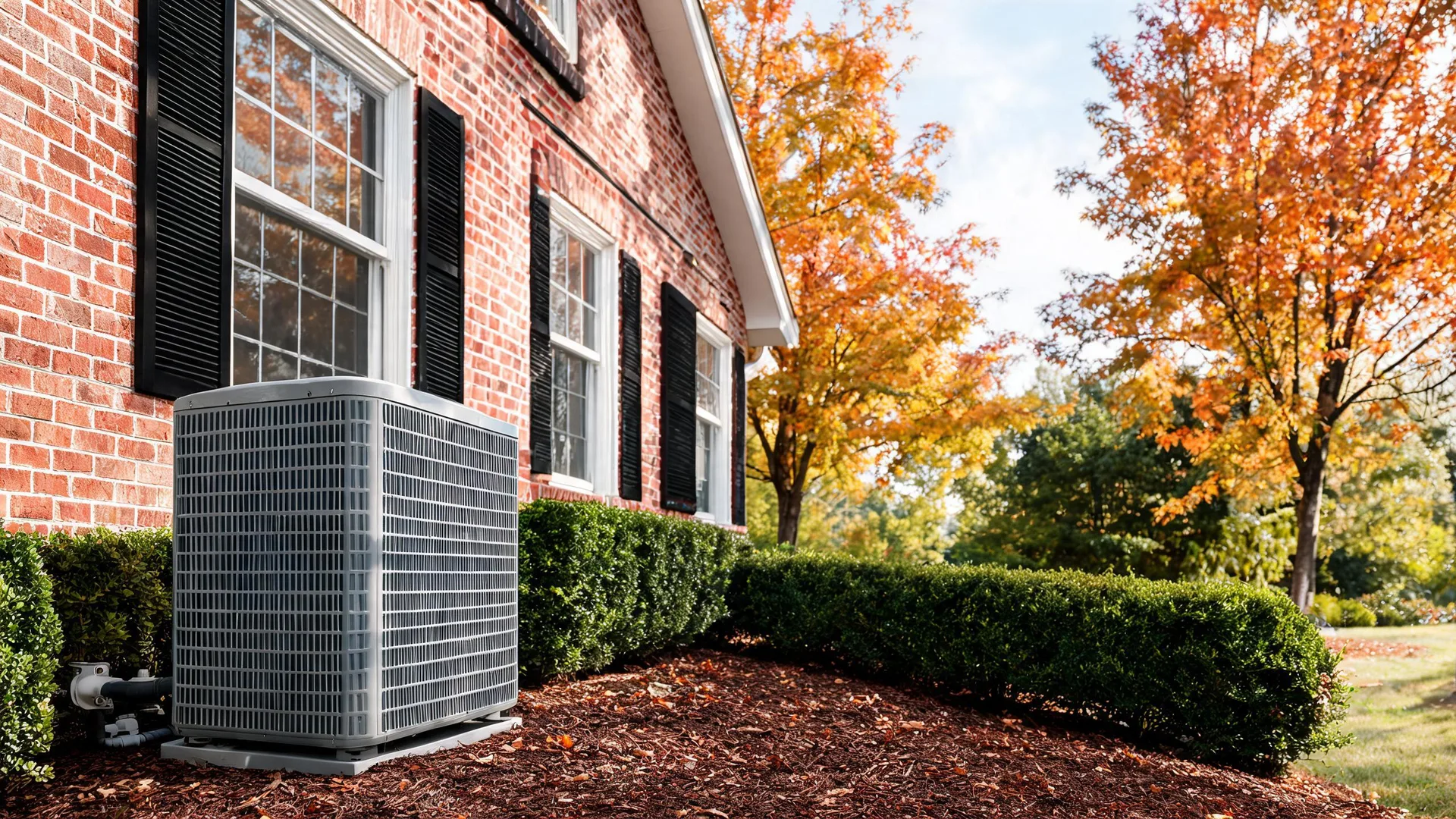
Ask what happens the moment power cuts out and comes back

Every air conditioner stops the instant power drops, no matter what it's rated for. What matters is what the system does when power returns. Some control boards have a built in delay that protects the compressor from a restart surge, some don't, and a unit without one can short cycle the compressor if the grid flickers a few times in a row. Ask whether the compressor has that protection, and ask what backup options exist for the thermostat and any zone controls if you want them to hold settings through an outage.

An outdoor central air conditioning unit mounted on a concrete pad beside a blue-sided house at sunset.

Going above the federal minimum saves little here, about $20 a year.

  • A higher-efficiency unit$280 a year
  • A new unit at the federal minimum, 14.3 SEER2$300 a year

Estimates for a typical Durham County home, from EIA household energy data, North Carolina fuel prices and NOAA climate normals. Your home will differ.

Installation starts with the old equipment coming out, not the new one going in. The line set gets disconnected, refrigerant recovered into a tank rather than vented, and the old outdoor unit and indoor coil come off their pad and out of the closet or attic. From there a tech checks the ductwork that's staying in place, because a new system pushes air differently than the one it's replacing and a duct that worked fine before might whistle or starve a room now. The new outdoor unit goes on its pad, the indoor coil goes in above or beside the furnace or air handler, and the line set connecting them gets run, flared, and checked for leaks before anything gets charged with refrigerant. Once it's charged, the system runs through a startup check: airflow across the coil, temperature split between the air going in and the air coming out, and the controls cycling the way they're supposed to. A thermostat gets set up last, after the tech knows the system responds to it correctly.