







An outdoor air conditioning condenser unit on a concrete pad next to the gray vinyl siding of a residential home.

AC Installation in Clayton, NC

Tell us about the job

Takes about a minute. No obligation.

New system or replacementCentral ACJohnston County, NC
Step 1 of 2

What ZIP code is the job in?

Johnston County logged 202 severe weather events between 2015 and 2024. Most of that was damaging wind, 164 times in those years, the kind that throws branches and debris into an outdoor condenser. Fourteen hail events in the same stretch, three tornadoes, seven tropical storms or hurricanes working up from the coast. Statewide, a quarter of households lost power for a day or more in 2024. A new AC install here should account for what sits outside and what happens when the grid goes down, not just what cools the house on a calm afternoon.

5 months
May through September, your air conditioner is on duty
89°F
the average summer afternoon it cools against
14 hail events
in ten years, and hail bends the fins on outdoor coils
13.4 SEER2
the federal minimum any new unit must meet
Isometric cutaway illustration of a small home interior with furniture and ducting, showing an indoor air handler connected by lines to an outdoor condenser unit on a pad.
Your air conditioner works hardest from June through August.

NOAA nClimDiv, 1991–2020 normals

This AC will run from May through September, with afternoon highs averaging 89°F in June, July and August.

A system sized for that kind of summer has to run long and hard every single year, so this is not the place to size it close.

At 14.67 cents a kilowatt-hour, every inefficient hour on this system shows up on the bill

Power here costs 14.67 cents per kilowatt-hour
Climate zone 3A
Cooling runs May through September
Electric heat means your home is already built for itElectricity heats 77.8% of homes in Johnston County, more than every other fuel combined

April is the month to get this done. Cooling starts in May here and runs through September, so a system put in before then goes into its first real test on your schedule, not during a stretch where it's already working hard. Waiting until the old one fails after the season starts means picking from whatever a contractor can get installed fast, not necessarily the right size or model for this house. Install in April and there's time to size it properly, schedule the work, and have it running before cooling season begins. Five months is a long stretch to ask a rushed install to carry.

Plan for what's outside the house, not just what's inside it

Where the outdoor unit goes and how it's mounted matters as much here as what's inside the house. Ask about a pad or bracket that keeps it clear of runoff and falling limbs, and where it sits in relation to fences or trees that could come down on it. If heat or hot water matters to you during an outage, ask what backup options exist for this system before it's installed, not after the power's already out.

Find a contractor
A man in a dark gray t-shirt and brown work pants, seen from behind, carries a worn leather tool bag up wooden porch steps toward an orange front door.
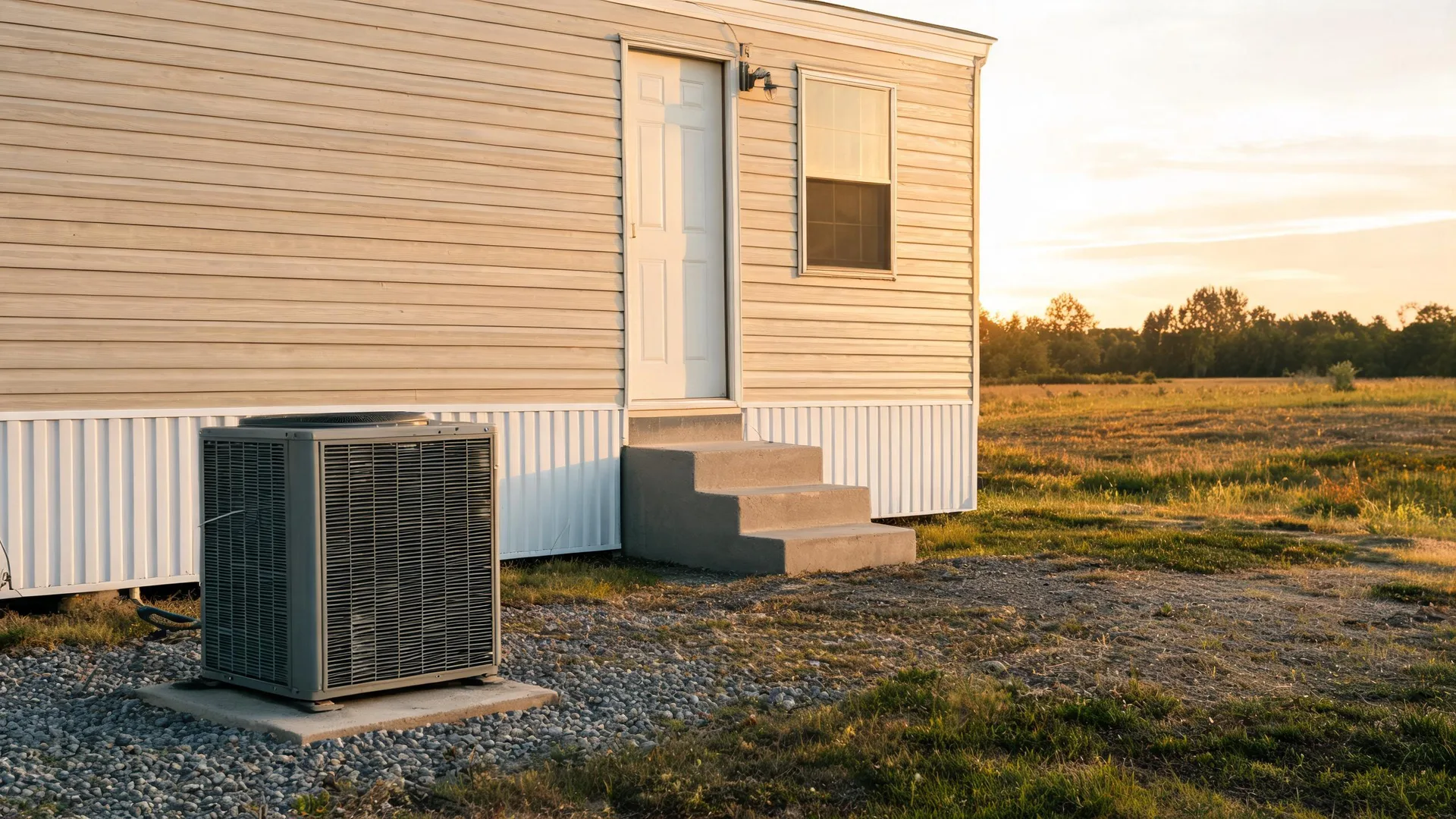
A gray cylindrical air conditioning condenser unit mounted on a concrete pad next to a light-colored vinyl-sided house exterior.

Five months of running, outside in the weather the whole time

Five months of running also means five months of standing outside taking whatever the weather sends. Johnston County saw damaging wind 164 times between 2015 and 2024, enough to put branches and debris into a condenser most years, not once a decade. The unit a contractor recommends and the one that holds up are not always the same, so ask what the equipment is rated to handle before it goes in, and where it will sit once it's out there every day for the next several summers.

The old unit has to come out whole

A condenser holds a charge of refrigerant that has to be recovered before the unit is disconnected, not vented into the air. The line set gets disconnected at both ends, the electrical whip is capped, and the old pad or mounting bracket usually comes out too since a new system often has different footing needs. A furnace or air handler tied to the same system gets pulled at the same time if it's being replaced, since the coil inside it is matched to the old condenser and won't pair right with a new one.

What that means for the job

Removing the old system is part of the install, not a separate call. A contractor should haul away the old condenser, coil, and any old refrigerant lines or wiring that aren't being reused, and leave the pad area ready for the new equipment. If the ductwork or line set is being kept, it gets inspected first, since a new condenser pushing against old, leaking lines will never run the way it's rated to.

Aerial view of a residential air conditioning condenser unit mounted on a concrete pad next to a house with vinyl siding and a sliding glass door.

Going above the federal minimum saves little here, about $20 a year.

  • A higher-efficiency unit$320 a year
  • A new unit at the federal minimum, 14.3 SEER2$340 a year

Estimates for a typical Johnston County home, from EIA household energy data, North Carolina fuel prices and NOAA climate normals. Your home will differ.

Installation starts with a load calculation, not a price quote. A contractor measures the square footage, checks insulation and window area, and figures out how much cooling the house actually needs, because a system that's too big cycles on and off and never pulls enough moisture out of the air, and one that's too small runs constantly and still can't keep up. Once the equipment is sized, the crew sets the new outdoor unit on its pad, runs or reuses the line set, and connects the indoor coil to the air handler or furnace. The lines get pressure tested for leaks before anything is charged with refrigerant, since a leak found after charging means doing that step twice. The system gets charged to the manufacturer's spec, not just until it blows cold, and airflow gets checked at the vents. Before the crew leaves, the thermostat gets programmed and the whole system runs through a full cycle so any problem shows up that day, while someone is still there to fix it.