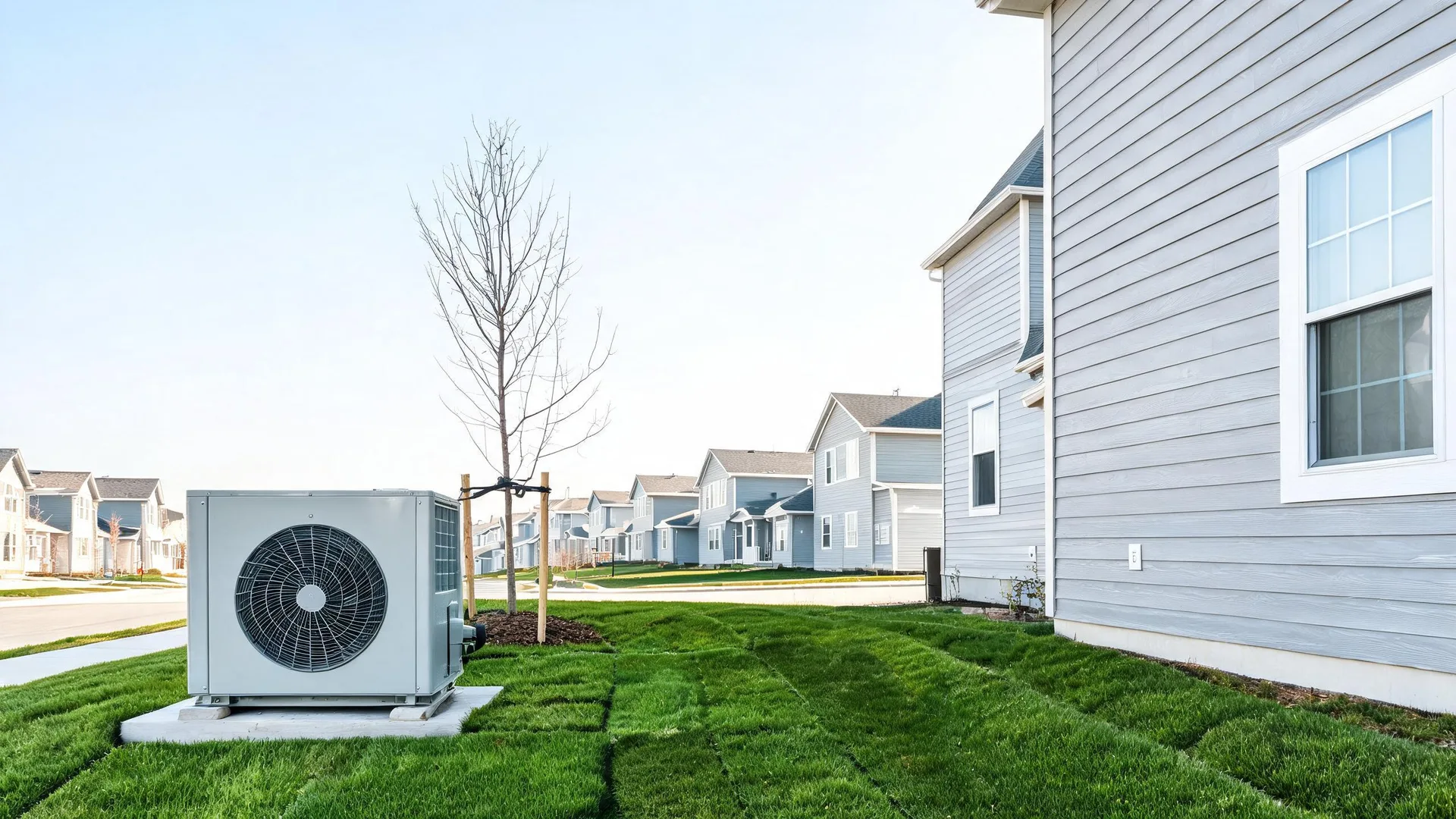
An outdoor air conditioning condenser unit on a concrete pad next to the gray vinyl siding of a residential home.

AC Installation in Charlotte, NC

Tell us about the job

Takes about a minute. No obligation.

New system or replacementCentral ACMecklenburg County, NC
Step 1 of 2

What ZIP code is the job in?

Storms come through here often

Mecklenburg County logged 178 severe weather events between 2015 and 2024. Damaging wind caused 122 of those, and hail hit 38 times. Five tornadoes touched down in that stretch, along with four tropical storms or hurricanes and six winter storms. A new outdoor unit sits outside through all of it.


The power doesn't always stay on

A quarter of North Carolina households went at least 24 hours without power in 2024. An air conditioner needs electricity to run, and so does most of the heat in homes here. A new system is worth planning around that, not just around a hot stretch of weather.

5 months
May through September, your air conditioner is on duty
88°F
the average summer afternoon it cools against
38 hail events
in ten years, and hail bends the fins on outdoor coils
13.4 SEER2
the federal minimum any new unit must meet
Isometric cutaway illustration of a small home interior with furniture and ducting, showing an indoor air handler connected by lines to an outdoor condenser unit on a pad.
Your air conditioner works hardest from June through August.

NOAA nClimDiv, 1991–2020 normals

Electricity heats 52.4% of homes in Mecklenburg County, more than gas and every other fuel combined.

Most homes here lean on the same power supply for heat and for cooling, so a new air conditioner is going in on a grid that already carries the winter heating load.

Five months of cooling start in May, so get it in before then

Cooling runs May through September
Climate zone 3A
Power here costs 13.33 cents per kilowatt-hour

Cooling runs about five months here, May through September, and the afternoon high averages 88°F through June, July and August. The dew point sits at 67°F those same months, higher than most of the country sees, so the air stays heavy even after the temperature drops in the evening. A system sized for a milder climate ends up running long hours trying to catch up on humidity as well as heat. Add in 122 damaging wind events and 38 hail events over the past decade, and the outdoor unit is taking weather hits most of the country doesn't deal with. A system built for this county has to handle the daily load and the occasional direct hit, not just one or the other.

Plan the install around the outages too

Ask where the new outdoor unit will sit and what will shield it, since wind and hail are part of the deal here. Ask what happens to heat and hot water when the power drops, since most of both run on electricity in this county. Settling that now, while the system is being chosen, is easier than sorting it out after a storm.

Find a contractor
A man in a dark gray t-shirt and brown work pants, seen from behind, carries a worn leather tool bag up wooden porch steps toward an orange front door.
A gray cylindrical air conditioning condenser unit mounted on a concrete pad next to a light-colored vinyl-sided house exterior.

Five months a year, every year

Five months of cooling a year sounds manageable until you count the hours. Running from May through September at an afternoon average of 88°F means the compressor is cycling on most days for most of a day, not just during a July heat wave. That adds up to more run hours than a system in a milder state ever sees, year after year. A unit sized or installed wrong feels that first, usually by its second or third summer. Ask what tonnage and efficiency rating the new system carries, and why, before it goes in.

The old unit has a charge in it

A working air conditioner holds refrigerant under pressure, and that has to be recovered with the right equipment before the unit is disconnected. It is not something to drain onto the ground or let off into the air. Whoever removes the old system handles the refrigerant side first, then disconnects the electrical and the line set.

The pad, the lines and the wiring usually stay

Most installs reuse the existing pad, and often the line set and electrical whip as well, if they are in good shape and sized right for the new unit. A straight swap goes faster than a first-time install because that groundwork is already done. Worn line sets or undersized wiring get replaced rather than reused, since the new system depends on both being right.

Aerial view of a residential air conditioning condenser unit mounted on a concrete pad next to a house with vinyl siding and a sliding glass door.

Going above the federal minimum saves little here, about $20 a year.

  • A higher-efficiency unit$310 a year
  • A new unit at the federal minimum, 14.3 SEER2$330 a year

Estimates for a typical Mecklenburg County home, from EIA household energy data, North Carolina fuel prices and NOAA climate normals. Your home will differ.

Installation day starts with a load calculation, not the new unit going on the pad. The installer measures the house, the windows, the insulation, and sizes the system to that, since a unit too big or too small never runs right. Once the old equipment is out, they set the new outdoor unit level and secure it, connect the line set, and pull a vacuum on the lines to clear out air and moisture before any refrigerant goes in. Electrical gets tied in and tested next. Then the system runs through a full cycle while the installer checks refrigerant charge, airflow at the vents, and the temperature split between the air going in and the air coming out. A thermostat gets programmed last, once everything else checks out.