





Aerial view of a gray outdoor air conditioning condenser unit mounted on a concrete pad next to a house with vinyl siding.

AC Installation in Asheboro, NC

Tell us about the job

Takes about a minute. No obligation.

New system or replacementCentral ACRandolph County, NC
Step 1 of 2

What ZIP code is the job in?

Randolph County saw 232 severe weather events between 2015 and 2024. Most of that was wind, 202 events, the kind that throws branches and debris into an outdoor condenser. Nineteen hail events in the same stretch, plus a tornado and two tropical storms passing through. A new system has to sit outside through all of that. And when storms knock the power out, the problem isn't just the heat. Statewide, one in four households went at least a full day without power in 2024. A new AC install is a chance to plan for that before it happens, not after.

5 months
May through September, your air conditioner is on duty
88°F
the average summer afternoon it cools against
19 hail events
in ten years, and hail bends the fins on outdoor coils
13.4 SEER2
the federal minimum any new unit must meet
Isometric line illustration of a cutaway single-story house showing interior rooms with furniture, ceiling ductwork, an indoor air handler, and an outdoor condenser unit connected by lines along the exterior wall.
Your air conditioner works hardest from June through August.

NOAA nClimDiv, 1991–2020 normals

This AC will run from May through September, with afternoon highs averaging 88°F.

Five months of that heat, plus air that sits at a 65°F dew point, means the unit you install has to be sized for how hard Asheboro actually runs it.

Install before May, and it's done before the heat shows up

Cooling runs May through September
Summer afternoons average 88°F
202 damaging wind events from 2015 to 2024

Randolph County falls under zone 3A in the 2021 energy code, a warm, humid zone with a long cooling season. That rating sets the floor for what can legally go in. Any split-system unit under 45,000 Btu/h installed here has to hit at least 14.3 SEER2, higher than the 13.4 national minimum manufacturers build to. Systems at or above that size need 13.8 SEER2. A contractor sizing your install has to work within that standard, not the national one. A federal tax credit is available on qualifying high-efficiency equipment, which is worth asking about when you're comparing units.

Pick where the new unit sits, and what backs up heat and hot water, before it's installed

Ask about a pad location that keeps the condenser clear of falling branches, and a disconnect that's easy to reach if you need to shut it down fast. If you're also weighing backup power for an outage, this install is the time to ask what it would take to keep the furnace and water heater running too.

Find a contractor
A gray metal air conditioning condenser unit mounted on a concrete pad in a flat grassy field under a partly cloudy sky.

Five months of this, every year

Pick a contractor who sizes this off the load in your house, not the square footage on the listing. An oversized unit cycles on and off fast and never runs long enough to pull the moisture out of the air. An undersized one runs the whole stretch from May to September and still can't keep up on the 88 degree afternoons. Either way you feel it in the house and you'll feel it on the bill. Ask whoever quotes the job to walk through how they got the number, not just what the number is.

The load calc decides more than the Btu number

A contractor has to look at how much sun hits the walls, how many windows face west, how the attic is insulated, and how much ductwork runs through unconditioned space. Two houses the same size can need different sized systems. That calculation also decides what size ductwork and what blower speed the system needs to move air correctly, and all of that shapes what the job takes to do right.

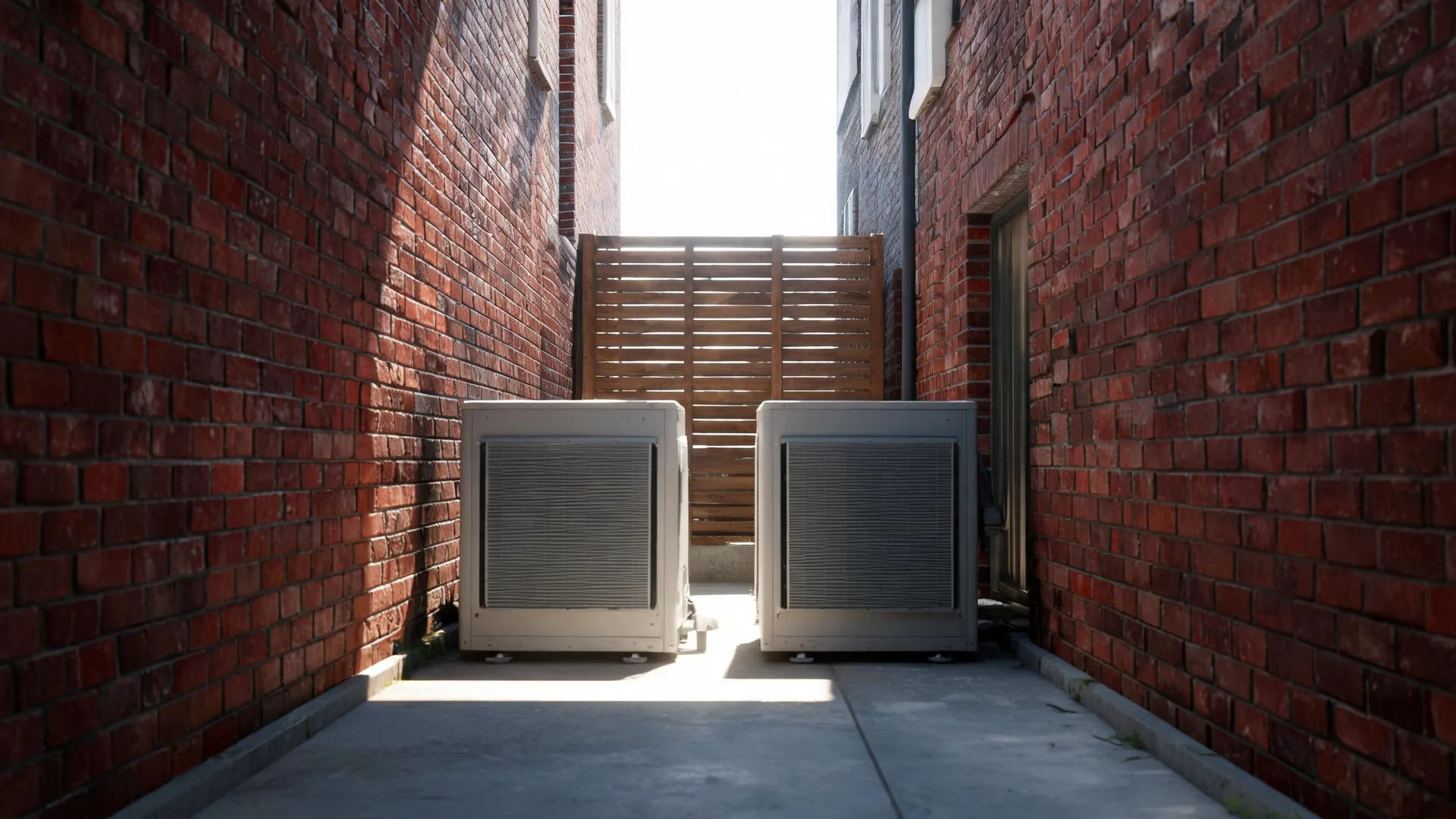
The condenser pad and the line set matter as much as the unit

Where the outdoor unit sits determines how much refrigerant line and electrical wire has to run, and whether a crew has to work around tight crawl space access or a long trip from the breaker panel. A straightforward spot to set the pad and tie into power keeps the job simple. A unit that has to go on the far side of the house, or up on a stand, adds labor regardless of what the equipment itself costs.

An outdoor central air conditioning unit mounted on a concrete pad beside a blue-sided house at sunset.

Going above the federal minimum saves little here, about $20 a year.

  • A higher-efficiency unit$290 a year
  • A new unit at the federal minimum, 14.3 SEER2$310 a year

Estimates for a typical Randolph County home, from EIA household energy data, North Carolina fuel prices and NOAA climate normals. Your home will differ.

Installation starts with pulling the old unit, if there is one, and that means recovering the refrigerant from it legally before anything gets disconnected. From there the crew sets the new condenser on its pad, runs the line set, and ties in the electrical whip and disconnect. Inside, the coil gets matched to the furnace or air handler, and the ductwork gets checked for leaks at the connections before anything is sealed up. Once everything is connected, the system gets charged with refrigerant to the exact weight the manufacturer specifies, not just until it feels cold. A good installer checks static pressure in the ducts and airflow at the vents before calling it done, because a system can be wired right and still move too little air to work the way it should. The last step is running it through a full cycle and checking the temperature split between the air going in and the air coming out, which tells you the system is actually doing its job and not just turning on.