





Two white Southern-style homes with wraparound porches lit by landscape lighting at night, flanked by live oak trees hung with Spanish moss.

Heat Pump Repair in Wilmington, NC

Tell us about the job

Takes about a minute. No obligation.

RepairHeat PumpNew Hanover County, NC
Step 1 of 2

What ZIP code is the job in?

New Hanover County saw 111 severe weather events between 2015 and 2024, including windstorms, hail, and tornadoes. A heat pump's outdoor unit sits outside year round, exposed to whatever comes through. Hail dents the cabinet and bends the fins on the coil. Wind-blown debris can get pulled into the fan or crack a blade. None of that always stops the unit from running, at least for a while. If a storm has come through since it last ran fine, it's worth having someone look at the outdoor unit even if you haven't noticed a problem yet.

5 months
November through March, your system heats
5 months
May through September, it cools
36°F
the average winter night it heats against
88°F
the average summer afternoon it cools against
Isometric cutaway illustration of a single-story house showing interior rooms with ductwork, an indoor air handler unit, and an outdoor condenser unit connected by lines along the exterior wall.
Your system heats November through March and cools May through September.

NOAA nClimDiv, 1991–2020 normals

Heat pumps in Wilmington switch over to heat in November.

October is the month to get a repair looked at, before the first cold morning finds the weak part.

Half the homes here date to 1993 or later, so the heat pump is likely still within its working life

Half the homes here were built by 1993
Power costs 14.13 cents a kWh statewide
Climate zone 3A

Get it checked after a storm

Storms hit hard here. If the outdoor unit took hail or debris, have it checked even if it still runs.

Find a contractor
A gray air-source heat pump mounted on a concrete pad next to a house with gray vinyl siding, surrounded by gravel and flanked by green shrubs and white hydrangea flowers.

Why a small problem doesn't stay small

A failing part rarely stays contained once the unit keeps running on top of it. A reversing valve that's starting to stick gets worked every time the system switches between heating and cooling. Each cycle wears it further toward stuck in one direction for good. A coil losing airflow makes the compressor pull harder to move the same heat, and a compressor that runs hot for long stretches wears faster than one that gets fixed early. Ice left on the outdoor coil blocks airflow over the iced section, so the unit that should idle through a defrost cycle instead keeps calling for heat it can't deliver. A slow refrigerant leak follows the same pattern. Less charge means less cooling for the compressor itself, and a compressor that runs low on refrigerant for months wears in a way a fresh leak never does. None of this means shutting the system off the moment something sounds off. It means the part that's already weak is the one wearing out faster for every hour the unit keeps running on it.

What a tech checks first

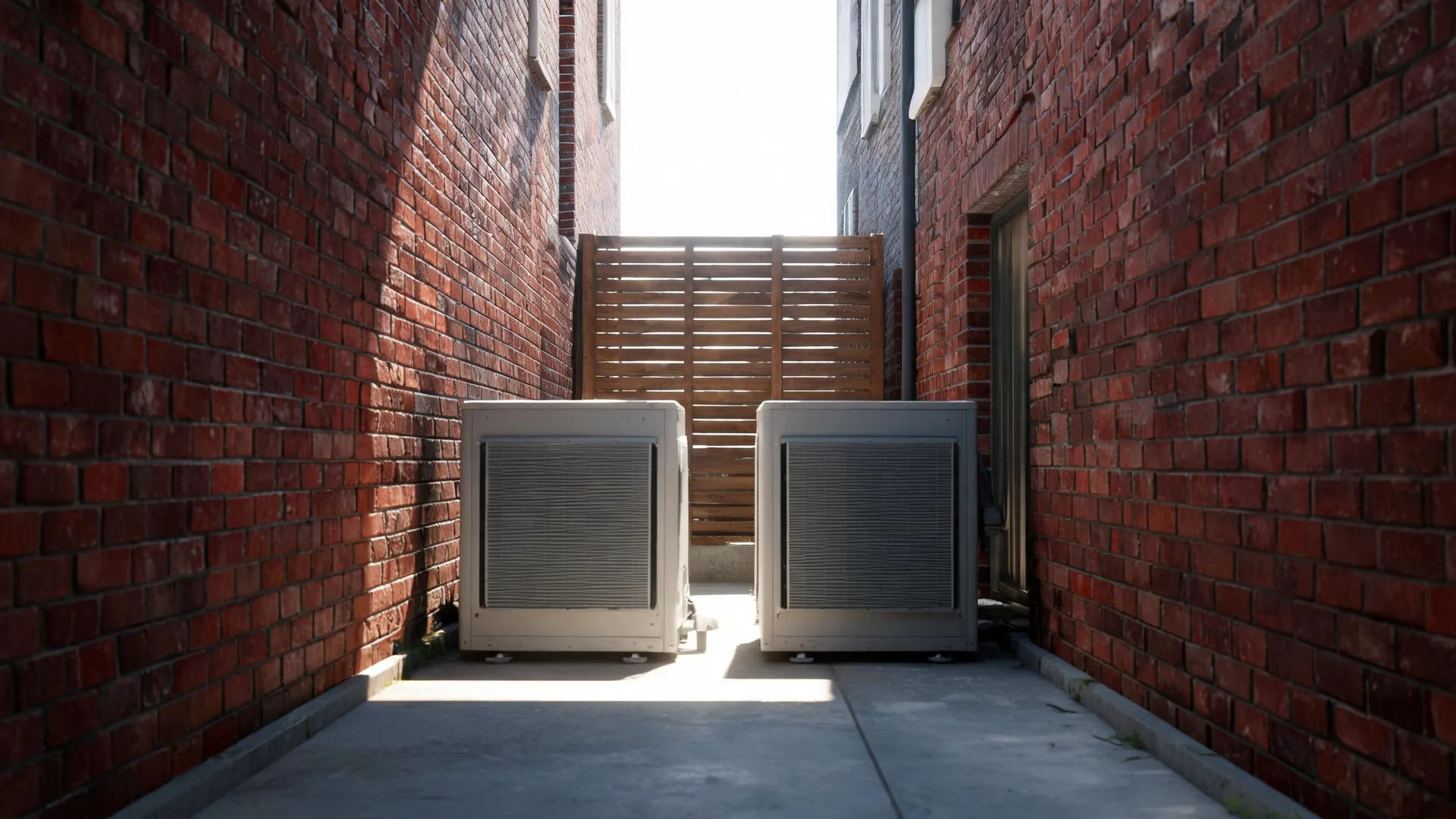
A diagnostic visit starts outside at the unit itself. The tech checks refrigerant pressures, looks at the reversing valve, and watches whether the outdoor coil is frosted or clear. They'll run the system in both heating and cooling to see if it switches over cleanly, since a heat pump that heats fine but won't cool, or the other way around, usually points straight at the reversing valve. From there they check the capacitor and contactor, since a weak capacitor can make a compressor hum without starting.
Why the diagnosis comes before the fix

A system that won't heat could be a dead defrost board, a stuck reversing valve, or a slow refrigerant leak, and each one calls for a different repair. Opening the unit and testing each part rules out the ones that are fine, so the part that actually gets replaced is the one that's actually failing. Guessing at a repair without that step means paying for a part that wasn't the problem.

A heat pump in trouble usually tells you before it quits outright. Short cycling is one of the first signs, the unit kicking on and off in quick bursts instead of running a steady stretch. Warm air that isn't actually warm, just less cold than the room, often means the system is stuck between heating and cooling instead of switching over clean. Ice on the outdoor coil that doesn't clear on its own is another one worth paying attention to, since that unit should go through a defrost cycle on its own schedule, not stay frosted over. A hum from the outdoor unit with no fan movement points at a capacitor losing its strength. A system that runs long stretches without ever seeming to catch up, blowing air the whole time but never quite warming the room, is often low on refrigerant or losing airflow somewhere. Any of these is worth a call before it turns into no heat at all.

Age by itself doesn't mean a heat pump needs replacing, and a repair bill doesn't mean it does either. What matters more is which part failed and what else is starting to go with it. A reversing valve or defrost board is a contained repair, and a system that's otherwise kept up can run well for years after. A compressor is a different question, since it's the most expensive part in the unit, and a tech will usually weigh its cost against replacing the whole system rather than just that part. Frequent repairs in a short span matter too, since a unit that needs a different fix every season is usually telling you the whole system is wearing down at once, not failing in one isolated spot. A tech who's run the diagnostic can tell you which kind of problem you've got, and that's worth knowing before deciding anything.