







Aerial view of a square outdoor air conditioning condenser unit on a concrete pad beside a house wall with a sliding glass door.

AC Maintenance in Wilson, NC

Tell us about the job

Takes about a minute. No obligation.

Tune-up, service, or cleaningCentral ACWilson County, NC
Step 1 of 2

What ZIP code is the job in?

Your AC runs about five months a year here, May through September. That doesn't sound like much until you look at what it's working against. Afternoon highs average 88°F through June, July and August, and the air sits heavy on top of that, with a dew point around 68°F those same months. Higher than most of the country deals with. The unit has to pull more moisture out of the air just to make the house feel right, on top of fighting the heat. That's steady, hard running for five straight months, and it wears on parts like the capacitor and the contactor faster than it would somewhere milder.

5 months
May through September, your air conditioner is on duty
88°F
the average summer afternoon it cools against
16 hail events
in ten years, and hail bends the fins on outdoor coils
76 wind events
in ten years, and wind drives debris into outdoor units
Isometric line illustration of a cutaway house showing interior rooms with furniture and ceiling ductwork, connected to an outdoor condenser unit with a fan beside the building.
Your air conditioner works hardest from June through August.

NOAA nClimDiv, 1991–2020 normals

Half the homes in Wilson County were built in 1986 or later.

A system installed with a newer house still has years ahead of it, and a yearly check is what keeps it running toward the end of that life instead of toward an early repair.

May is when it starts working. April is when it gets checked.

Cooling runs May through September
Summer afternoons average 88°F
6 tropical storms and hurricanes from 2015 to 2024
Storms here are hard on outdoor unitsWilson County had 109 severe weather events between 2015 and 2024, 76 of them damaging wind.

A yearly check on a newer system is a quick job. The technician is looking for small drift before it becomes a failure: refrigerant charge a little low, a capacitor reading weak, a condenser coil coated enough to make the compressor work harder than it should. None of that shows up on the power bill right away, and none of it announces itself the way a dead compressor does. Catching it early costs an afternoon. Missing it costs the parts that were still good.

Get it checked before May asks anything of it

May through September is five straight months of the heat and moisture this unit has to work against. A check now catches the capacitor or contactor before the season puts the load on it.

Find a contractor
A man in a dark shirt and brown pants, seen from behind, carries a waxed canvas tote bag up wooden porch steps toward an orange front door, with a potted shrub beside the entry.
An outdoor air conditioning condenser unit mounted on a concrete pad surrounded by gravel, photographed against a partly cloudy blue sky.

Skipped checks don't show up until the part is gone

Skip the yearly check and the unit doesn't fail right away. It fails slower, in ways you can't see from the thermostat. A capacitor that's starting to weaken still starts the compressor, just with more strain each time, until one afternoon it doesn't. A dirty condenser coil still rejects heat, just not as much, so the compressor runs longer to do the same job and the extra heat it builds up shortens its own life. Low refrigerant still cools the house, a little worse each week, while the compressor works harder to make up for what isn't there. None of this trips a breaker or throws an error. It just quietly moves the wear forward, so the part that should have lasted years gives out in one summer instead.

The filter is the first line of defense

A dirty filter chokes airflow across the evaporator coil. Starve that coil of air and it can get cold enough to ice over, and once ice builds up on it the system stops cooling the house at all. The blower also works harder to push air through a clogged filter, which is wear on a motor that's supposed to last for years.

The coils and drain need a clear path too

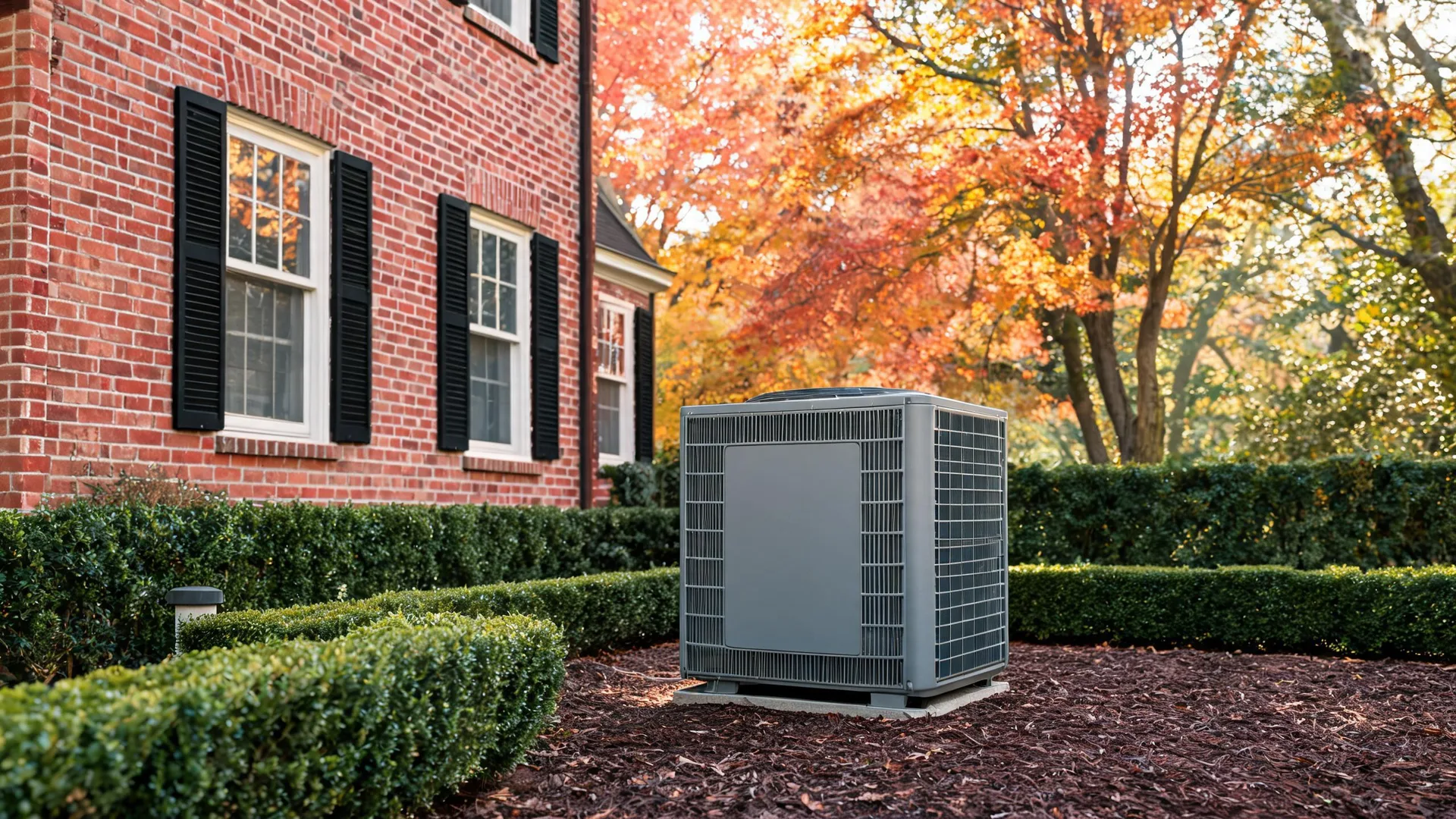
The condenser coil outside has to shed heat, and if it's coated in dirt or grass clippings the compressor works harder and runs hotter to do the same job. Inside, the drain line carries off the water the system pulls from the air, and when that line clogs, water backs up and finds somewhere to go, usually a ceiling or a wall.

Overhead view of a gray residential air conditioning condenser unit mounted on a concrete pad beside a house with asphalt shingle roofing.

Book your AC tune-up in April, before homes here start needing cooling in May.

  1. Jan
  2. Feb
  3. Mar
  4. Apr
  5. May
  6. Jun
  7. Jul
  8. Aug
  9. Sep
  10. Oct
  11. Nov
  12. Dec

A tune-up checks the refrigerant charge, cleans the coils, tests the capacitor and tightens the electrical connections.

After a storm, the part of the system that took the hit is sitting outside. A tune-up is a reasonable time to have the outdoor unit looked over for bent fins, a cracked fan blade, or debris packed down inside the cabinet. Hail dents the housing without you knowing what it did to the coil behind it. Wind drives leaves and twigs into the unit where they sit against the coil and block airflow. None of that announces itself until the compressor is working harder than it should. Worth asking the technician to check while they're already there.