







An outdoor air conditioning condenser unit positioned on a concrete pad next to a blue-sided house, surrounded by green shrubs and flowering hydrangeas at sunset.

AC Maintenance in Thomasville, NC

Tell us about the job

Takes about a minute. No obligation.

Tune-up, service, or cleaningCentral ACDavidson County, NC
Step 1 of 2

What ZIP code is the job in?

Davidson County logged 169 severe weather events between 2015 and 2024. Most of that was wind, 129 events, with 26 hail events mixed in. An outdoor AC unit sits outside through all of it, taking hail dents and flying debris with nowhere to hide. Hail can bend the fins on the coil, and wind throws branches and grit into the cabinet where the fan and wiring are. A quarter of North Carolina households lost power for a full day or more in 2024, which means the unit has to come back on and run right after sitting dead in the heat. A tune-up before storm season catches bent fins, loose wiring and a cabinet full of debris before any of it keeps the system from starting back up.

5 months
May through September, your air conditioner is on duty
87°F
the average summer afternoon it cools against
26 hail events
in ten years, and hail bends the fins on outdoor coils
129 wind events
in ten years, and wind drives debris into outdoor units
Isometric cutaway illustration of a single-story house showing interior rooms, ductwork and an air handler in the attic space, and an outdoor condenser unit connected by lines at the exterior wall.
Your air conditioner works hardest from June through August.

NOAA nClimDiv, 1991–2020 normals

A dirty condenser coil makes the system run longer to do the same job.

A tune-up catches the dirty coil before it strains the compressor.

Half these homes are newer, worth keeping that way

Half the homes here were built by 1985
Cooling runs May through September
Summer afternoons average 87°F
May starts the season hereCooling runs May through September in Davidson County, so April is the month to get it checked.

A yearly tune-up is what keeps a newer system newer longer. A technician checks refrigerant charge, tightens electrical connections, and clears the condenser coil before any of it turns into a bigger repair. Skip a few years of that and small issues go unnoticed, wear on the compressor, strain on parts that would have lasted another decade. If your system came with the house, a once-a-year check is the cheapest way to get the full years out of it that it was built for.

Check it before storm season

Storm season beats up outdoor units here. Have it checked for damage and debris before you need it.

Find a contractor
A man in a cap, dark shirt and tan work pants walks up concrete steps toward a red front door, carrying a canvas tool bag with tools in its side pocket.
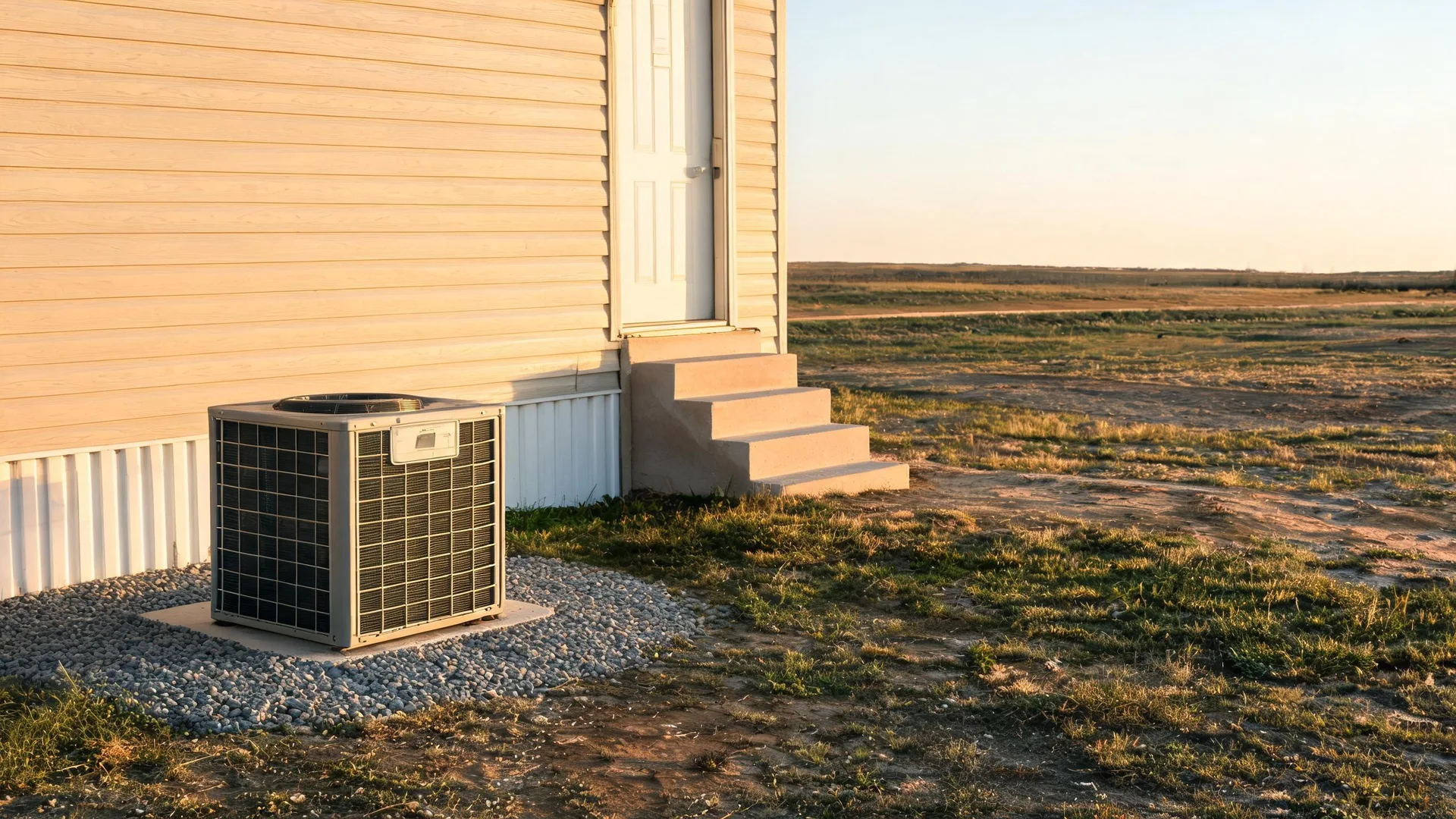
A gray residential air conditioner condenser unit mounted on a concrete pad in an open grass field.

What a tune-up catches before you'd ever notice it

A technician opens the cabinet and checks things a homeowner never sees from the yard. The capacitor gets tested under load, not just looked at, because a weak one can still look fine sitting still. Refrigerant pressure gets checked against what the system calls for, since too little means a slow leak somewhere in the line set and too much strains the compressor on every cycle. The contactor gets inspected for pitting, a sign it's been arcing a little each time the system starts. Wiring connections get tightened, because a loose connection heats up under load and that heat breaks down the insulation around it over time. The condensate drain gets checked for a clog that hasn't backed up yet but will. None of this shows up as a problem you'd notice turning the thermostat down on a hot afternoon. It shows up later, as a compressor that failed early or a system that short cycles, and by then the part that would have caught it is long past catching anything.

Checking a number is not the same as testing it

Anyone can hook up a gauge and read a pressure. A thorough tune-up checks that pressure against what the system is actually calling for at that temperature, not just whether the number looks normal. The same goes for amp draw on the compressor and fan motor. A quick visit reads the dial. A real one knows what the dial should say.

What gets skipped when the visit runs short

The condensate drain is easy to glance at and easy to actually flush. The coil fins are easy to look at through the grille and easy to actually comb straight and wash out. A rushed tune-up checks the box on both. A careful one takes the time to flush the drain with something that clears a clog before it forms, and straightens fins instead of noting they're bent.

Overhead view of an outdoor AC condenser unit on a concrete pad next to a house with a dark shingle roof.

Book your AC tune-up in April, before homes here start needing cooling in May.

  1. Jan
  2. Feb
  3. Mar
  4. Apr
  5. May
  6. Jun
  7. Jul
  8. Aug
  9. Sep
  10. Oct
  11. Nov
  12. Dec

A tune-up checks the refrigerant charge, cleans the coils, tests the capacitor and tightens the electrical connections.

A tune-up is more than a filter change. The technician pulls the panel and inspects the blower wheel, because dust and grime build up on the blades and throw them out of balance over time. The evaporator coil inside gets checked too, not just the outdoor one, since a coil caked with dust can't pull heat out of the air the way it's supposed to. Belts aren't part of the picture on most systems built in the last few decades, since the motors drive the fan directly, but the motor bearings still get checked for wear. The refrigerant lines get looked over for rub spots or insulation that's cracked and fallen away, since bare line loses efficiency and sweats, and that moisture finds its way into places it shouldn't. A thermostat calibration check rounds it out, because a thermostat reading a few degrees off makes the whole system run longer than it needs to.