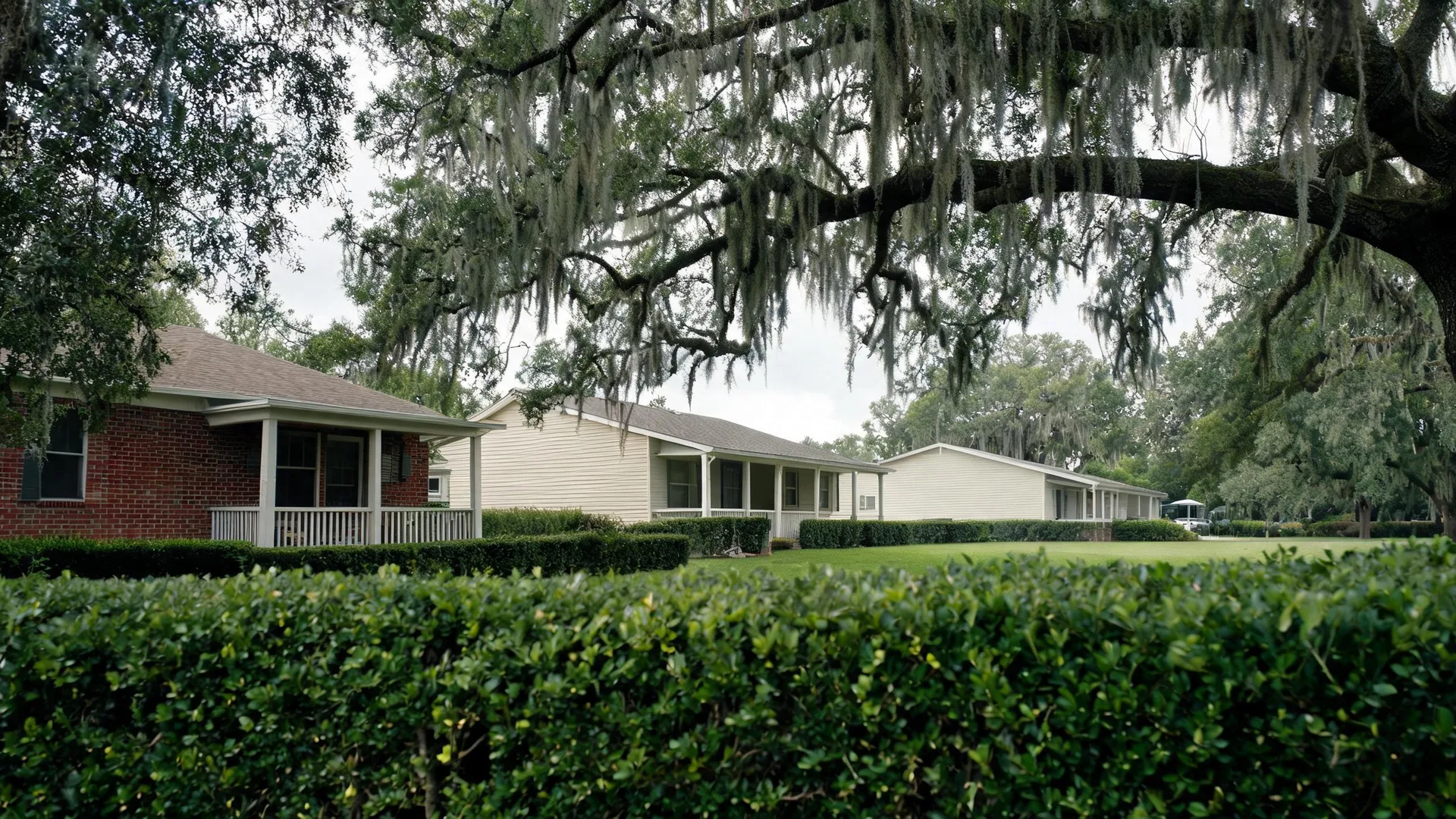
Single-story buildings with pale siding and one brick section with a covered porch stand behind a trimmed hedge and lawn, under a large moss-draped oak branch.

AC Maintenance in Rocky Mount, NC

Tell us about the job

Takes about a minute. No obligation.

Tune-up, service, or cleaningCentral ACNash County, NC
Step 1 of 2

What ZIP code is the job in?

Nash County sees real storm damage

Nash County logged 135 severe weather events between 2015 and 2024, including 90 damaging wind events, 23 hail events, and 5 tornadoes. An outdoor AC unit sits outside through all of it, with no wall to protect the coil or fan.


A storm doesn't have to hit your house to hit your AC

Wind-blown debris and hail can dent a condenser or bend its fins without leaving a mark anywhere else on the property. A unit that looks fine from the porch can still be running on a damaged coil or a fan knocked out of balance.

5 months
May through September, your air conditioner is on duty
88°F
the average summer afternoon it cools against
23 hail events
in ten years, and hail bends the fins on outdoor coils
90 wind events
in ten years, and wind drives debris into outdoor units
Isometric grayscale illustration of a cutaway house with the roof lifted, showing interior rooms, ductwork, an indoor air handler, and an outdoor condenser unit beside the building.
Your air conditioner works hardest from June through August.

NOAA nClimDiv, 1991–2020 normals

AC units in Nash County run five months straight, with afternoon highs averaging 88 degrees through June, July and August.

That kind of stretch wears down parts faster, so a unit that was fine last September can have problems by this one.

Half these homes were built by 1986, so the system inside is probably younger than the house needs it to be

Half the homes here were built by 1986
Cooling runs May through September
Summer afternoons average 88°F
A neglected AC costs more to run hereNash County homes paid 14.40 cents per kilowatt-hour in 2025, and a dirty or worn unit burns more of it to do the same job.

Cooling runs May through September here, five months straight, and May comes in at close to full load. There's no mild stretch at the start where a weak capacitor or a low charge gets a chance to show itself slowly. Have the unit checked in April, before that first stretch of heat, and a tech can find a problem while the system is sitting idle. Wait until the season's underway and you're finding out about that same problem on a day the house needs the AC working.

Get the outdoor unit inspected before storms find it

Have the outdoor unit checked before storm season gets going, while it's easy to see what's debris and what's a bent fin or a dented coil. A tech can catch that kind of damage now, before a summer's worth of running pushes it into a bigger repair.

Find a contractor
A man in a dark long-sleeve shirt and tan work pants walks up concrete steps toward an orange front door, carrying a waxed canvas tool bag in his right hand, with a potted shrub beside the gray-sided house.
A gray cylindrical air conditioning condenser unit mounted on a concrete pad next to a light-colored vinyl-sided house exterior.

Five months of running starts in May. Get ahead of it.

Once that five-month run starts in May, the unit doesn't get a break to show you a problem slowly. A tune-up before the season gets going means a tech finds a weak part while the system is off, not while it's straining through an 88 degree afternoon. Nash County also sees its share of damaging wind, 90 events between 2015 and 2024, so the same visit is a chance to check the condenser for anything bent or knocked loose before a full summer of running makes it worse.

Keep the airflow clear

Change the air filter on a regular schedule and check it between visits, because a clogged filter starves the system of airflow and makes it work harder to cool the same air. Keep the area around the outdoor unit clear too. Grass clippings, leaves and shrubs growing close to the cabinet block the airflow the condenser needs to dump heat, and a unit that can't breathe runs longer and hotter than it should.

Know what's yours to watch, and what isn't

Keep an eye on the thermostat settings, listen for sounds the system didn't used to make, and look at the outdoor unit after storms for anything bent, dented or sitting too close to the fan. That's the homeowner's part. Refrigerant levels, electrical connections and anything inside the cabinet need a trained tech, because opening that up without the right gauges and training can turn a small problem into a bigger repair.

An outdoor air conditioning condenser unit on a concrete pad next to the gray vinyl siding of a residential home.

Book your AC tune-up in April, before homes here start needing cooling in May.

  1. Jan
  2. Feb
  3. Mar
  4. Apr
  5. May
  6. Jun
  7. Jul
  8. Aug
  9. Sep
  10. Oct
  11. Nov
  12. Dec

A tune-up checks the refrigerant charge, cleans the coils, tests the capacitor and tightens the electrical connections.

A proper tune-up starts with the refrigerant charge, checked against what the system calls for, because a unit running low cools worse and strains the compressor to make up for it. The tech cleans the condenser coil, since a coil caked with dirt can't shed heat the way it needs to, and checks the fan motor and blades for wear or a wobble that'll only get worse. Electrical connections get checked too, because a loose or corroded connection builds heat and can take out a part during a long run. The capacitor gets tested under load, not just looked at, since a capacitor can measure fine sitting idle and still fail the moment the compressor asks something of it. Indoors, the blower wheel and evaporator coil get checked for dirt and airflow, and the drain line gets cleared so condensation has somewhere to go. None of this fixes something broken. It finds the part that's close to failing while the system is still running, so it gets replaced on a schedule instead of during a breakdown.