White two-story houses with wraparound porches and Spanish moss-draped oak trees photographed along a residential street at night.

AC Maintenance in Raleigh, NC

Tell us about the job

Takes about a minute. No obligation.

Tune-up, service, or cleaningCentral ACWake County, NC
Step 1 of 2

What ZIP code is the job in?

Wake County sees a lot of severe weather

458 severe weather events hit Wake County between 2015 and 2024. 308 of those were damaging wind, and 122 were hail. Add 5 tornadoes and 6 tropical storms or hurricanes in the same stretch, and an outdoor unit has had plenty of chances to take a hit.


The condenser sits outside through all of it

The outdoor unit has no cover besides its own casing. Wind-blown branches dent the fins, hail marks up the coil, and debris can work its way into the fan. A tune-up catches that kind of damage early, before it turns into a refrigerant leak or a fan that won't turn.

5 months
May through September, your air conditioner is on duty
88°F
the average summer afternoon it cools against
122 hail events
in ten years, and hail bends the fins on outdoor coils
308 wind events
in ten years, and wind drives debris into outdoor units
Isometric cutaway illustration of a house with a dark shingled roof, showing interior ductwork connected to an indoor air handler and an outdoor condenser unit beside the building.
Your air conditioner works hardest from June through August.

NOAA nClimDiv, 1991–2020 normals

A dirty coil or a low charge makes the compressor run longer to cool the same house.

Electricity in Wake County runs 14.92 cents a kilowatt-hour, so that extra runtime shows up on the bill all summer.

May is when it starts working. April is when it gets checked.

Cooling runs May through September
Summer afternoons average 88°F
308 damaging wind events from 2015 to 2024
Five months of 88 degrees wears a system downAfternoon highs average 88°F through June, July and August, with the dew point near 66°F.

Half the homes in Wake County were built in 2000 or later. If yours is one of them, the system might still be the one it came with, or close to it. A yearly check is what keeps it running that way. A technician can catch a refrigerant leak or a worn contactor while it's still a small fix, not a reason to replace the whole unit early. Skipping that check doesn't break anything right away. It just means small problems go unnoticed until they're not small anymore.

Get the outdoor unit checked before storm season finds the damage

Branches and hail do their damage before the unit ever shuts off. A tune-up gets someone eyes on the coil and the fan now, while the fix is still small, instead of after the next storm finds the weak spot.

Find a contractor
A man seen from behind in a dark jacket, tan work pants and boots climbs wooden porch steps toward an orange front door, carrying a waxed canvas tool bag, with a potted shrub beside the entry.
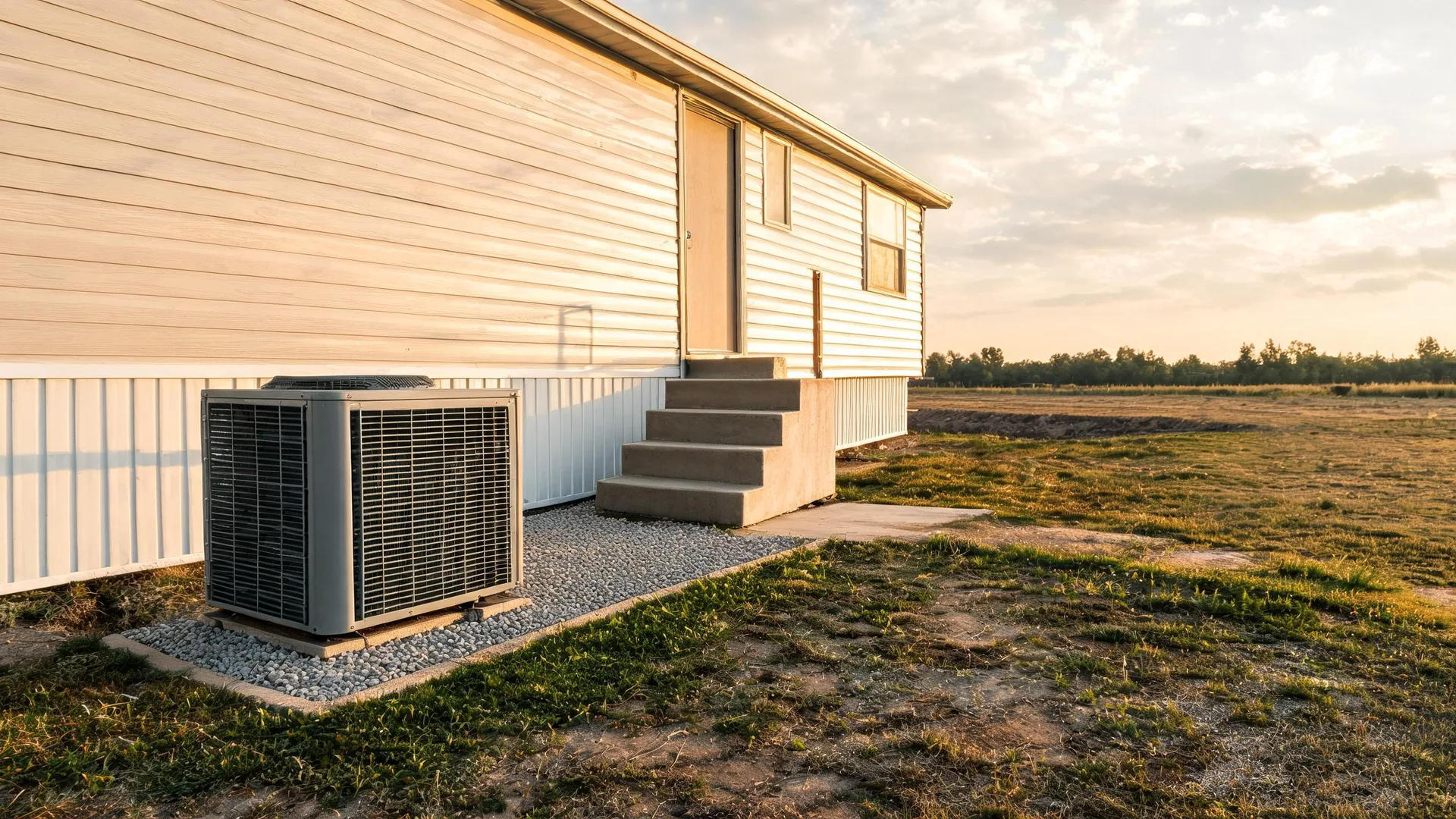
A gray residential air conditioner condenser unit mounted on a concrete pad in an open grass field.

The season runs long. The check should come before it does.

Five months of cooling, May through September, is a long stretch for one machine to run without a break. This clip shows what that looks like day into night. A system that runs that long needs the weak part found before the season finds it. A tune-up before May puts a technician in front of the coil and the fan while they're still easy to check, not after a 88 degree afternoon in July has already pushed something past its limit.

A real check means the panels come off

A thorough tune-up has the technician pull the access panel and look at the capacitor, the contactor, and the wiring, not just glance at the outside of the unit. The coil gets checked for dirt buildup and bent fins, not just a quick look through the grille. Refrigerant levels get measured against what the system is supposed to have, not eyeballed. If nobody opens the unit, nobody can tell you what's actually going on inside it.

A quick visit skips the parts that fail quietly

A capacitor that's starting to weaken still lets the unit run. A coil with a thin layer of dirt still cools the house. These problems don't announce themselves until the compressor is straining or the airflow has dropped enough to notice. A tune-up that only checks thermostat settings and refrigerant pressure misses exactly the parts that cause a breakdown mid-summer.

Aerial view of a residential air conditioning condenser unit mounted on a concrete pad next to a house with vinyl siding and a sliding glass door.

Book your AC tune-up in April, before homes here start needing cooling in May.

  1. Jan
  2. Feb
  3. Mar
  4. Apr
  5. May
  6. Jun
  7. Jul
  8. Aug
  9. Sep
  10. Oct
  11. Nov
  12. Dec

A tune-up checks the refrigerant charge, cleans the coils, tests the capacitor and tightens the electrical connections.

A real tune-up starts outside at the condenser. The technician cuts power to the unit first, then pulls the fan guard and checks the blades for a wobble or drag, since a motor working against resistance runs hotter and wears faster. The coil gets washed clean, because dirt on the fins acts like a blanket and keeps heat from leaving the refrigerant where it should. Inside, the technician checks the blower wheel for dust buildup and makes sure the motor spins freely without straining. The refrigerant lines get checked for the right pressure and for any sign of oil residue, which is usually where a slow leak shows itself first. Last comes the drain line, flushed clear so condensation has somewhere to go instead of backing up into the pan.