






A red brick house with a white-columned porch and a row of pale clapboard cottages sit behind a trimmed hedge and lawn, under oak branches draped with Spanish moss.

AC Maintenance in Pinehurst, NC

Tell us about the job

Takes about a minute. No obligation.

Tune-up, service, or cleaningCentral ACMoore County, NC
Step 1 of 2

What ZIP code is the job in?

Electricity here runs 15.23 cents per kilowatt-hour on average. A dirty coil or a low charge makes the compressor work harder to hit the same temperature, and every extra minute it runs gets billed at that rate. A system that has to struggle pulls more power doing it, not less. That difference shows up on the meter long before anything actually breaks.

5 months
May through September, your air conditioner is on duty
89°F
the average summer afternoon it cools against
15 hail events
in ten years, and hail bends the fins on outdoor coils
136 wind events
in ten years, and wind drives debris into outdoor units
Isometric cutaway illustration of a small house showing interior rooms with furniture, an indoor air handler with ducts in the attic space, and refrigerant lines running to an outdoor condenser unit on a pad.
Your air conditioner works hardest from June through August.

NOAA nClimDiv, 1991–2020 normals

Moore County saw 167 severe weather events between 2015 and 2024, including 136 with damaging wind.

Outdoor condensers take that wind and whatever it carries, so a unit due for a check should get one before storm season, not after.

Half these homes are still young enough that a checkup is what keeps the system that way

Half the homes here were built by 1994
Cooling runs May through September
Summer afternoons average 89°F
May is when it starts workingCooling in Moore County runs May through September, so April is the month to have it checked.

Cooling runs May through September here, five months of the compressor cycling on and off most days. June through August, the afternoon high averages 89°F, and the dew point sits at 68°F, heavier than most of the country ever sees. The system is not just running long hours, it is pulling moisture out of air that already holds a lot of it, so the coil has more work to do before the house feels dry and cool. Five months of that kind of load wears parts faster than a milder climate would. A weak capacitor or a coil losing its grip tends to show up in July, right when the house needs the system most.

Get it checked before it has to work harder than it should

A tune-up before summer catches the dirty coil or weak capacitor before it spends a season pulling extra power at your expense. Once the heat sets in, the system runs that way for months with no break to fix it.

Find a contractor
A gray residential air conditioning condenser unit mounted on a concrete pad outdoors, surrounded by green grass under a partly cloudy blue sky.

It runs five months straight with no break to catch a problem

Five months is a long stretch to find out mid-season that a part is failing. Once the system starts cycling in May, it runs that way through September with no real break, so whatever goes wrong keeps running wrong. A check now catches a weak capacitor or a coil going bad while the unit is sitting idle, not while the house needs it at 89 degrees. There is no slow stretch in the middle of that to get it looked at cheap or easy. It gets checked before May, or it gets fixed in July.

A gauge set has to come out

Checking refrigerant charge means hooking up gauges to the lines and reading pressures against what the system is supposed to run. Reading the charge off a sticker or skipping it and just topping off the line is a guess, not a check. A thorough visit also means pulling the capacitor and testing it under load, not just looking at it for bulging, since a capacitor can test weak long before it looks bad.

The coil and drain decide if the work holds

Dirt packed into the coil fins blocks airflow no matter how well the refrigerant is charged, so a real tune-up includes combing and rinsing the coil, not wiping down what the hand can reach. The condensate drain line gets flushed too, since algae builds up inside it and a clogged drain backs up into the pan or the house. Skip either one and the system can test fine on the gauges and still run harder than it should.

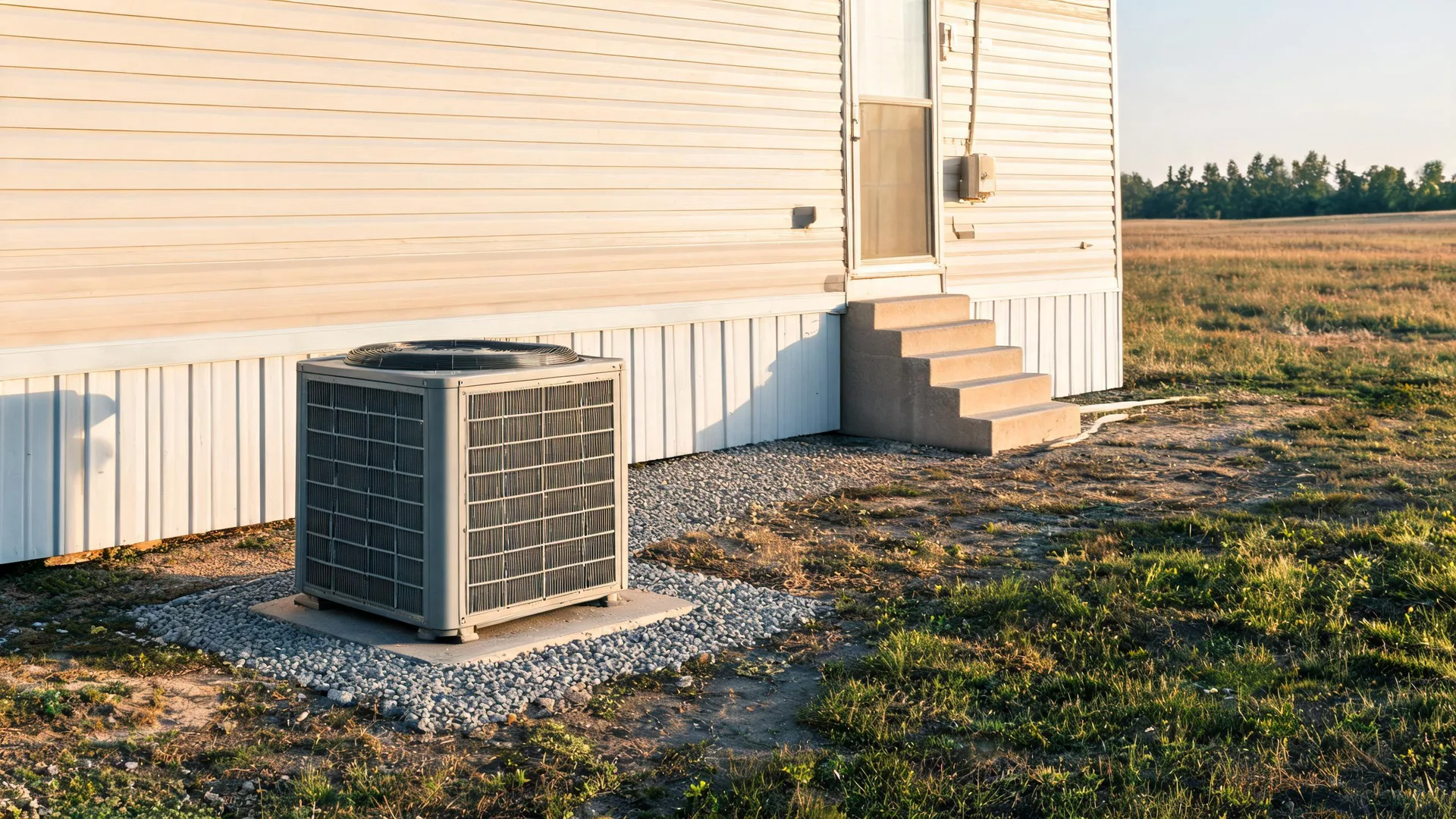
An outdoor air conditioning condenser unit positioned beside a blue-sided house at sunset.

Book your AC tune-up in April, before homes here start needing cooling in May.

  1. Jan
  2. Feb
  3. Mar
  4. Apr
  5. May
  6. Jun
  7. Jul
  8. Aug
  9. Sep
  10. Oct
  11. Nov
  12. Dec

A tune-up checks the refrigerant charge, cleans the coils, tests the capacitor and tightens the electrical connections.

A tune-up means someone actually opens the cabinet and checks the parts that fail quietly. The contactor gets tested, since its contacts pit and burn with every cycle and a worn one can stick or fail to close at all. Electrical connections get checked and tightened, because a loose connection builds heat and that heat breaks down the wire insulation around it over time. The blower wheel gets looked at too, since dirt caked onto the blades throws it out of balance and cuts the airflow moving across the coil. Refrigerant lines get checked for the oily residue that signals a slow leak, something a system can run with for a while before it shows up as poor cooling. None of this is guesswork. Each part either passes a real test or it does not, and a tune-up is only as good as which of these actually got checked.