





Aerial view of a gray outdoor air conditioning condenser unit mounted on a concrete pad next to a house with vinyl siding.

AC Maintenance in Mount Airy, NC

Tell us about the job

Takes about a minute. No obligation.

Tune-up, service, or cleaningCentral ACSurry County, NC
Step 1 of 2

What ZIP code is the job in?

A dirty filter is where most AC trouble starts. Air has to push through it, and once it's clogged with dust, the blower has to work harder to pull air across the evaporator coil. That coil needs steady airflow to stay above freezing. Starve it and ice builds up on the coil itself, which cuts cooling even further and can send liquid refrigerant back to the compressor, which that part was never built to handle. The outdoor coil has its own problem: it sits outside and collects leaves, grass clippings and dirt on the fins, so it can't shed heat the way it should. Inside, the drain line carries off the water the coil pulls out of the air, and that line grows algae over time. Once it clogs, the water backs up into the drain pan and from there into the house. None of these parts fail on their own. A clean filter protects the coil, a clean coil protects the compressor, and a clear drain keeps the water where it belongs.

4 months
June through September, your air conditioner is on duty
85°F
the average summer afternoon it cools against
27 hail events
in ten years, and hail bends the fins on outdoor coils
158 wind events
in ten years, and wind drives debris into outdoor units
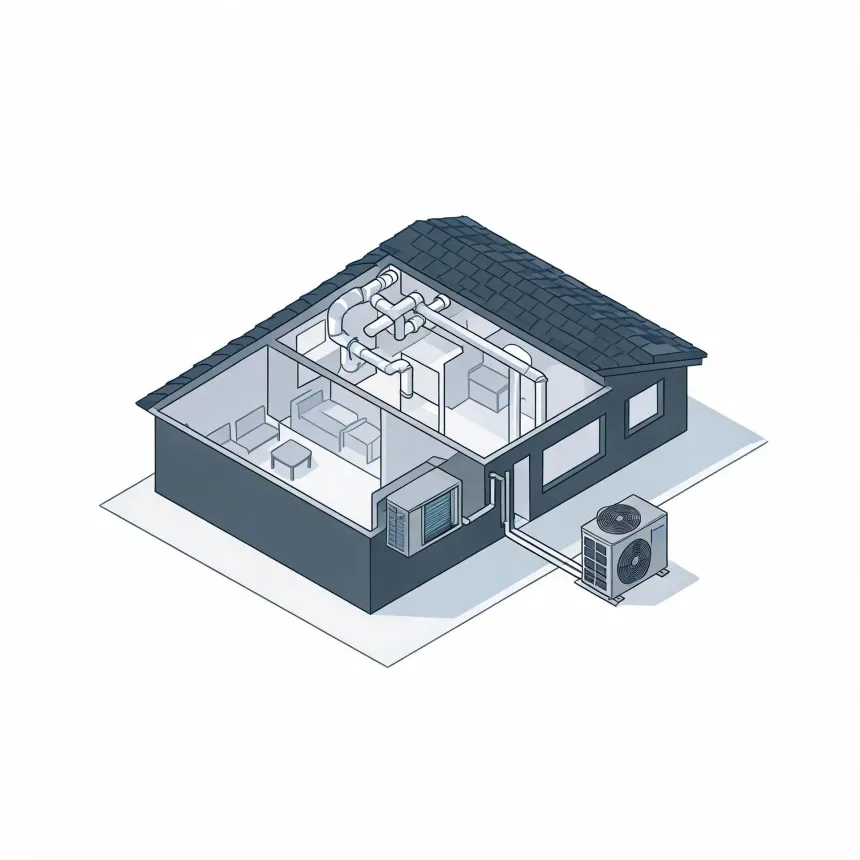
Isometric line illustration of a cutaway single-story house showing interior rooms with furniture, ceiling ductwork, an indoor air handler, and an outdoor condenser unit connected by lines along the exterior wall.
Your air conditioner works hardest from June through August.

NOAA nClimDiv, 1991–2020 normals

An air conditioner losing capacity rarely shuts off on its own, it just runs longer to do less.

A check catches the weak capacitor or the low airflow before the compressor is the part that gives out.

This county sees weather most places don't

202 severe weather events from 2015 to 2024
25% of homes statewide lost power a day or more in 2024
158 damaging wind events from 2015 to 2024
Ready before June asks anything of itCooling here runs June through September. May is the month to get it checked.

A tune-up is more than a quick look. The tech checks refrigerant charge against what the unit calls for, since too little or too much makes the compressor work harder than it should. The capacitor gets tested under load, because a weak one lets the compressor or fan motor start wrong and burn out early. Electrical connections get checked for corrosion and loose wiring, since a bad connection builds heat right at the terminal. The condenser fan motor gets checked for noise and play in the bearing. Contactors get inspected for pitting, since burned contacts can stick or fail to make contact at all. The thermostat gets tested to make sure it calls for cooling and shuts off the way it should. None of this fixes something broken. It finds the part that is wearing out quietly, before it takes the compressor down with it.

Have the outdoor unit checked before storm season leans on it

Wind and hail have hit this county hundreds of times over the past ten years, and the outdoor unit is the part sitting outside taking it. A check now catches a bent fin or a loose connection before a storm finds it. It also means the unit is ready to come back on by itself once power returns, which matters here, since a quarter of North Carolina households went at least a day without it in 2024.

Find a contractor
An outdoor residential air conditioning condenser unit mounted on a concrete pad, surrounded by gravel with a blue sky in the background.

Every hour it runs is an hour something is wearing

An air conditioner doesn't wear out evenly. It wears out at the parts that work hardest, and those are the same parts carrying the load every time the system runs. A compressor that short cycles because of a weak capacitor logs more starts than one that runs clean, and every hard start heats the windings a little more than the last one. A motor bearing that's starting to dry out doesn't fail the first week, it grinds a little more each season until it seizes. None of this shows up as a sudden break. It shows up as the system running longer to hold the same temperature, pulling more than it used to for less cooling. Left alone, that's the pattern that ends with a compressor failure instead of a capacitor replacement. A unit that gets looked at every year is a unit where that wear gets caught while it's still a cheap part, not an expensive one.

A thorough check means hands on the unit

A real tune-up means the panels come off. The tech pulls the blower wheel to check for dust buildup on the blades, inspects the evaporator coil directly instead of guessing from a gauge reading, and checks the condensate pan for standing water or rust. Refrigerant pressures get measured with gauges, not assumed from how cold the air feels at the vent. Amp draw gets checked on the compressor and both motors against what the nameplate calls for. Each of these takes time because each one means confirming a number instead of assuming the system is fine because it's running.

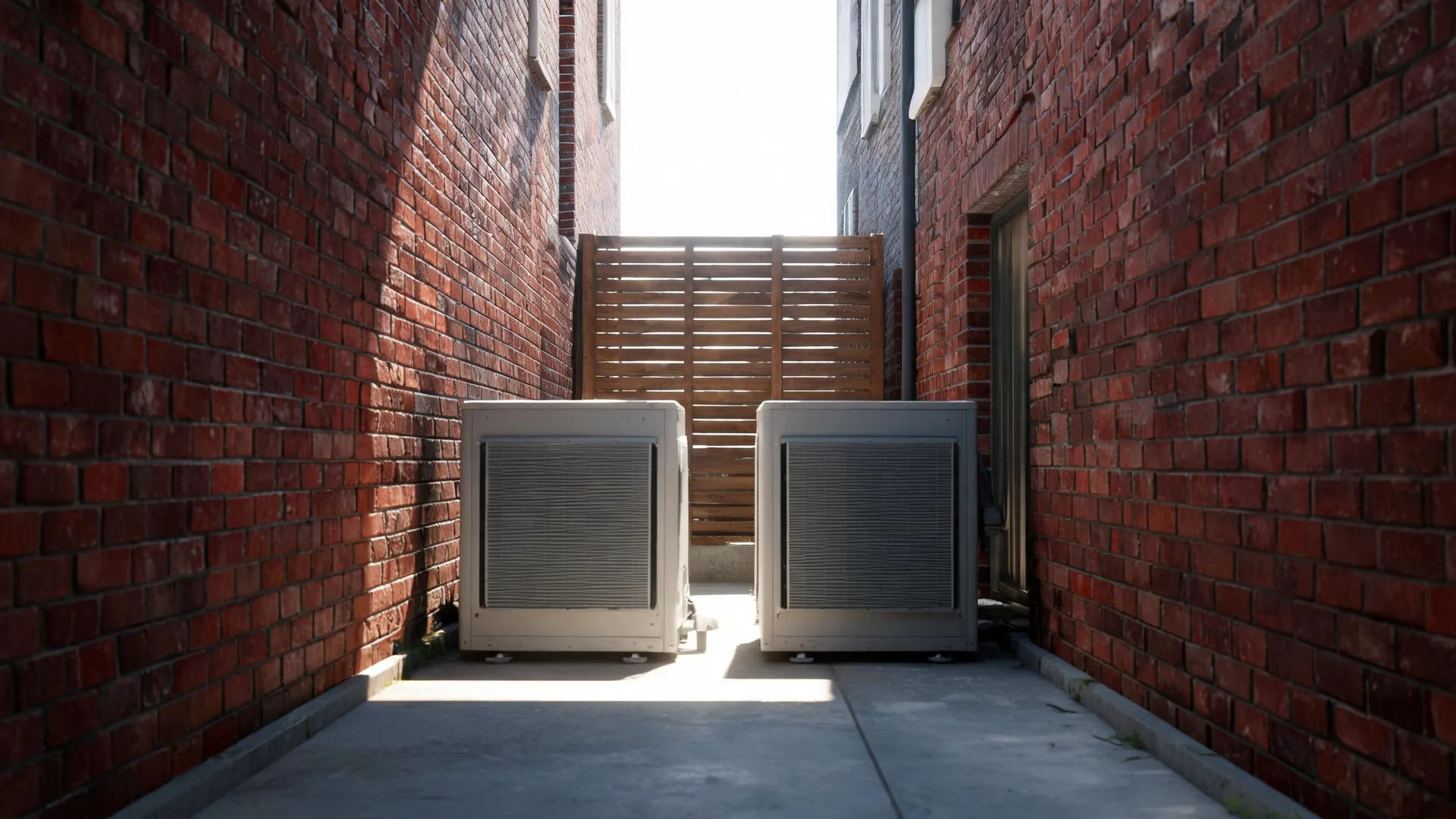
A quick check only looks

A fast visit usually means the tech glances at the outdoor unit, checks that air is moving at the vents, and maybe swaps the filter if one's handed to them. Nothing gets tested under load. A capacitor can look fine sitting still and still fail the moment the compressor tries to start. A connection can look tight and still be carrying heat nobody measured. The unit keeps running after a quick look the same way it was running before it, which tells the homeowner nothing about what's about to wear out.

An outdoor central air conditioning unit mounted on a concrete pad beside a blue-sided house at sunset.

Book your AC tune-up in May, before homes here start needing cooling in June.

  1. Jan
  2. Feb
  3. Mar
  4. Apr
  5. May
  6. Jun
  7. Jul
  8. Aug
  9. Sep
  10. Oct
  11. Nov
  12. Dec

A tune-up checks the refrigerant charge, cleans the coils, tests the capacitor and tightens the electrical connections.

A homeowner can tell the air is cooler coming out of the vent. That's about all they can tell. The things that actually end a unit's life happen where nobody's looking. A capacitor can hold enough charge to start the compressor every time for weeks and still be weak enough to fail on the next hot start, and from the couch it sounds exactly the same as a healthy one. A refrigerant charge that's a little low doesn't announce itself, it just means the compressor runs hotter and longer for the same cooling, season after season. A coil can be coated in dust on the side you can't see without the panel off, quietly losing the ability to shed heat while the air at the vent still feels fine. None of this shows up as a sound or a smell or a change in comfort until the part that was struggling finally quits. By then it's not the cheap part anymore.