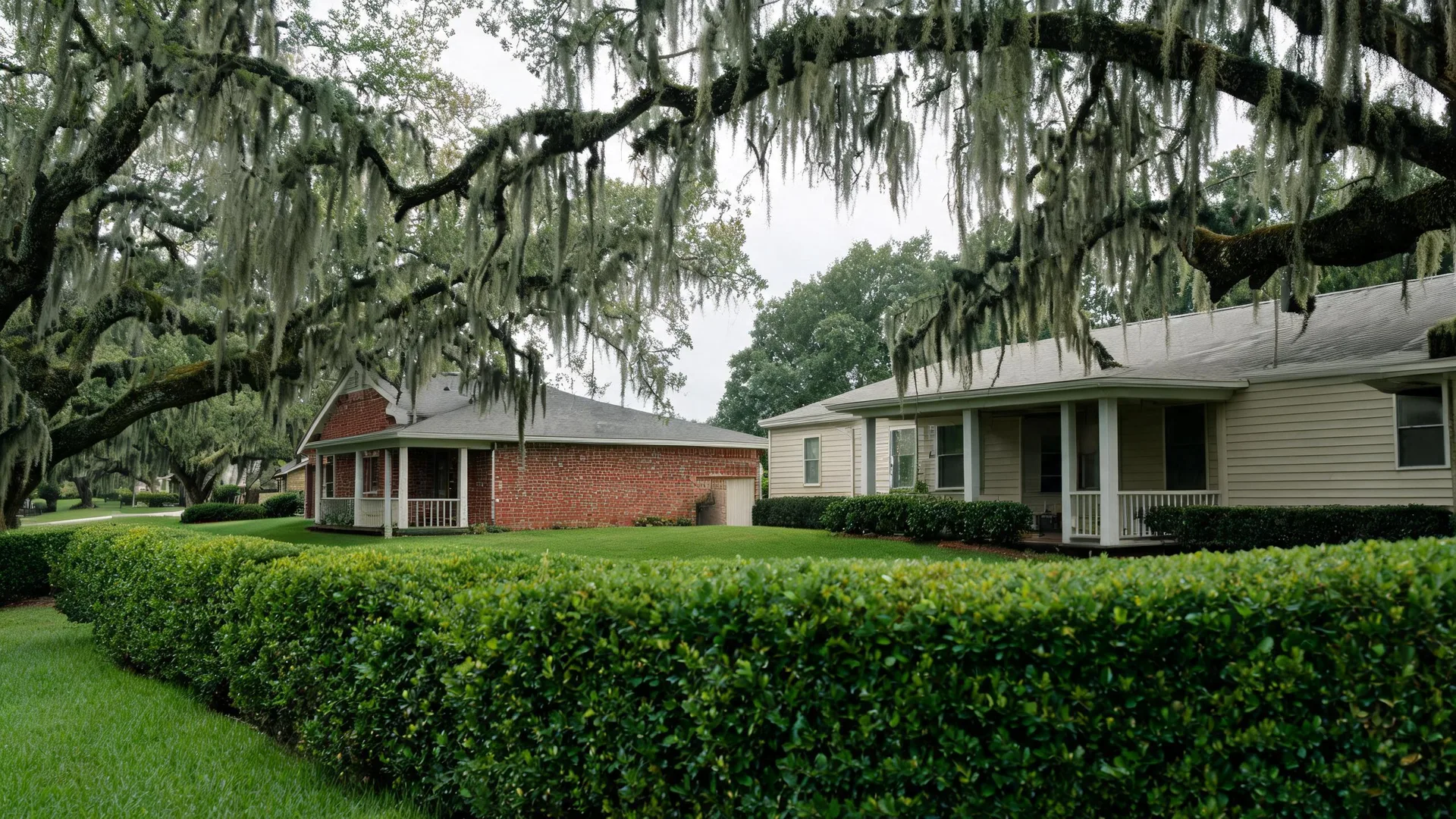





Two single-story houses, one brick with a covered porch and one with pale siding, seen across a mown lawn and a trimmed hedge, beneath large oak branches draped with Spanish moss.

AC Maintenance in Morehead City, NC

Tell us about the job

Takes about a minute. No obligation.

Tune-up, service, or cleaningCentral ACCarteret County, NC
Step 1 of 2

What ZIP code is the job in?

A dirty filter is the start of most service calls. Airflow drops, the evaporator coil gets colder than it should, and eventually it ices over. Once that coil is frozen, the system can't pull heat out of the air no matter how long it runs. The outdoor coil matters too. It has to shed heat into the air outside, and when it's caked with grass clippings or dust, the whole system works harder to do the same job. Then there's the drain line, the part people forget about completely. Algae builds up inside it over time, the line clogs, and the pan backs up. Some systems shut themselves off when that happens. Others just overflow onto the floor or ceiling below.

5 months
May through September, your air conditioner is on duty
87°F
the average summer afternoon it cools against
13 hail events
in ten years, and hail bends the fins on outdoor coils
85 wind events
in ten years, and wind drives debris into outdoor units
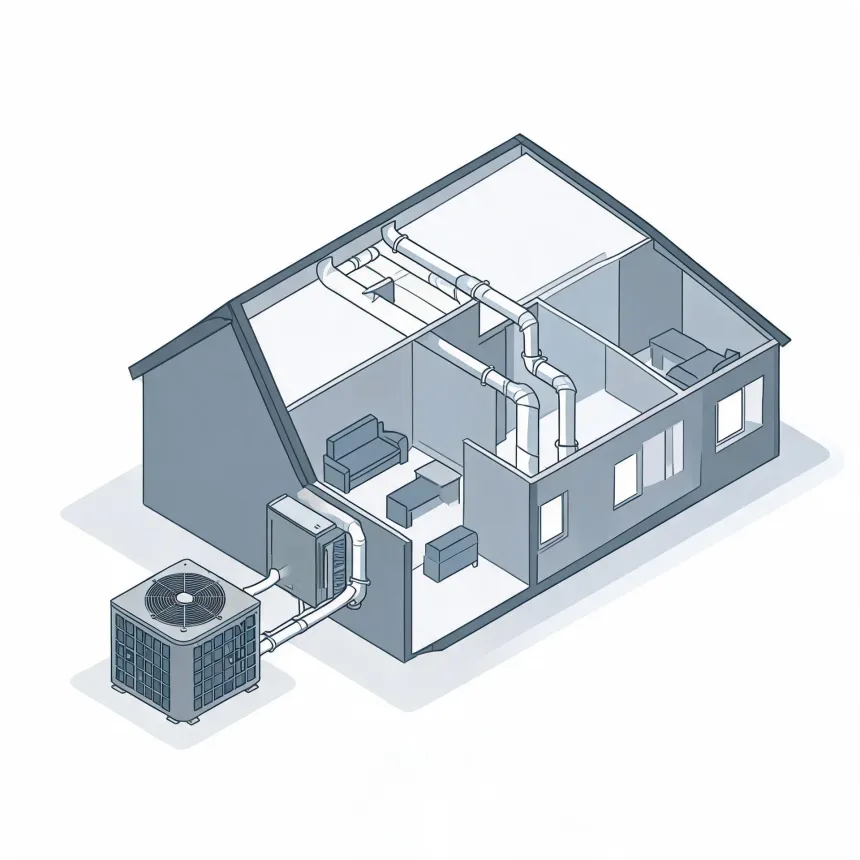
Isometric line illustration of a cutaway house showing interior rooms with ductwork, an indoor air handler, and an outdoor condenser unit connected by lines, on a white background.
Your air conditioner works hardest from June through September.

NOAA nClimDiv, 1991–2020 normals

Half the homes in Carteret County were built in 1989 or later.

A system that age is usually still sound, and a yearly check is what keeps it that way.

On a system that age, a yearly check is what keeps it running through a hot month

Half the homes here were built by 1989
Cooling runs May through September
Summer afternoons average 87°F
Five months of work, every yearAfternoons sit near 87°F through June, July and August, with cooling running May through September.

Cooling here runs May through September, five months of real work for that system. April is the month before any of that starts, and that's when to get it looked at. Whatever's weak gets found while the compressor isn't running yet, not after it's been working all day in the heat. A capacitor that's marginal in April can fail outright once summer load hits it. Book the check in April and there's still time to fix what turns up before the first hot stretch.

Storm season here is hard on the outdoor unit

Carteret County saw 129 severe weather events between 2015 and 2024, wind and hail among them. A quarter of North Carolina households lost power for a day or more last year. The outdoor unit sits outside through all of it. Have it checked for debris and damage before the next storm comes through.

Find a contractor
A gray residential air conditioning condenser unit mounted on a concrete pad outdoors, surrounded by green grass under a partly cloudy blue sky.

Skip it and the system doesn't fail. It just works harder until it does

A system that skips its yearly check doesn't fail all at once. The capacitor weakens a little more each season, the coil collects a little more dust, and the unit keeps running anyway, just worse than before. Nothing tells you that's happening from inside the house, since the air still comes out cold. What changes first is how hard the compressor works to make that happen, and that part wears on itself the same way a car engine wears faster when it's low on oil. By the time the system actually quits, usually on a day it's working hardest, whatever failed had been getting worse for a while.

A gauge set gets unpacked, or it doesn't

Checking refrigerant charge means connecting gauges to the system and reading pressures against what that unit is supposed to run. A quick visit skips this and just checks that the system turns on and blows cold air. A system can be low on charge and still blow air that feels cool, while the compressor works harder than it should and wears faster.

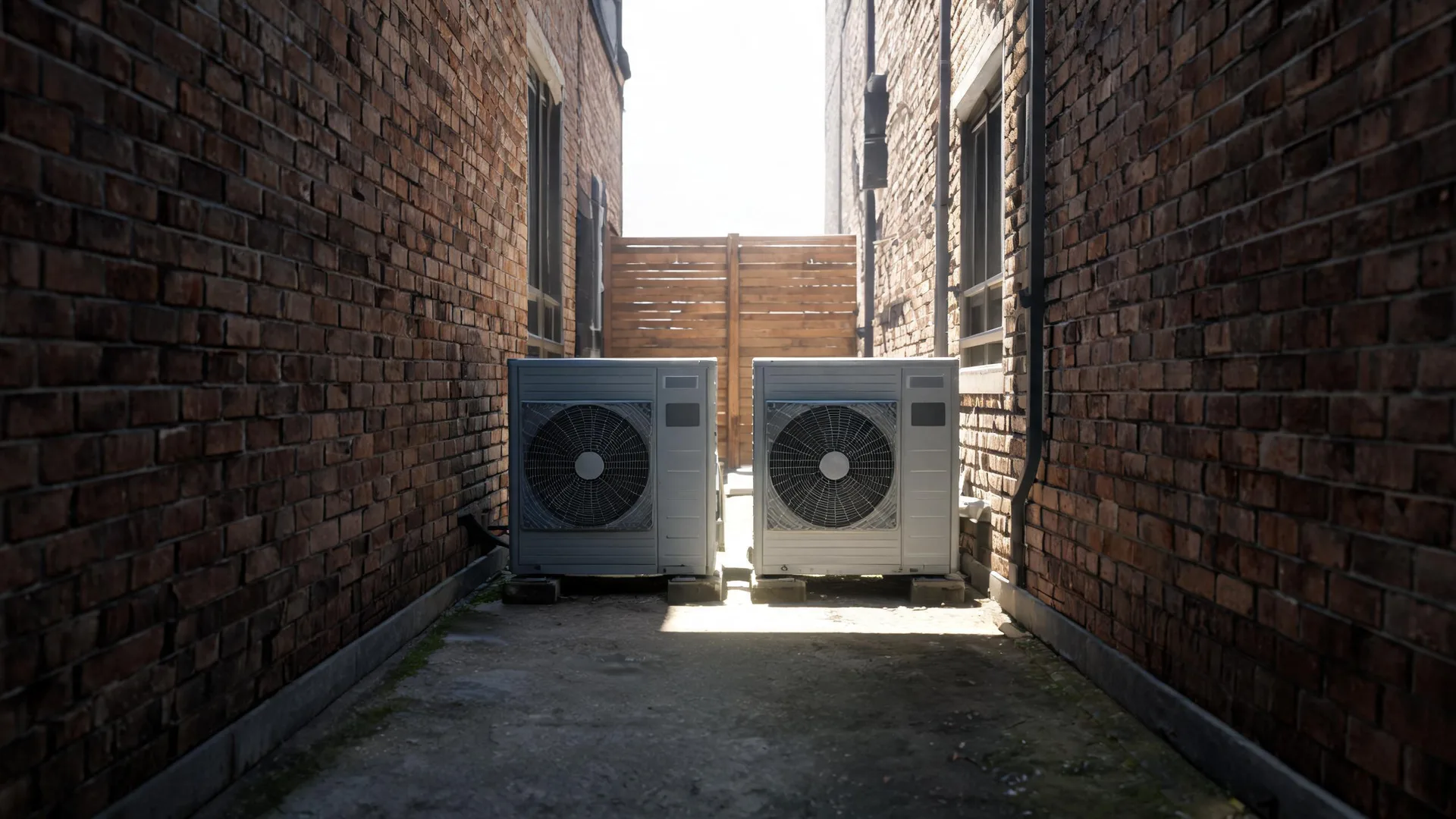
What a thorough check also covers

Electrical connections get checked for looseness, since a loose connection heats up and burns before it fails outright. The blower wheel gets looked at for dust buildup, which cuts airflow the same way a dirty filter does. A quick visit tends to skip both and move straight to whether the system runs.

An outdoor air conditioning condenser unit mounted on a concrete pad next to a blue-sided residential house at sunset.

Book your AC tune-up in April, before homes here start needing cooling in May.

  1. Jan
  2. Feb
  3. Mar
  4. Apr
  5. May
  6. Jun
  7. Jul
  8. Aug
  9. Sep
  10. Oct
  11. Nov
  12. Dec

A tune-up checks the refrigerant charge, cleans the coils, tests the capacitor and tightens the electrical connections.

A tune-up starts with the thermostat calling for cooling and someone watching what actually happens in response, not just whether the fan turns on. Refrigerant pressures get checked against the manufacturer's numbers for that unit, since too much or too little charge both make the compressor work harder than it should. The contactor and capacitor get tested under load, because a capacitor that's starting to go often still starts the system, just slower and hotter each time. Condensate drain and pan get checked for standing water or algae growth before it becomes a clog. The blower compartment gets opened up, not just the filter slot, since dust collects on the wheel itself and nothing on the outside shows it. Refrigerant lines get checked for proper insulation, since a bare section wastes cooling before it ever reaches the house. None of this takes longer because nothing is broken yet. That's the point of doing it now instead of later.