Overhead view of an air conditioning condenser unit on a concrete pad next to a house with asphalt shingle roofing and vinyl siding.

AC Maintenance in Jacksonville, NC

Tell us about the job

Takes about a minute. No obligation.

Tune-up, service, or cleaningCentral ACOnslow County, NC
Step 1 of 2

What ZIP code is the job in?

Electricity here runs 14.07 cents a kilowatt-hour

Onslow County homes paid an average of 14.07 cents per kilowatt-hour in 2025. A dirty coil or a low charge makes the compressor work harder to do the same job, and every extra minute it runs gets billed at that rate.


A skipped tune-up shows up on the bill

A neglected air conditioner draws more power to cool the same house. In a place where the unit runs most of the year, that difference adds up fast. A yearly check catches the wear before it turns into a bigger draw.

5 months
May through September, your air conditioner is on duty
88°F
the average summer afternoon it cools against
18 hail events
in ten years, and hail bends the fins on outdoor coils
68 wind events
in ten years, and wind drives debris into outdoor units
Isometric line illustration of a cutaway single-story building showing interior rooms, ceiling ductwork and an air handler, connected by lines to an outdoor condenser unit beside the exterior wall.
Your air conditioner works hardest from June through September.

NOAA nClimDiv, 1991–2020 normals

Five months of 88 degree afternoons asks a lot of a compressor.

A unit that runs that hard needs its coils and charge checked before July, not during it.

Get it looked at before May, not after the first hot week

Cooling runs May through September
Summer afternoons average 88°F
Power here costs 14.07 cents per kilowatt-hour

May is when cooling starts here, not when it ramps up to it. The system goes from sitting idle to running most of the day in the first month of the season. April is the time to get the coils and refrigerant charge checked, while it's still off or running light. A unit that goes into May already strained stays strained for the next five months, since the season doesn't let up until September. Waiting until the first hot week means the check happens while the compressor is already working hard, not before.

A well-running AC is a cheaper one to run

A tune-up gets the coil clean and the charge right, so the compressor stops working harder than it has to. Electricity here isn't cheap to waste, and a unit running longer than it needs to is doing exactly that, every day the heat holds on.

Find a contractor
An outdoor residential air conditioning condenser unit mounted on a concrete pad, surrounded by gravel with a blue sky in the background.

Your system has more years ahead of it than most, and a yearly check is how it keeps them

Half the homes in Onslow County were built in 1998 or later. If yours is one of them, the compressor and coils likely still have plenty of working life left in them, and a yearly check is what keeps it that way. A system that gets its coils cleaned and its charge checked every year wears slower than one left alone, since dirt and a low charge are what make the compressor strain. That strain is what shortens a system's life, not just its age. A newer unit still pays for a yearly check, because the check is what keeps it newer longer.

The signs are easy to miss

An air conditioner that's losing efficiency doesn't usually stop working. It runs longer to hit the same temperature, cycles on and off more than it used to, or blows air that's not as cold as it should be. Ice on the line outside, a musty smell from the vents, or a unit that seems to run constantly are all signs the system is working harder than it needs to. None of these stop the house from cooling, so they're easy to write off until the bill or the compressor says otherwise.

A check catches what you can't see

The coils, the refrigerant charge, and the electrical connections all wear in ways that don't show up from the thermostat. A coil caked with dirt blocks heat transfer even though the fan still runs fine. A charge that's crept low makes the compressor work to move less cooling than it should. These are the things a yearly check is built to catch, before they turn into the kind of strain that shortens how long the unit lasts.

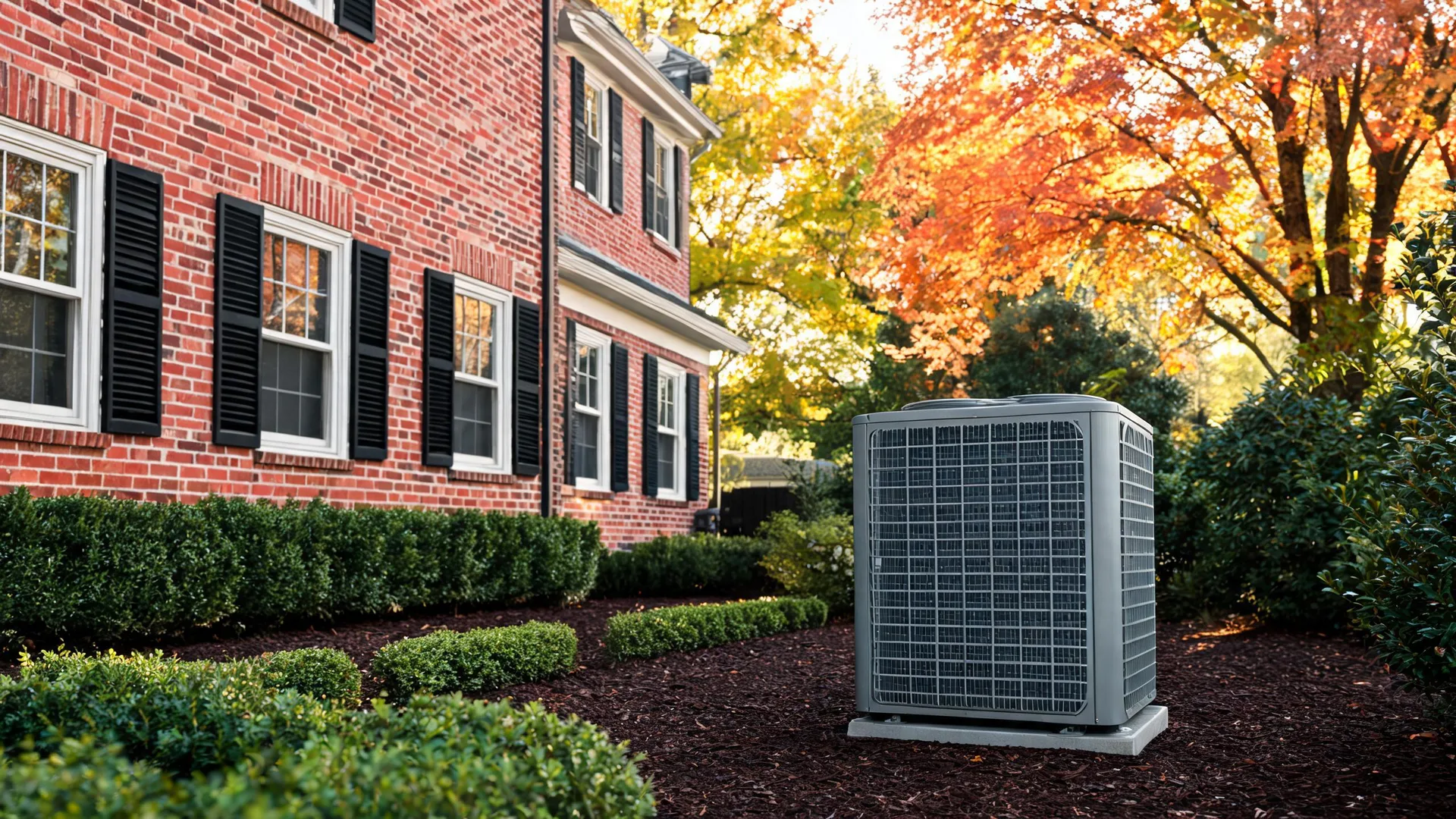
Overhead view of a gray outdoor AC condenser unit on a concrete pad beside a mulched garden bed and a house with vinyl siding.

Book your AC tune-up in April, before homes here start needing cooling in May.

  1. Jan
  2. Feb
  3. Mar
  4. Apr
  5. May
  6. Jun
  7. Jul
  8. Aug
  9. Sep
  10. Oct
  11. Nov
  12. Dec

A tune-up checks the refrigerant charge, cleans the coils, tests the capacitor and tightens the electrical connections.

A tune-up is a fixed list, not a once-over with a flashlight. The coil outside gets washed clean, because dirt on those fins blocks the heat the system is trying to get rid of. The refrigerant charge gets checked against what the system calls for, since too little and the compressor strains, too much and it strains a different way. The electrical connections get checked for anything loose or corroded, which is where a lot of no-start calls come from later. The capacitor gets tested, not eyeballed, because a weak one can still let the unit start and still fail within the month. The condensate drain gets cleared, so the system isn't growing a clog that backs up into the house. The blower wheel and fan motor get looked at too, since a dirty wheel moves less air for the same effort. None of this is guesswork. It's the same dozen or so checks every time, because those are the parts that actually wear.