A single-story brick house with a dark hipped roof and covered porch, seen from a low angle across a lawn with blurred grass in the foreground, framed by pine trees and a large spreading oak on the right.

AC Maintenance in Hickory, NC

Tell us about the job

Takes about a minute. No obligation.

Tune-up, service, or cleaningCentral ACCatawba County, NC
Step 1 of 2

What ZIP code is the job in?

Catawba County sees real storm activity

Catawba County recorded 117 severe weather events between 2015 and 2024. That includes 66 damaging wind events, 32 hail events, 5 tornadoes and 9 winter storms. An outdoor AC unit sits outside through all of it.

Outages here aren't rare

A quarter of North Carolina households lost power for 24 hours or more in 2024. When the power goes out in summer, the air conditioner is the first thing you notice is gone, and the last thing you can afford to have fail once the power comes back.

5 months
May through September, your air conditioner is on duty
87°F
the average summer afternoon it cools against
32 hail events
in ten years, and hail bends the fins on outdoor coils
66 wind events
in ten years, and wind drives debris into outdoor units
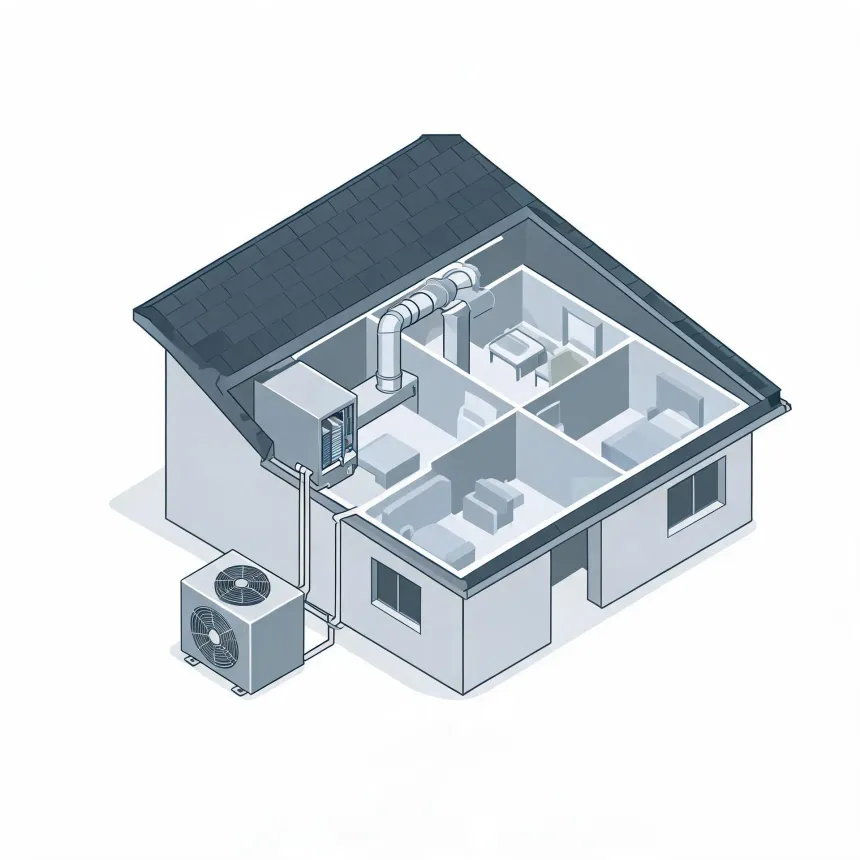
Isometric cutaway illustration of a single-story house showing interior rooms, ceiling ductwork connected to an indoor air handler, and an outdoor condenser unit beside the exterior wall.
Your air conditioner works hardest from June through August.

NOAA nClimDiv, 1991–2020 normals

A dirty filter makes the whole system work harder, and it's the one part you can check yourself without any tools.

Swap it when it looks gray and clogged, and leave the rest to someone who can open the cabinet safely.

Half the homes here are young enough that upkeep still pays off

Half the homes here were built by 1985
Climate zone 3A
Power here costs 13.08 cents per kilowatt-hour
Get it checked in AprilCooling runs May through September here, and the first hot month is a bad time to find out something's wrong.

A yearly check is worth it on a system that still has a lot of life left. The technician can clean the coil, check the refrigerant charge and test the capacitor before any of it turns into a breakdown. That matters more here because the unit just sat through another season of wind and hail outside. A system that gets checked every year also comes back online cleaner after a power cut, with less strain on the parts that took the hit when the power dropped and surged back. If your system came with the house, ask the technician how much life it likely has left and whether anything found during the check needs attention now or can wait.

Get the outdoor unit checked before the next storm rolls through

The outdoor unit at your place has sat through storm after storm. A tune-up gets eyes on it before next season adds to the wear, catching cracked fins or loose connections while they're still a quick fix.

Find a contractor
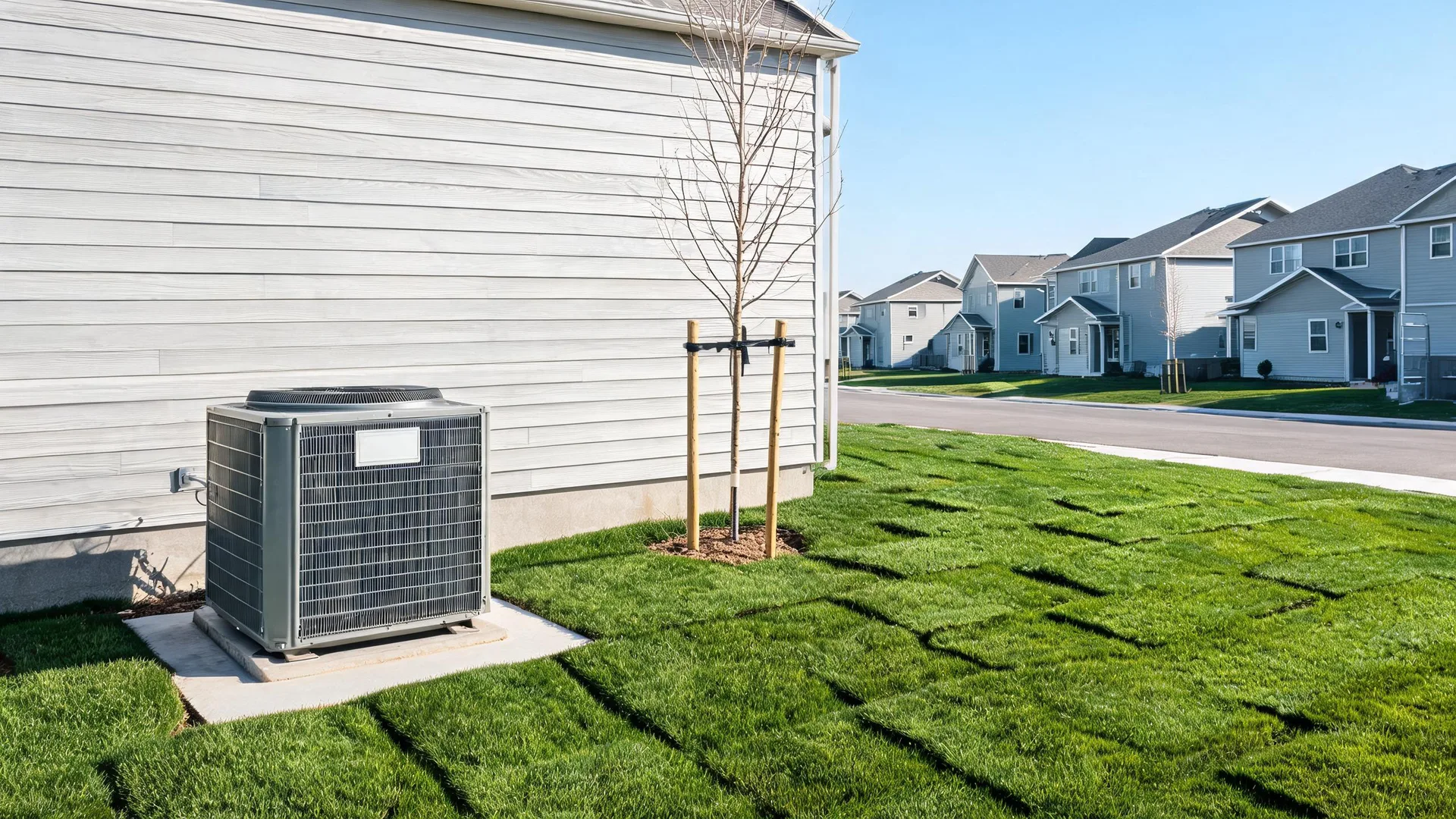
A gray residential air conditioning condenser unit mounted on a concrete pad outdoors, surrounded by green grass under a partly cloudy blue sky.

What's Wearing Out While Your House Still Feels Fine

The compressor runs every time the thermostat calls for cool, and most of what it does happens where you can't see it. A technician checks refrigerant pressure because a system low on charge makes the compressor work past what it's built for, and that shortens its life well before it fails outright. The contactor switches power to the outdoor unit thousands of times over a season, and its contacts pit and burn a little each time until one day they don't close. A capacitor weakens slowly, giving the compressor a harder start each time, long before it gives out and the unit won't start at all. None of this shows up as a change in how your house feels day to day. The air still gets cold, right up until the part that was wearing down finally quits.

The coil can't shed heat through a layer of dirt

The outdoor coil and the indoor coil both need bare metal exposed to the air moving across them. Dust on the indoor coil and grass clippings or cottonwood fluff on the outdoor coil work like a blanket. The system still runs, but it rejects less heat and pulls the compressor down toward pressures it wasn't built to run at for long.

The drain line is the part nobody checks until water shows up

Warm air passing over the indoor coil drops its moisture into a pan, and that pan drains out through a small line that algae and dirt can clog over time. Once it backs up, the pan overflows into the ductwork or the ceiling below it. A technician clears that line and confirms it's draining before it becomes a water stain instead of a filter change.

Overhead view of an outdoor AC condenser unit on a concrete pad next to a house with a dark shingle roof.

Book your AC tune-up in April, before homes here start needing cooling in May.

  1. Jan
  2. Feb
  3. Mar
  4. Apr
  5. May
  6. Jun
  7. Jul
  8. Aug
  9. Sep
  10. Oct
  11. Nov
  12. Dec

A tune-up checks the refrigerant charge, cleans the coils, tests the capacitor and tightens the electrical connections.

A tune-up is a short list of checks, not a once-over with a flashlight. The technician measures refrigerant pressure against what the system is supposed to run at, not just whether it feels cold at the vent. They test the capacitor and contactor under load, since both can look fine sitting still and still be close to done. The condensate drain gets flushed so it can't back up later. The blower wheel gets looked at for dust buildup, because a dirty wheel moves less air even when the motor behind it is fine. Electrical connections get tightened, since a loose one runs hot and burns the lug over time. None of this takes long, and none of it is guesswork. It's the same dozen checks every time, done in order, so nothing gets skipped because it seemed fine last year.