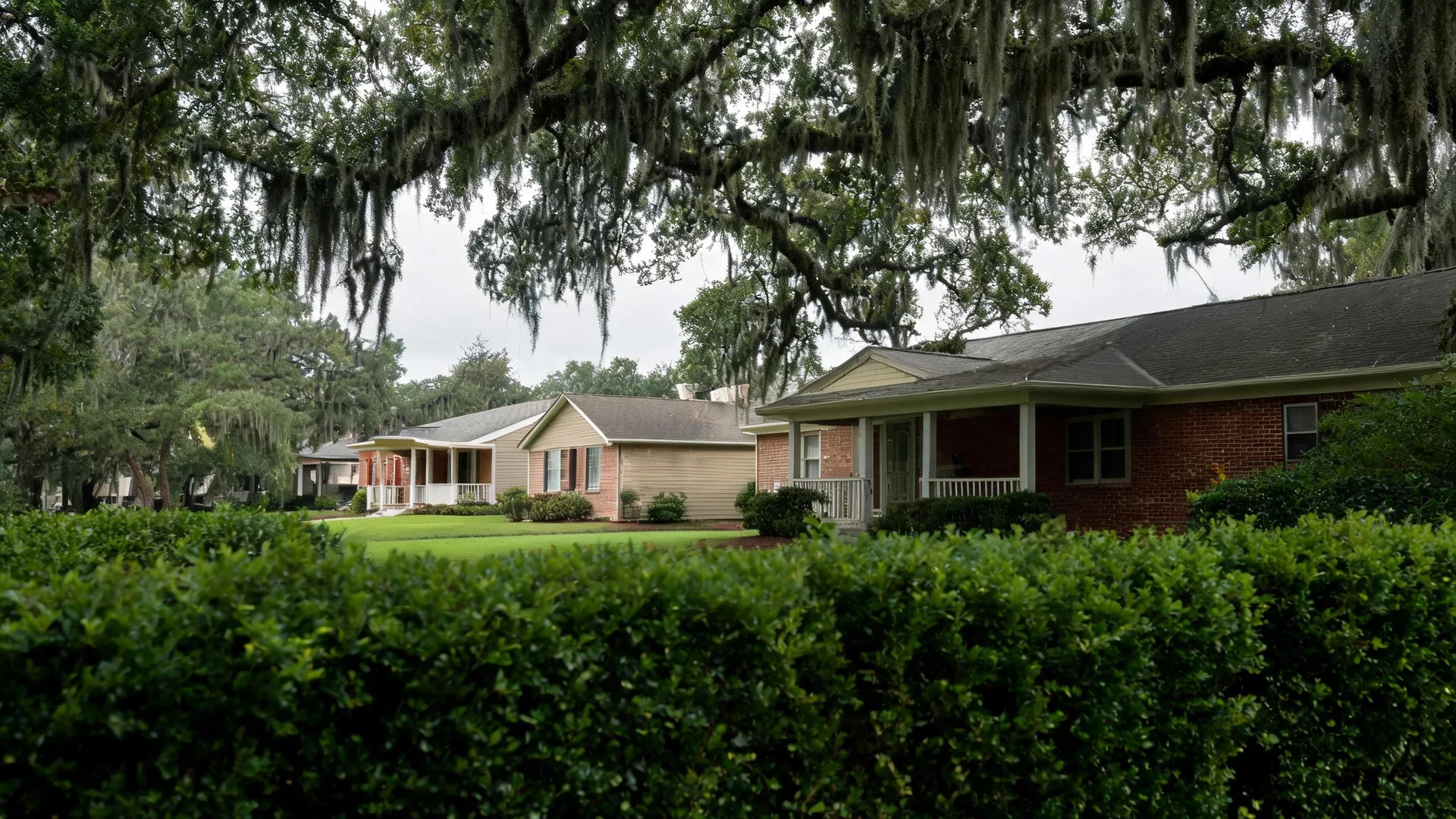




Single-story brick and siding houses with covered porches behind a trimmed hedge and lawn, framed by large oak branches draped with hanging moss under an overcast sky.

AC Maintenance in Greenville, NC

Tell us about the job

Takes about a minute. No obligation.

Tune-up, service, or cleaningCentral ACPitt County, NC
Step 1 of 2

What ZIP code is the job in?

Skip a tune-up and the first thing to go is airflow. Dust builds on the coil and the blower wheel, and the system has to work harder to push air through. The capacitor and the contactor wear with every start and stop, and nobody checks them until one fails outright. Refrigerant can run low from a slow leak that would have shown up on a gauge. None of this announces itself right away. The system keeps running, just worse, until the day it doesn't.

5 months
May through September, your air conditioner is on duty
88°F
the average summer afternoon it cools against
25 hail events
in ten years, and hail bends the fins on outdoor coils
67 wind events
in ten years, and wind drives debris into outdoor units
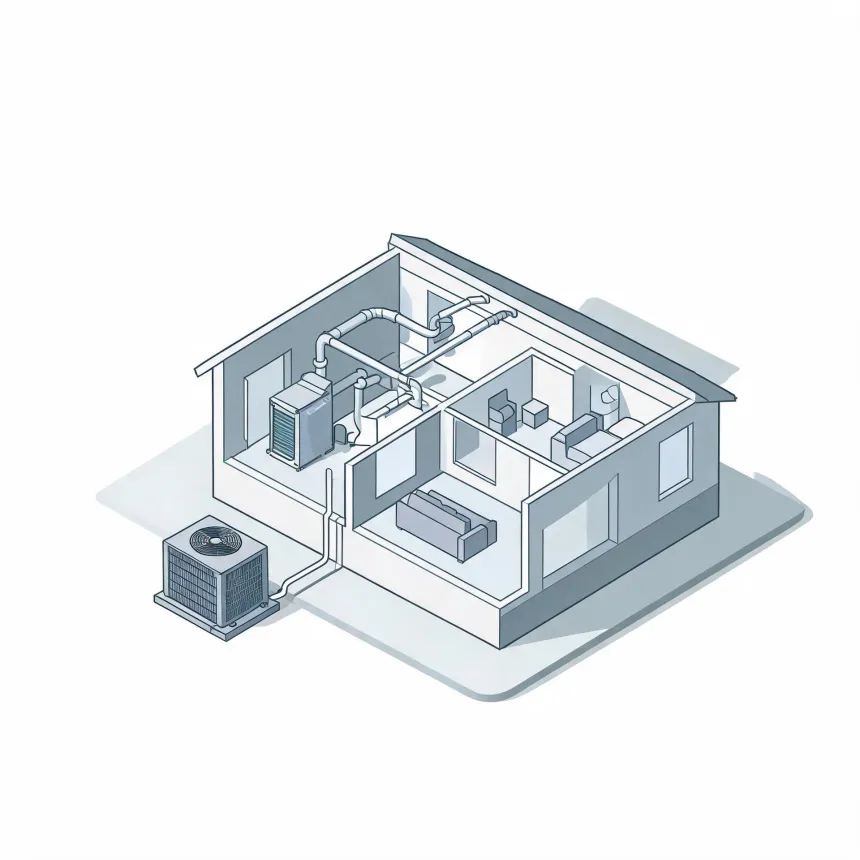
Isometric line illustration of a cutaway house showing interior rooms, a furnace or air handler with ductwork, and an outdoor condenser unit beside the building.
Your air conditioner works hardest from June through September.

NOAA nClimDiv, 1991–2020 normals

Half the homes in Pitt County were built in 1994 or later.

A system that age still has years ahead of it, and a yearly check is what gets it there.

May is when it starts working. April is when to book it.

Cooling runs May through September
Summer afternoons average 88°F
Power here costs 13.03 cents per kilowatt-hour

Cooling runs about five months here, May through September. For three of those months the afternoon high averages 88°F, and the air carries more moisture than most of the country sees, with dew points averaging 69°F in June, July and August. The system is not just running long, it's pushing against heat and humidity at the same time, and that combination asks more of the compressor and the blower than a dry heat would. A worn capacitor or a dirty coil that could limp along somewhere milder shows itself fast under that kind of load. Once the season starts there is no break in the work for the unit to catch up on.

Keep it in good shape

If your system is fairly new, a yearly check keeps it in good shape for longer.

Find a contractor
An outdoor air conditioning condenser unit mounted on a concrete pad beside a house, with electrical conduit running to a wall-mounted disconnect box.

Built new, kept that way

A yearly check is routine work. The technician clears the coil, tests the capacitor, checks refrigerant charge, confirms the contactor is still making clean contact. On a newer system none of that is a repair, it's just keeping the wear from getting ahead of itself. Skip it for a few summers running and small issues stack up quietly, and a system with years left on paper starts acting like an old one.

What shows up before a breakdown does

A system about to fail rarely does it without warning. The airflow out of the vents gets weaker as dust builds on the blower wheel. Short cycling starts, where the unit shuts off a few minutes after it kicks on, because a failing capacitor can't keep the compressor running steady. The outdoor unit starts making a hum or a click where before it just ran quiet. Ice can form on the indoor coil when refrigerant runs low, and that ice cuts the airflow down even further. Each sign on its own might not mean much, but any one of them is worth a look before it turns into a unit that won't start at all.

A check finds what a glance can't

Most of what fails in an air conditioner doesn't fail where the homeowner can see it. The capacitor sits inside the outdoor unit and gives no warning before it goes. Refrigerant charge only shows low on a gauge, not to the eye. A contactor can be pitted and still close the circuit, right up until the day it doesn't. A technician checking these during a routine visit catches the part that's wearing down while it's still doing its job, not after it's stopped.

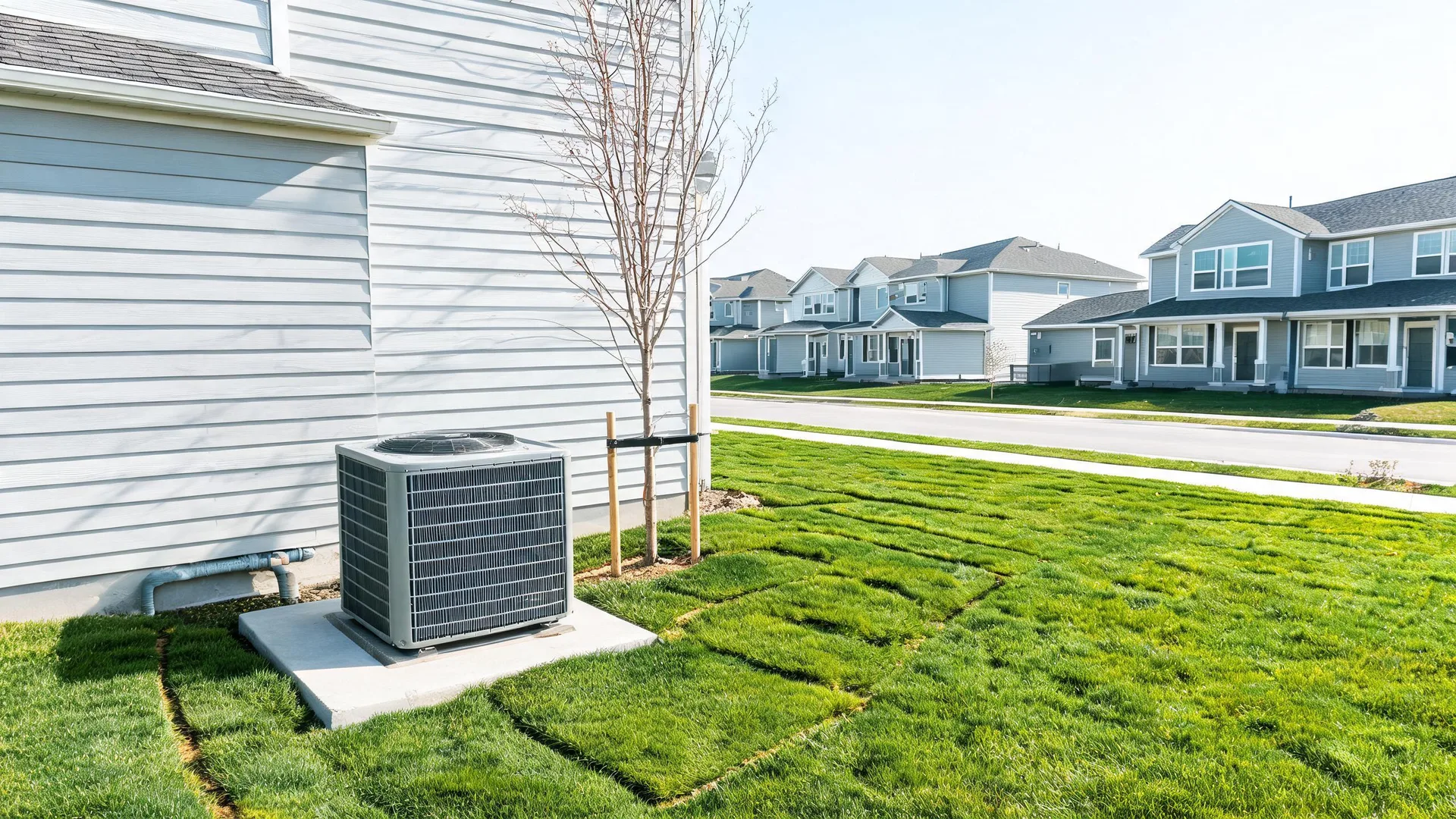
An outdoor central air conditioning unit mounted on a concrete pad beside a blue-sided house at sunset.

Book your AC tune-up in April, before homes here start needing cooling in May.

  1. Jan
  2. Feb
  3. Mar
  4. Apr
  5. May
  6. Jun
  7. Jul
  8. Aug
  9. Sep
  10. Oct
  11. Nov
  12. Dec

A tune-up checks the refrigerant charge, cleans the coils, tests the capacitor and tightens the electrical connections.

A tune-up starts outside, at the condenser. The technician cuts power, pulls the panel, and clears leaves and grass clippings away from the coil fins so air can move through them the way it was designed to. Bent fins get combed straight, since crushed fins choke airflow the same as dirt does. Inside, the evaporator coil gets checked for dust and mildew buildup, because a coated coil can't pull heat out of the air as well as a clean one. The technician measures refrigerant charge against what the system calls for, not just whether it's cold at the vent. Electrical connections get tightened, since a loose wire heats up and can burn before anything else fails. The capacitor gets tested under load, not just looked at, because a weak one can still start the compressor and still be close to done. The contactor gets checked for pitting on the contacts. Drain lines get flushed so condensate has somewhere to go instead of backing up into the pan. None of this is glamorous work. It's the same dozen checks, done the same way, so the parts that fail quietly get caught while they're still working.