






A white Southern-style house with a wraparound porch photographed at night, surrounded by Spanish moss-draped oak trees lit by landscape lights.

AC Maintenance in Gastonia, NC

Tell us about the job

Takes about a minute. No obligation.

Tune-up, service, or cleaningCentral ACGaston County, NC
Step 1 of 2

What ZIP code is the job in?

Gaston County saw 102 severe weather events between 2015 and 2024. Most of that was wind, 67 events, with 20 hail events mixed in. An outdoor AC unit sits outside through all of it, and wind-blown branches or hail can bend the fins or dent the cabinet without you noticing from inside the house. Six tornadoes and three hurricanes or tropical storms touched this county in that same stretch. A tune-up is when a contractor can catch a cracked fan blade or debris packed into the coil before the unit runs again on the next hot day.

5 months
May through September, your air conditioner is on duty
88°F
the average summer afternoon it cools against
20 hail events
in ten years, and hail bends the fins on outdoor coils
67 wind events
in ten years, and wind drives debris into outdoor units
Isometric cutaway illustration of a house showing interior ductwork, an air handler, and an outdoor condenser unit connected by lines, with simple furniture in the rooms.
Your air conditioner works hardest from June through August.

NOAA nClimDiv, 1991–2020 normals

A clogged filter makes the whole system work harder to push air through.

Checking it yourself between visits is one of the few things a homeowner can do that actually protects the unit.

Half these homes were built by 1982, which means half are newer

Half the homes here were built by 1982
Climate zone 3A
Power here costs 12.87 cents per kilowatt-hour
May Is When It Starts WorkingCooling runs May through September here. Have it checked in April.

A system that's a few years old still has most of its working life ahead of it, and a yearly tune-up is what gets it there. The contractor checks the refrigerant charge, tests the capacitor, and clears anything that built up in the coil over the year. None of that is work you can see from the thermostat. Skip it for a few summers and a newer unit starts failing the same way an old one does, just years ahead of when it should. If your AC came with the house, or you know it's a newer install, this is the cheap way to keep it that way.

The Unit Outside Took the Weather. Make Sure It Still Works.

Wind and hail have come through this county more times than most places see in a decade. An outdoor unit left unchecked after a season like that is running with damage you can't see from inside the house. Have it looked at before the next stretch of hot days asks something of it.

Find a contractor
An outdoor air conditioning condenser unit mounted on a concrete pad beside a house, with electrical conduit running to a wall-mounted disconnect box.

Skip the Tune-Up and the Damage Is Quiet, Until It Isn't

A dirty coil is the start of most of this. Dust and grime settle on it and the system can't shed heat the way it should, so the compressor runs longer to do the same job. Run it like that long enough and the compressor is what fails, and that's the expensive part to replace. The fan motor wears on its own schedule too, and without someone listening for the bearing noise early, it keeps turning until it seizes. Refrigerant doesn't get used up, but a slow leak will starve the system a little more each year, and nobody catches that without a gauge on it. None of this shows up as a sudden break. It shows up as a system that runs longer, costs more to run, and gives out sooner than it should have.

The Coil Does the Work the Filter Protects

The evaporator coil inside is what actually pulls heat out of the air, and it needs airflow across it to do that. A dirty filter starves it of that airflow, and a coil that can't breathe starts icing over instead of cooling. Once ice forms, it blocks even more airflow, and the problem feeds itself until the system is blowing warm air or not running at all.

The Drain Line Is Easy to Forget

As the coil pulls moisture out of the air, that water has to go somewhere, and it runs out through a condensate drain line. Algae and dirt build up inside that line the same way they would in any drain, and once it clogs, the water backs up into the pan under the coil and overflows. A contractor checks and clears that line as part of a tune-up, because nobody notices it's clogged until there's water where it shouldn't be.

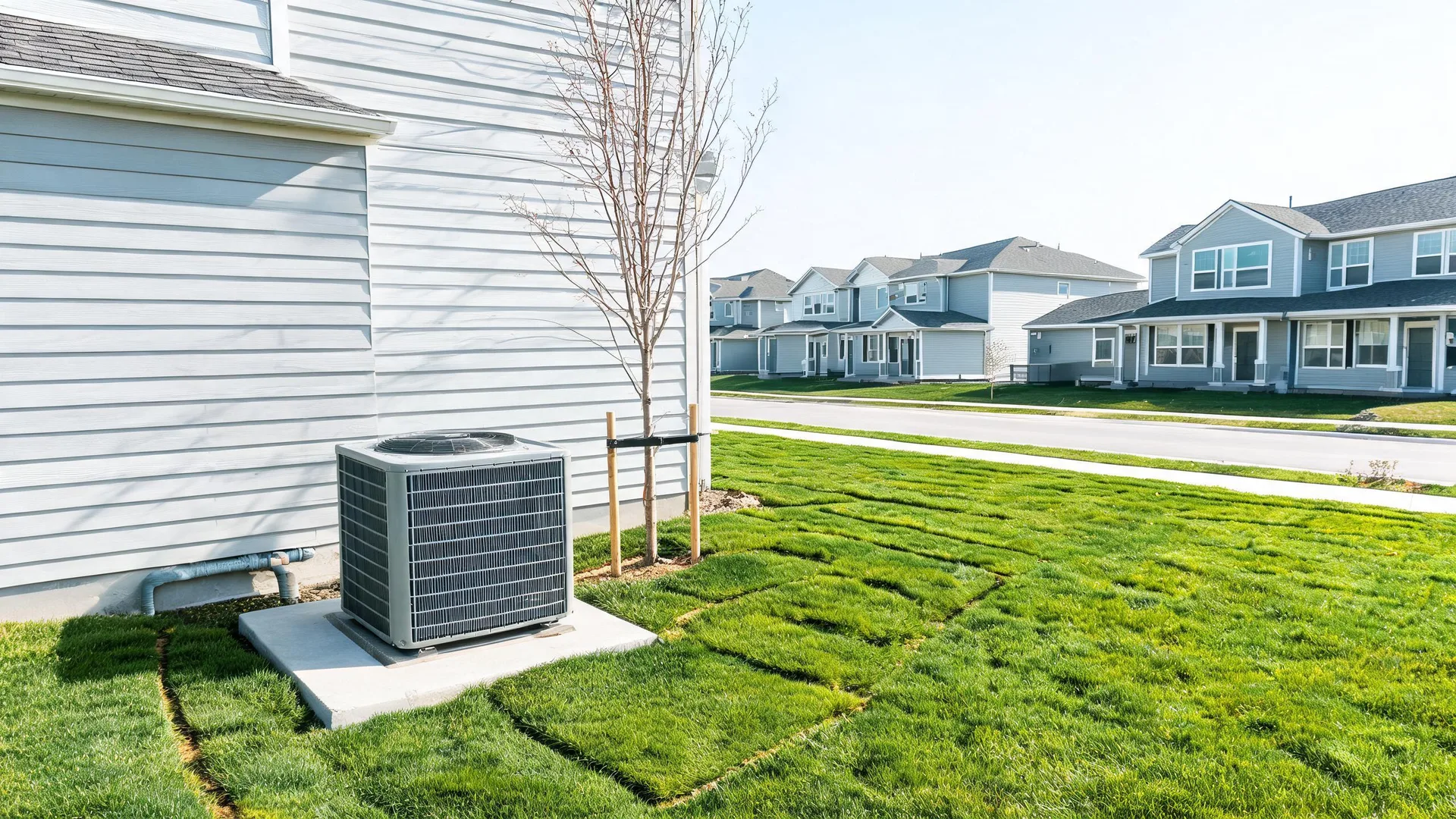
An outdoor central air conditioning unit mounted on a concrete pad beside a blue-sided house at sunset.

Book your AC tune-up in April, before homes here start needing cooling in May.

  1. Jan
  2. Feb
  3. Mar
  4. Apr
  5. May
  6. Jun
  7. Jul
  8. Aug
  9. Sep
  10. Oct
  11. Nov
  12. Dec

A tune-up checks the refrigerant charge, cleans the coils, tests the capacitor and tightens the electrical connections.

A tune-up is a fixed list, not a once-over. The contractor measures the refrigerant charge against what the system is supposed to hold, because too little and too much both make it work harder than it needs to. The capacitor and contactor get tested, since those are what start the compressor and fan motor and they wear out quietly until the day they don't start at all. The blower wheel and coil get looked at for buildup that cuts into airflow. Electrical connections get checked for corrosion and loose terminals, because a connection that's heating up is a connection that's about to fail. The condensate drain gets cleared so it isn't the thing that backs up water next. Each piece of that list catches something different, and skipping one doesn't make the others matter less.