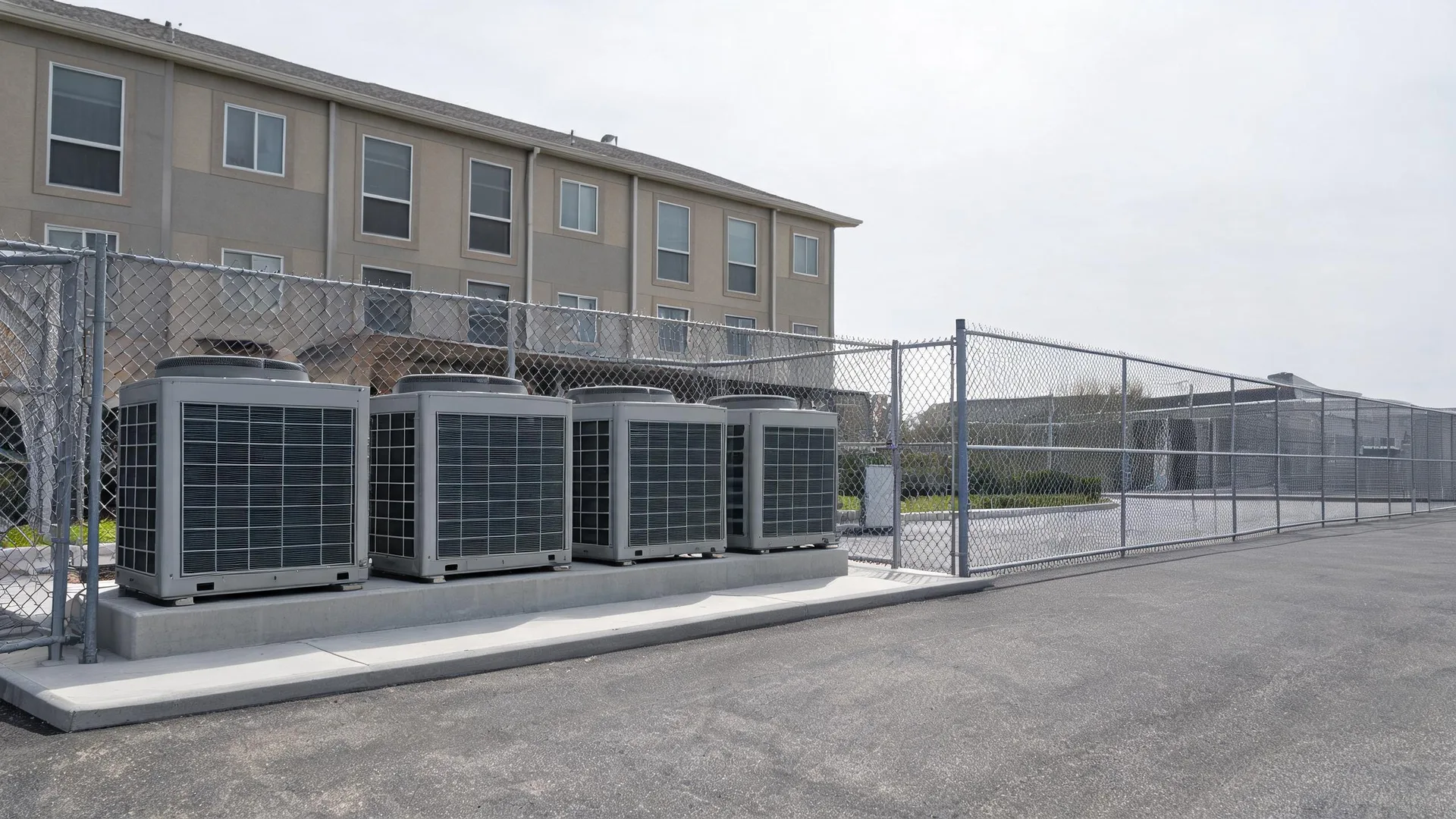
A dirty coil or a low charge makes the compressor work harder
An AC that's low on refrigerant or has a dirty condenser coil has to run longer to cool the same house. That extra runtime is pulling power the whole time.
Takes about a minute. No obligation.
An AC that's low on refrigerant or has a dirty condenser coil has to run longer to cool the same house. That extra runtime is pulling power the whole time.
North Carolina homes paid that rate in 2024. A system that's drifted out of tune burns more of it every month it goes unchecked.

NOAA nClimDiv, 1991–2020 normals
A dirty filter chokes airflow before anything else goes wrong.
Once airflow drops, the coil can ice over and the drain can back up right behind it.




Get a system looked at before May, before the first run of 89 degree afternoons finds whatever is already weak. A technician on a maintenance visit checks the refrigerant charge, tests the capacitor, and clears the condenser coil, the parts that take the worst of five straight months of heat. A weak capacitor found early is a quick fix. Found in the middle of a July heat wave, it means days without cooling while every contractor in the county is already booked. Cumberland County also sees its share of damaging wind, and a storm that knocks out power for a few hours is a hard way to learn a system was already struggling before the outage hit.
A technician can catch a low charge or a dirty coil before it spends a summer driving up your bill at 14.13 cents a kilowatt-hour. Getting it checked now settles the question either way.
Find a contractor
That same yearly check is what keeps a newer system newer. Catching a weak capacitor or a slow refrigerant leak early means the compressor never has to work past what it was built for. A system running at full working life from day into night gets more years out of its original parts when nothing is let to drift. If your system came with the house, this is the cheapest year to start that habit.
Most compressor failures start somewhere else first, a dirty coil, a weak capacitor, a low charge, something that makes the compressor strain to do its job. Left alone long enough, that strain is what burns it out. The compressor is the hardest part to replace, and it's also the part maintenance is meant to protect.
A system that misses its yearly check doesn't fail the first summer it's skipped. It runs a little weaker the next summer, and weaker again the one after, losing capacity so gradually that nobody notices until the afternoon it can't keep the house cool at all. By then it's not one small fix, it's whatever broke under years of unnoticed strain.
A tune-up checks the refrigerant charge, cleans the coils, tests the capacitor and tightens the electrical connections.
A tune-up is more than a filter swap. A technician measures refrigerant pressure against what the system is supposed to carry, because too little and the coil can't pull heat out of the air the way it should. The capacitor gets tested under load, not just looked at, since a weak one can still start the compressor on a cool morning and fail outright once the heat sets in. The condenser coil gets cleaned of the dirt and grass clippings that build up against it, because a blocked coil can't shed heat no matter how well everything else is running. Electrical connections get checked for the kind of corrosion that builds slowly and then fails all at once. The condensate drain gets cleared too, since a clogged one backs up and can shut the system down on its own before anything else goes wrong.