Single-story brick and white-sided buildings with covered porches behind a trimmed hedge and lawn, framed by overhanging oak branches draped with Spanish moss.

AC Maintenance in Asheboro, NC

Tell us about the job

Takes about a minute. No obligation.

Tune-up, service, or cleaningCentral ACRandolph County, NC
Step 1 of 2

What ZIP code is the job in?

Weather here takes a toll on outdoor units

Randolph County saw 232 severe weather events between 2015 and 2024, with damaging wind alone hitting 202 times. Hail showed up 19 times in that stretch, and a tornado touched down once. An outdoor AC unit sits outside through all of it, exposed to wind-blown debris and hail.


A storm can knock out more than your power

A quarter of North Carolina households went at least a day without power in 2024. When the power goes, your air conditioner stops, and so does anything else running on electricity in the house. A unit already weakened by storm damage has a harder time coming back once power returns.

5 months
May through September, your air conditioner is on duty
88°F
the average summer afternoon it cools against
19 hail events
in ten years, and hail bends the fins on outdoor coils
202 wind events
in ten years, and wind drives debris into outdoor units
Isometric cutaway illustration of a house showing attic ductwork, an indoor air handler, refrigerant lines running outside, and an outdoor condenser unit on a pad.
Your air conditioner works hardest from June through August.

NOAA nClimDiv, 1991–2020 normals

Cooling starts in May here and runs through September.

Get the tune-up done in April, before the first hot stretch puts load on the system.

Five months of 88 degree afternoons wears parts down fast

Cooling runs May through September
Summer afternoons average 88°F
202 damaging wind events from 2015 to 2024

A tune-up before the season starts catches what's already tired before the unit has to run flat out. Once those 88 degree afternoons settle in for the summer, a weak capacitor or contactor doesn't get a quiet failure. It gets a service call in the middle of the week everyone else is calling too. Checking it now, before cooling season begins, means replacing a worn part on a schedule picked by a technician, not one picked by the weather.

Have the outdoor unit checked before the next storm finds its weak spot

A unit that rode out this year's wind and hail without a scratch can still have debris caught in the coil or a fin bent just enough to matter. Have it checked before the next storm front comes through, while a technician can still pick the day.

Find a contractor
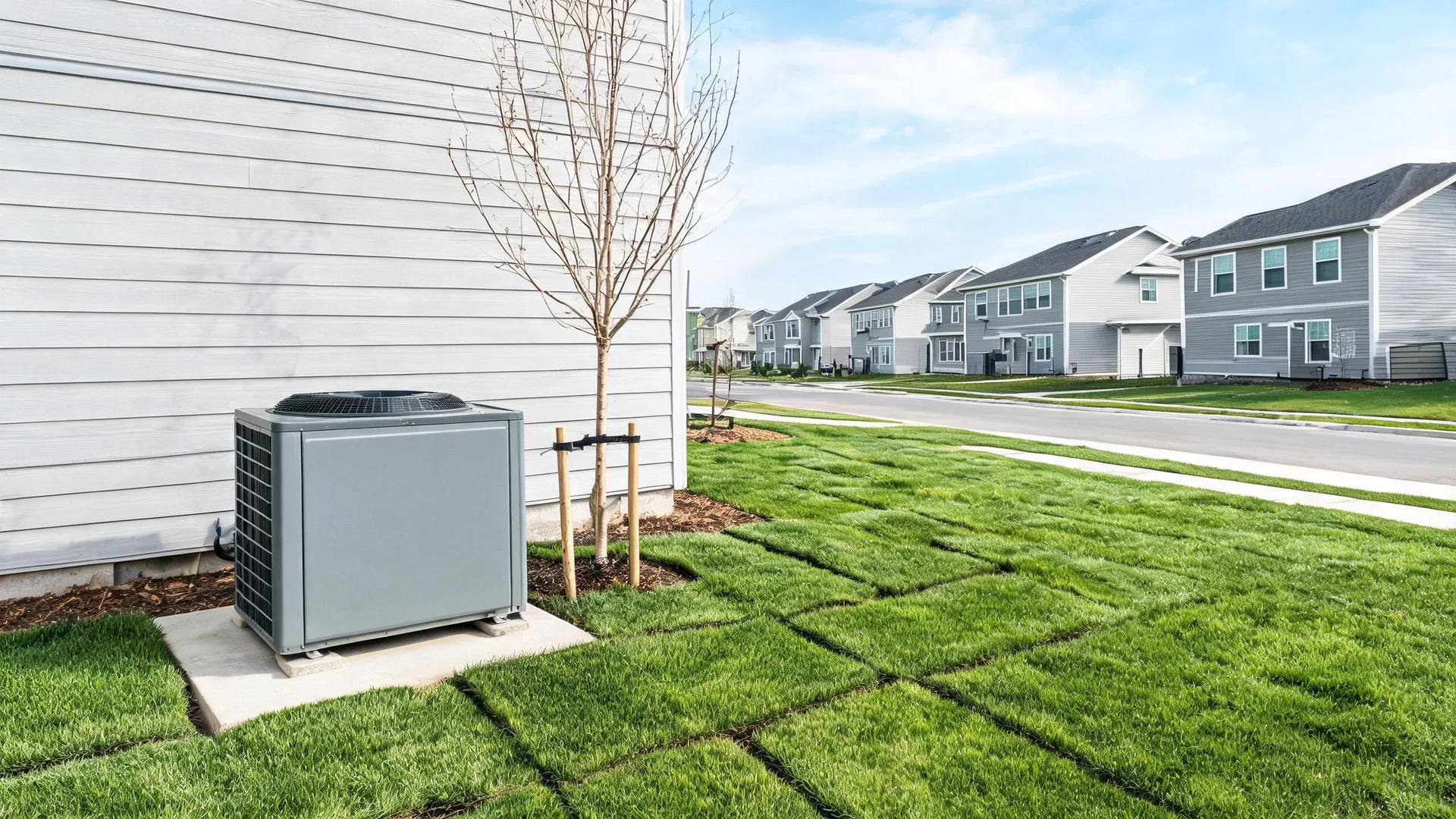
An outdoor air conditioning condenser unit mounted on a concrete pad surrounded by gravel, photographed against a partly cloudy blue sky.

A machine that runs unchecked is wearing down parts you can't see

Skip the yearly check and the first thing to go quiet is the coil. Dust and pollen settle on the fins until the coil can't shed heat the way it was built to, and the unit runs longer to get the same result. Run it dirty long enough and the compressor starts absorbing the strain, because that's the part doing the work to make up for everything else falling behind. A compressor is also the part nobody wants to replace, since the cost of swapping it often buys most of a new system. Low refrigerant does similar damage over time, and the only way to catch a slow leak is to have someone check the charge before it gets low enough to cause problems. None of this announces itself. The unit keeps running, the air coming out of the vents just isn't as cold as it used to be, and by the time it quits outright, the parts failing are the expensive ones.

A real tune-up opens the cabinet

A quick visit means someone swaps the filter, glances at the thermostat, and leaves. A thorough one has the panel off. The technician checks refrigerant charge against what the system calls for, tests the capacitor and contactor under load, and pulls the blower wheel to check for dirt buildup most people never see. The coil gets washed, not just looked at. That difference shows up when the unit has to run all day, not on the invoice.

Ask what readings they took

A tech who did the job can tell you the temperature split between the air going into the system and the air coming out. They can tell you what the refrigerant pressure read and whether it matched the charge the unit needs. Someone who skipped those steps has nothing to report but that everything looked fine. Looked fine and tested fine are not the same thing, and only one of them tells you the unit will hold up under a full day of running.

Aerial view of a gray outdoor air conditioning condenser unit mounted on a concrete pad next to a house with vinyl siding.

Book your AC tune-up in April, before homes here start needing cooling in May.

  1. Jan
  2. Feb
  3. Mar
  4. Apr
  5. May
  6. Jun
  7. Jul
  8. Aug
  9. Sep
  10. Oct
  11. Nov
  12. Dec

A tune-up checks the refrigerant charge, cleans the coils, tests the capacitor and tightens the electrical connections.

A tune-up means going through the system part by part, not glancing at it. The technician checks the refrigerant charge against what the unit calls for, because too little or too much makes the compressor work harder than it should. The capacitor and contactor get tested under load, since those are the parts that wear quietly and then fail all at once. The condenser coil gets washed, not just inspected, because a coil caked with dirt can't shed heat the way it was designed to. The blower wheel comes out for a look too, since buildup there cuts down the airflow moving across the coil in the first place. Electrical connections get checked for looseness or corrosion, because a connection that's starting to fail generates heat before it fails completely.